HomeAuthor

kkpcb02 - KKPCB - Page 2 of 15

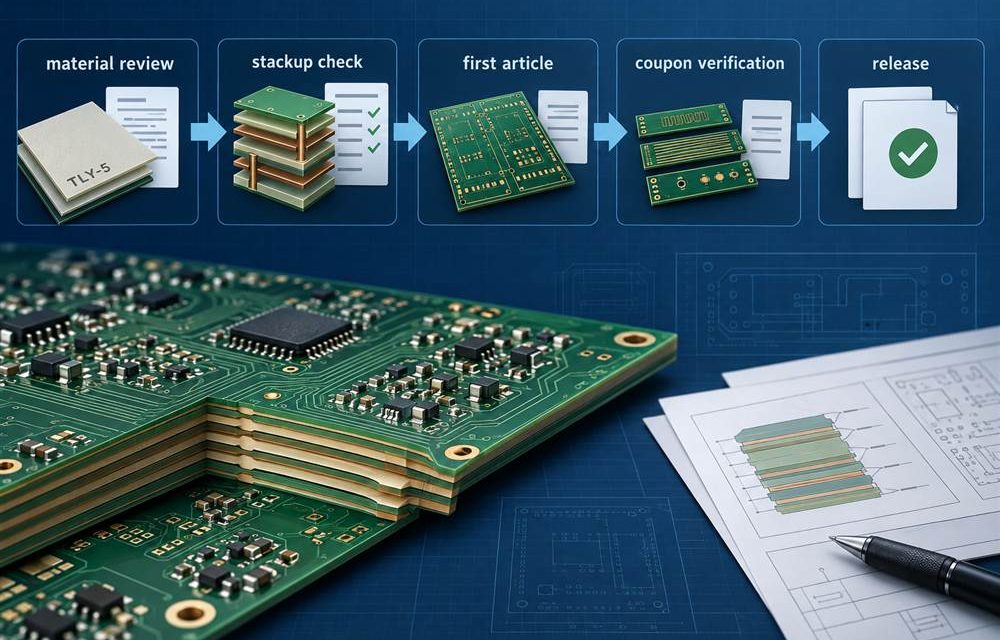
Taconic TLY-5 PCB Production Release: Linking DFM, Coupons, and Engineering Change Control

Table of Contents Turn the RF model into a release package Use coupons that correlate to product risk Control material and process changes Make the production handoff auditable Prototype success does not automatically create a repeatable production baseline. A material substitution, a different panel orientation, or a “small” drill-table change can move an RF launch...

Taconic TLY-5 PCB Assembly Window: Reflow and Connector Workmanship for RF Builds

Table of Contents Define the RF assembly window before quoting Protect the connector launch through reflow Inspect solder and cleanliness without disturbing RF geometry Control rework and release evidence RF boards can meet bare-board inspection and still miss the project target after assembly. A connector pin may pull a launch pad, solder mask can creep...

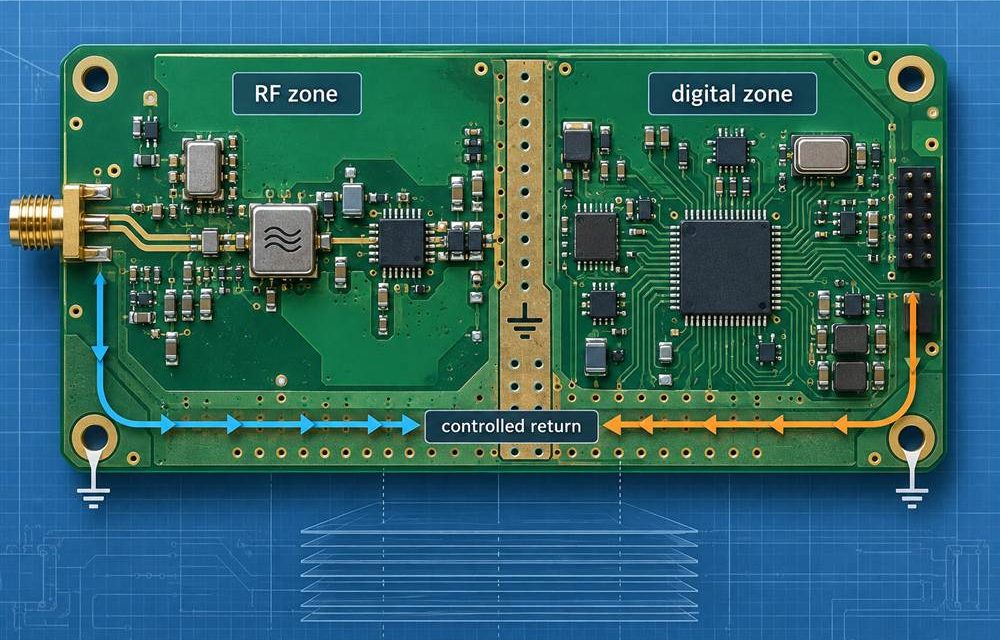
Taconic TLY-5 PCB Mixed-Signal Layout: A Return-Path Plan for GNSS and Radar

Table of Contents Separate RF, clock, power, and digital return paths Select layer transitions that preserve reference continuity Protect GNSS and radar interfaces during assembly Release a mixed-signal verification plan GNSS receivers and compact radar modules bring incompatible noise budgets onto the same board. The RF path needs a quiet reference and controlled geometry; the...

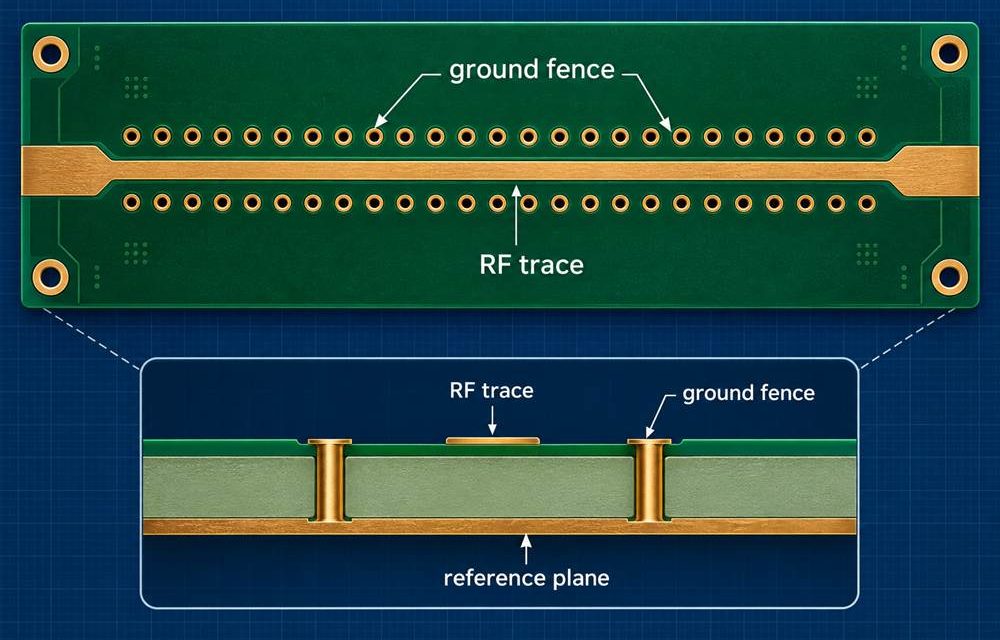
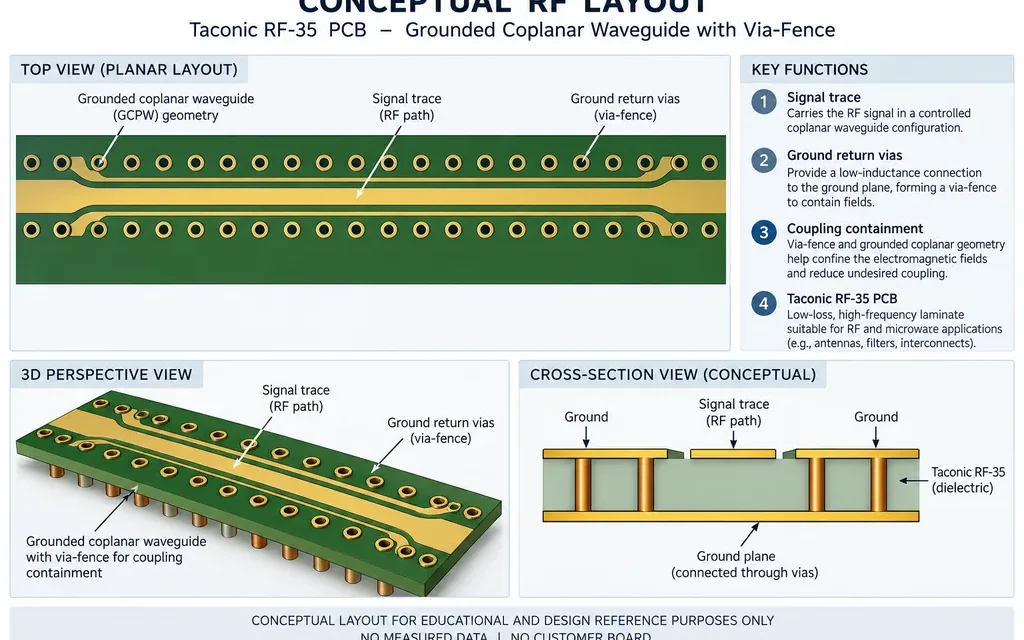
Taconic TLY-5 PCB Via-Fence Design: Containing Coupling Around RF Modules

Table of Contents Locate the coupling path before placing vias Build a repeatable fence and reference transition Coordinate shields, connectors, and assembly access Verify the fence in DFM and first article release Dense wireless modules often pass an electrical review and still show channel-to-channel coupling after the first hardware build. The cause is usually not...

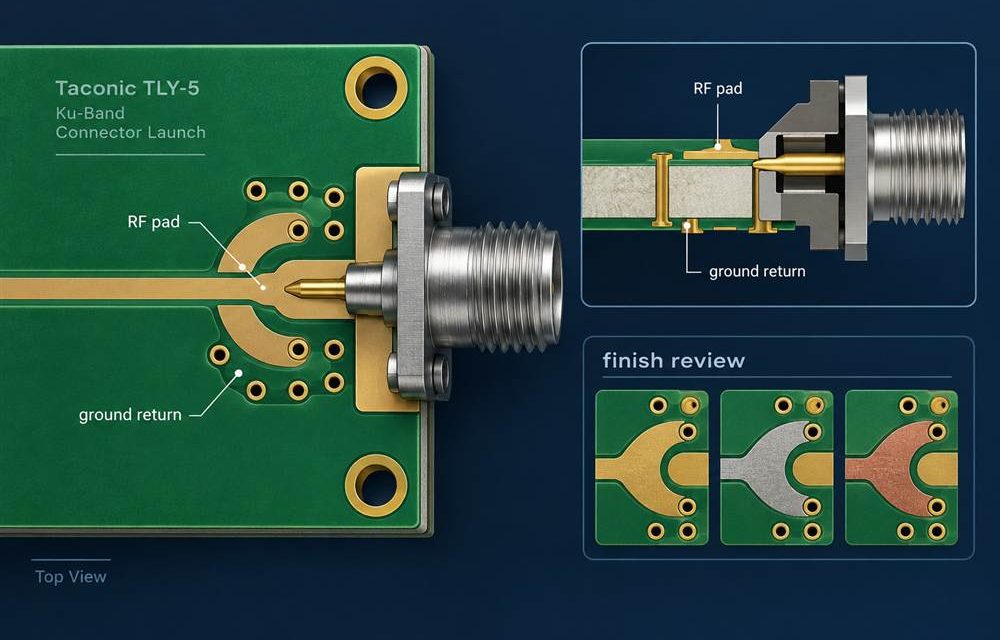
Taconic TLY-5 PCB for Ku-Band Antennas: Managing Phase Stability from Stackup to Launch

Table of Contents Why phase stability starts with the board stackup Translate antenna geometry into a manufacturable launch Control copper, mask, and reference-plane variation Release a verification package for production Ku-band antenna programs rarely fail because the laminate name was absent from the drawing. They fail when a small change in dielectric height, copper profile,...

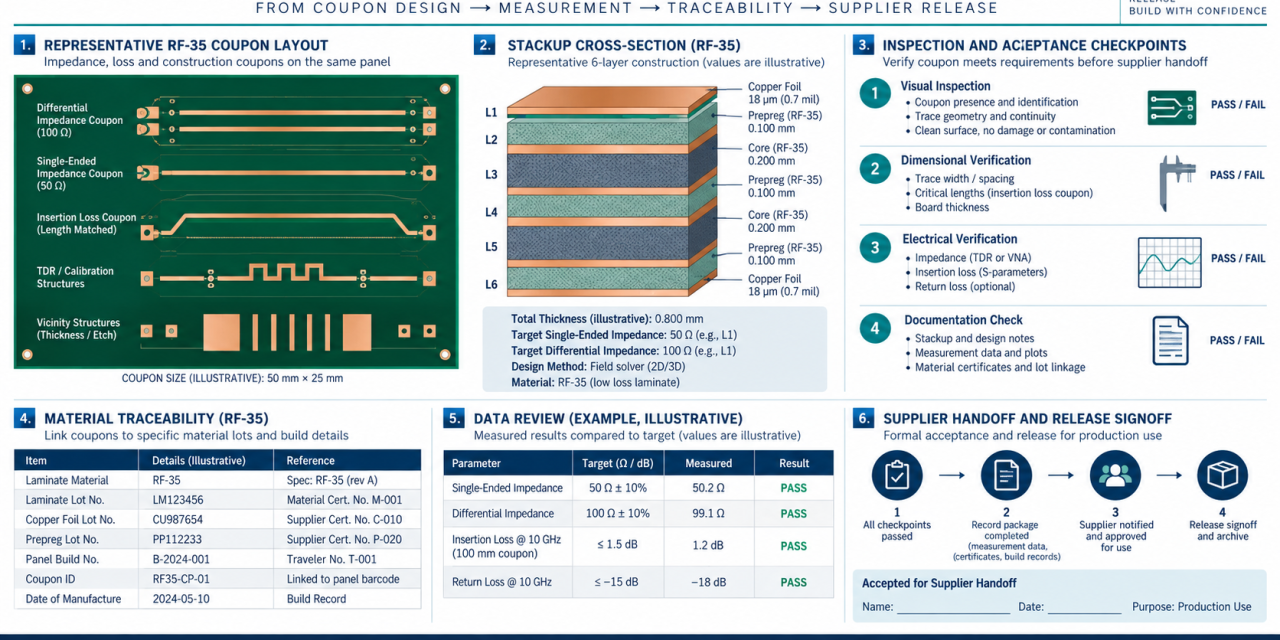
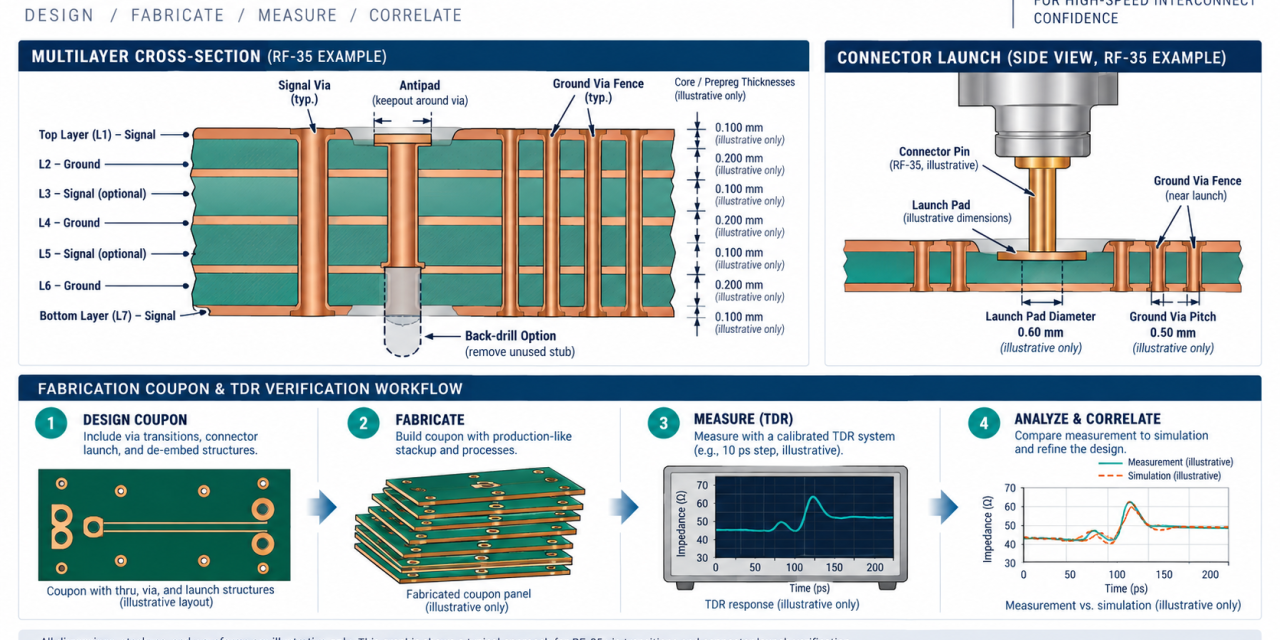
Taconic RF-35 PCB Coupon Design: Correlating Stackup, Impedance, and Production Release

Table of Contents Coupon decision and field geometry Measurement interface Data interpretation Production release gate An impedance coupon is valuable only when it represents the product path that the project team is trying to release. For a Taconic RF-35 PCB, a generic straight-line coupon may confirm a number while hiding the real risk in a...

Taconic RF-35 PCB Antenna Feed Keep-Outs: A DFM Method for Compact Wireless Modules

Table of Contents Feed field boundary Ground and shield continuity Connector and assembly access Manufacturing release Compact wireless modules rarely fail because the antenna feed is absent from the layout. They fail because the feed keep-out is treated as empty space instead of a controlled electromagnetic and manufacturing feature. A Taconic RF-35 PCB can provide...

Taconic RF-35 PCB Drill and Plating Control: Avoiding PTFE Via Reliability Escapes

Table of Contents PTFE drilling and stackup RF drill table and transition geometry Desmear and plating controls Coupons and assembly handoff A via can pass an electrical design review and still become the first reliability escape in a PTFE-based RF build. Drill wander on a Taconic RF-35 PCB, smear removal, rough hole walls, poor copper...

Taconic RF-35 PCB Copper Roughness: Turning Conductor Loss Into a Release Check

Table of Contents Copper profile and loss budget Drawing notes and finished geometry Cross-section inspection Procurement release gate Taconic RF-35 PCB projects often pass a schematic review and still lose margin at the first production build. The hidden variable is frequently conductor loss: copper roughness, finished trace width, etch shape, and the way the reference...

Taconic RF-35 PCB for Beamforming Networks: Holding Phase Balance Across a Multi-Channel Array

Table of Contents Electrical-length budget Stackup and return path Array routing and calibration Production release evidence Beamforming boards are often released as if they were ordinary controlled-impedance backplanes. That shortcut is risky. In a multi-channel array, a small phase error in one feed path changes the composite beam, reduces calibration margin, and can look like...