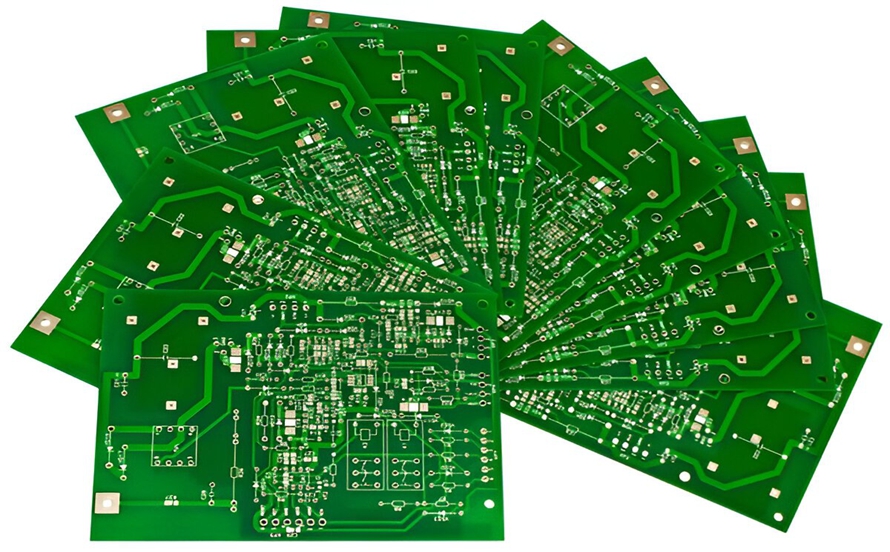
Power Electronics PCB - KKPCB
 
HomeTag

Power Electronics PCB - KKPCB

SiC PCB: PCB Design Solutions for Silicon Carbide Power Electronics

Power electronics are evolving rapidly as industries demand higher efficiency and greater power density. Silicon Carbide (SiC) semiconductors are becoming a key technology for modern power systems because they can operate at higher voltages, higher temperatures, and higher switching frequencies than traditional silicon devices. However, these advantages also place greater demands on circuit board design....

High Current PCB: Design Principles for Reliable Power Delivery

High Current PCB: Design Principles for Reliable Power Delivery Modern electronic devices and industrial systems increasingly require PCBs capable of handling high currents. A High Current PCB is specifically engineered to safely transmit large amounts of electrical current while minimizing heat generation, voltage drop, and reliability risks. These PCBs are widely used in power electronics,...

High Current PCB Design: How to Handle Large Current in Power Electronics

In many modern electronic systems, circuit boards must carry significantly higher currents than standard PCB designs. Applications such as power supplies, motor controllers, battery management systems, and industrial equipment require high current PCBs capable of safely handling large electrical loads. Designing a PCB for high current applications involves more than simply increasing the trace width....

SiC PCB – High-Performance Circuit Boards for Silicon Carbide Power Electronics

What Is a a SiC PCB? A SiC PCB is a printed circuit board designed to support silicon carbide (SiC) power semiconductor devices used in high-efficiency power electronics. Silicon carbide technology enables electronic systems to operate at higher voltages, higher temperatures, and higher switching frequencies compared to traditional silicon-based devices. PCBs designed for SiC devices must...

Heavy Copper PCB – High Current PCB for Power Electronics and Industrial Applications

What Is a Heavy Copper PCB? A Heavy Copper PCB is a printed circuit board manufactured with thicker copper layers than standard PCBs, typically ranging from 3 oz to 20 oz copper thickness or more. Unlike conventional PCBs that usually use 1 oz copper, heavy copper boards are designed to handle: High current loads Improved...

Alumina PCB – High-Temperature Ceramic Substrate for Power and Precision Electronics

What Is an Alumina PCB? An Alumina PCB is a ceramic-based printed circuit board manufactured using aluminum oxide (Al₂O₃) as the substrate material. Unlike conventional FR4 boards, Alumina PCBs are designed for extreme temperature environments, high-power density circuits, and long-term reliability applications. With strong mechanical strength and excellent electrical insulation, Alumina PCBs are widely used...

SiC PCB – High Temperature and High Power PCB Solutions for Silicon Carbide Applications

What Is a SiC PCB? A SiC PCB is a printed circuit board specifically designed to support Silicon Carbide (SiC) power devices. SiC semiconductors operate at higher voltages, higher temperatures, and higher switching frequencies compared to traditional silicon devices. Because of these characteristics, the PCB supporting SiC components must provide superior thermal management, electrical insulation,...

Ceramic PCB – High Thermal and High Power Substrate for Advanced Electronic Systems

What Is a Ceramic PCB? A Ceramic PCB is a printed circuit board built on a ceramic substrate rather than traditional epoxy glass (FR4). Ceramic materials provide exceptional thermal conductivity, high dielectric strength, and outstanding dimensional stability. Unlike conventional PCBs that rely on thermal vias or heavy copper to manage heat, ceramic PCB transfers heat...

Ceramic PCB – High Thermal Conductivity and High Reliability Substrate for Power Electronics

What Is a Ceramic PCB? A Ceramic PCB is a printed circuit board manufactured using ceramic-based substrates instead of traditional FR4 materials. Ceramic substrates offer superior thermal conductivity, excellent electrical insulation, and strong mechanical stability, making them ideal for high-power and high-reliability electronic applications. Unlike conventional PCB materials, ceramic boards are designed to efficiently dissipate...

High TG PCB – High Glass Transition Temperature PCB for Thermal Stability and Reliability

What Is a High TG PCB? A High TG PCB refers to a printed circuit board manufactured using laminate materials with a high glass transition temperature (Tg). The glass transition temperature is the point at which the PCB substrate transitions from a rigid state to a softer, more flexible state under heat. Standard FR4 materials...