HomeTag

thermal management PCB - KKPCB

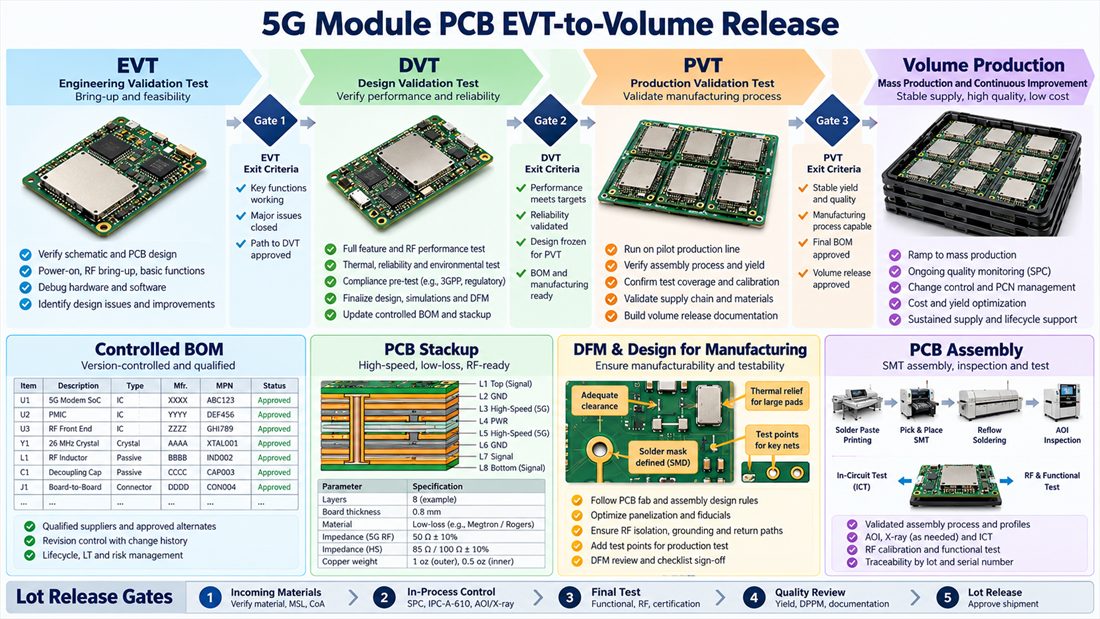
From EVT Evidence to Volume Release for a 5G Module PCB

5G module PCB production release begins when design evidence, supplier capability, and change control agree. The last ten percent of a board program is rarely a single design change. It is the point where a prototype stackup, a supplier process, a connector choice, and an enclosure must become one controlled release. For compact radio modules...
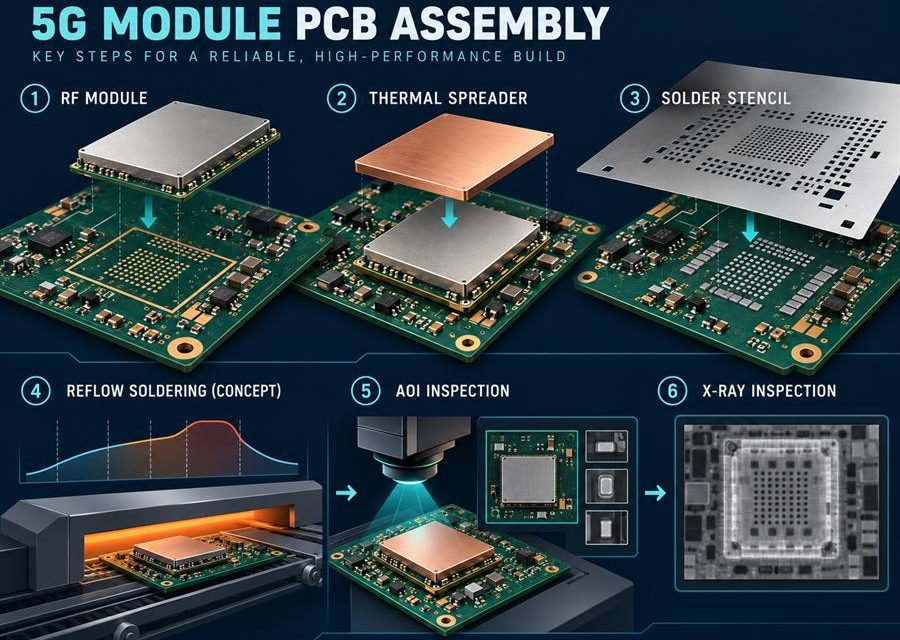
Keeping RF Performance Intact Through 5G Module PCB Assembly

5G module PCB assembly release begins by treating heat, solder, cleaning, and mechanical force as RF variables. An RF board can leave fabrication within drawing limits and still change during paste printing, reflow, shielding, cleaning, or mechanical assembly. That risk is amplified in compact radio modules used in private 5G radios, fixed-wireless units, and edge...

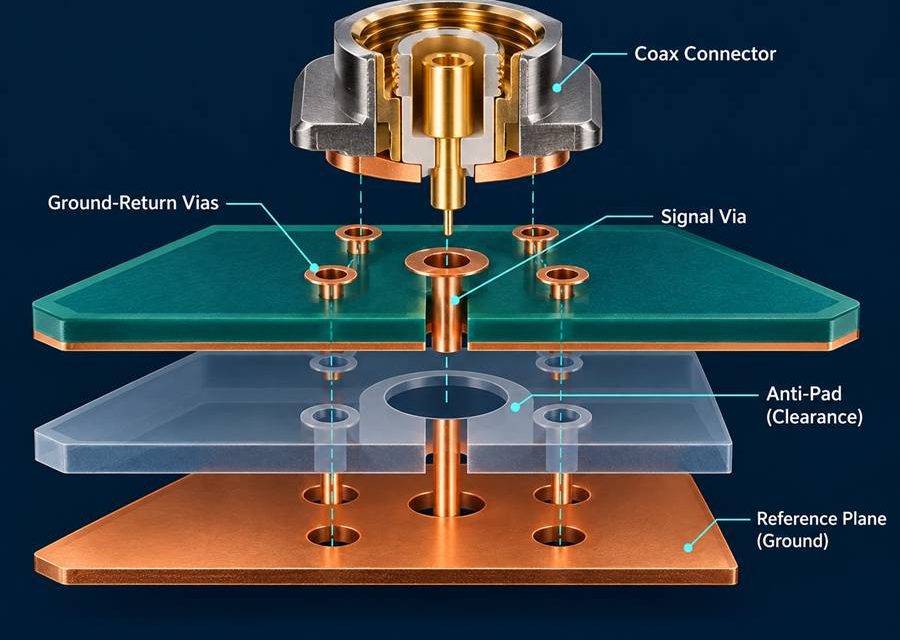
Designing Connector and Via Transitions for a 5G Module PCB Launch

5G module PCB launch design begins with a complete three-dimensional signal and return path. The boundary between a board and a connector, coax, antenna, or shield is where a clean schematic becomes a three-dimensional electromagnetic problem. In compact radio modules used in private 5G radios, fixed-wireless units, and edge gateways, that boundary can set the...

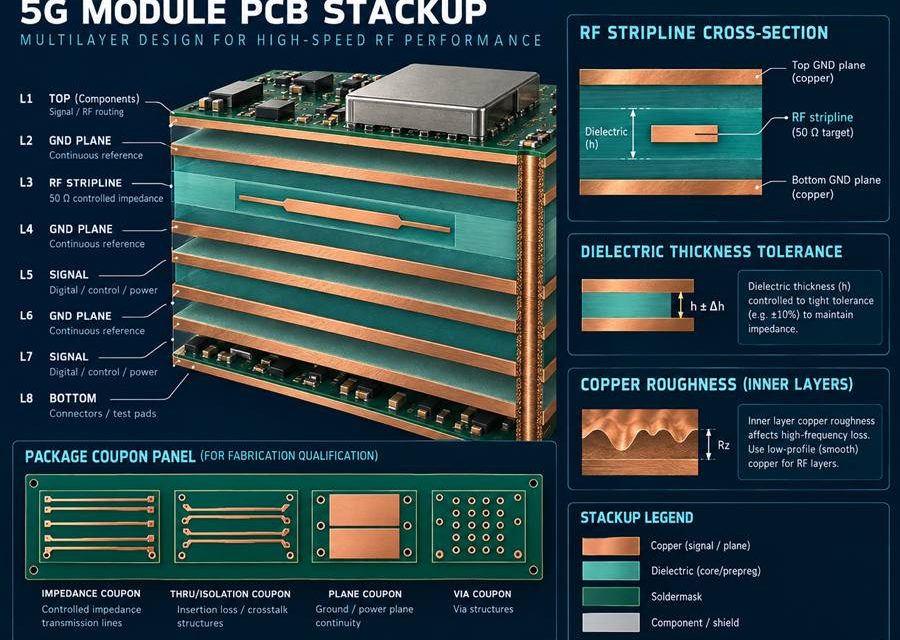
Selecting a 5G Module PCB Stackup Without Hiding the Loss Budget

5G module PCB stackup release begins by making every electromagnetic and manufacturing assumption visible. Stackup discussions fail when the drawing lists layer names but not the electromagnetic and manufacturing assumptions behind them. In compact radio modules used in private 5G radios, fixed-wireless units, and edge gateways, the board must carry RF energy, power current, high-speed...

High Current PCBs: Engineering Reliable Power Delivery for Demanding Applications

What is a High Current PCB? A High Current PCB is a printed circuit board specifically engineered to carry significant electrical current—ranging from several amperes to hundreds of amperes—without excessive heat generation, voltage drop, or reliability issues. Unlike standard PCBs, high current designs must address resistive losses (I²R), thermal buildup, and mechanical stress. If not...

High TG PCB: High Glass Transition Temperature PCB Solutions for Reliable High-Performance Electronics

Why High TG PCB Technology Matters Modern electronic systems are increasingly exposed to: Higher operating temperatures Greater power density Compact multilayer PCB integration Continuous industrial operation High-speed signal transmission Applications such as: Automotive electronics Industrial automation systems Power electronics 5G communication equipment Aerospace control systems require PCB materials capable of delivering: Excellent thermal reliability Stable...

SiC PCB: High-Power PCB Solutions for Silicon Carbide Power Electronics and EV Systems

 The Rapid Growth of SiC PCB Technology Modern power electronics are rapidly evolving toward: Higher power density Faster switching speeds Greater energy efficiency Compact power system integration High-voltage operation Applications such as: Electric vehicles Renewable energy systems Industrial automation equipment Aerospace power electronics Fast charging infrastructure increasingly rely on Silicon Carbide (SiC) power technology. Compared...

Heavy Copper PCB: High-Current and Thermal Management PCB Solutions for Power Electronics

 Why Heavy Copper PCB Technology Is Increasingly Important Modern electronic systems are rapidly demanding: Higher power density Greater current carrying capability Improved thermal reliability More compact power architectures Enhanced system durability Applications such as: Electric vehicles Industrial automation systems Renewable energy equipment Aerospace power electronics High-power communication infrastructure require PCB solutions capable of handling: High...

Alumina PCB: High Thermal Conductivity Ceramic PCB Solutions for Power Electronics and RF Applications

1.Why Alumina PCB Technology Is Important Modern electronic systems continue demanding: Higher power density Better thermal management Greater reliability Higher operating temperatures Compact electronic integration Applications such as: Power electronics Automotive systems LED lighting modules RF communication equipment Aerospace electronics generate substantial heat during operation. Traditional FR4 PCB materials often struggle with: Limited thermal conductivity...

Aluminum Nitride PCBs: High-Thermal-Performance Solutions for Advanced Electronics

An Aluminum Nitride (AlN) PCB is a printed circuit board built using aluminum nitride substrates, which provide high thermal conductivity (up to 170–200 W/m·K) and excellent electrical insulation. These properties make AlN PCBs ideal for high-power devices, RF circuits, and applications requiring efficient heat dissipation in compact layouts. AlN PCBs are commonly used in: Power...