HomeTag

Ceramic PCB - KKPCB

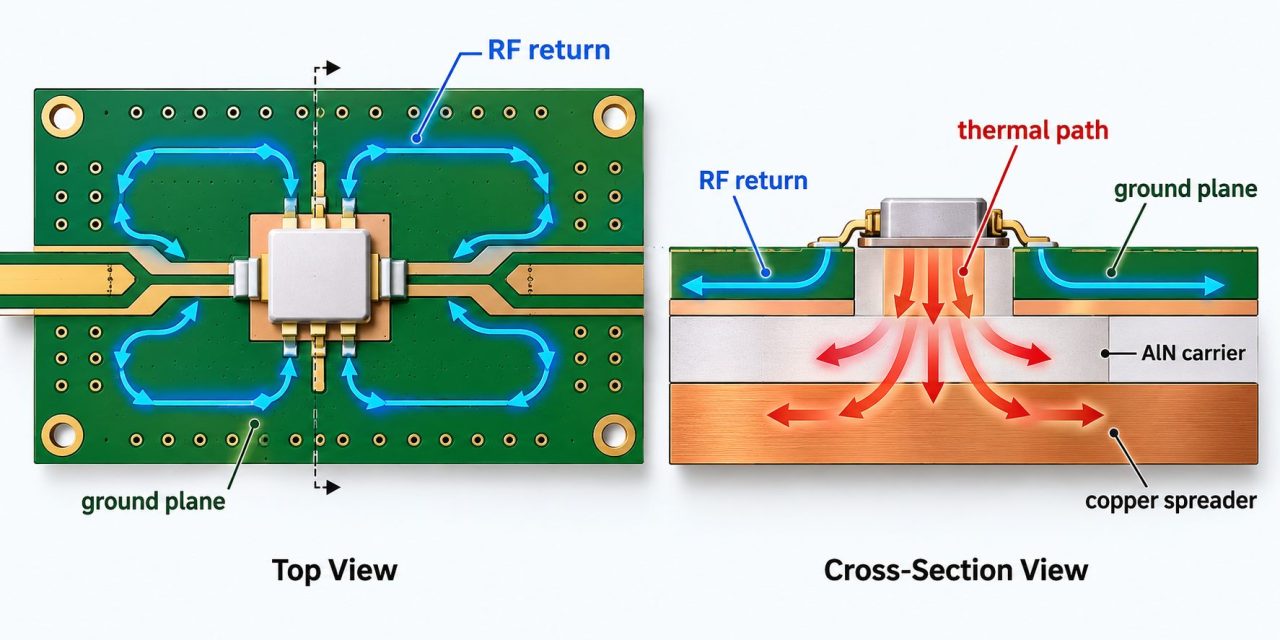
Aluminum Nitride PCB RF Power Layout: Separating Return Current from Heat Spreading

An Aluminum Nitride PCB power layout must release current return and heat through the same controlled interface before the module is approved. RF power boards built on aluminum nitride combine a low-loss electrical path with a high-conductivity thermal path, but the two paths do not always want the same copper geometry. A power island may...
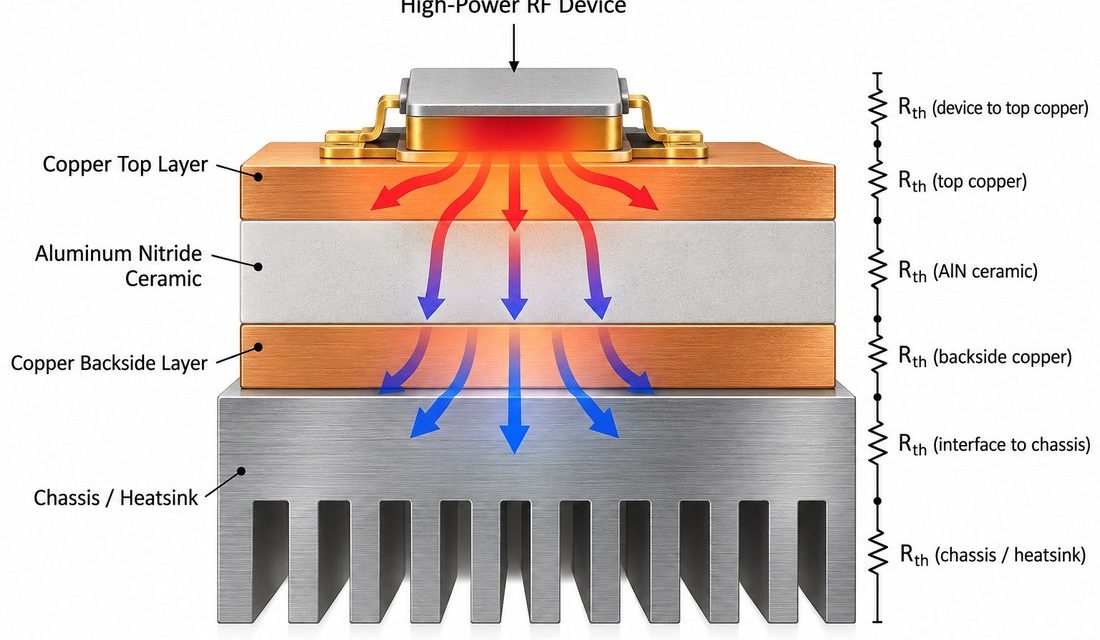
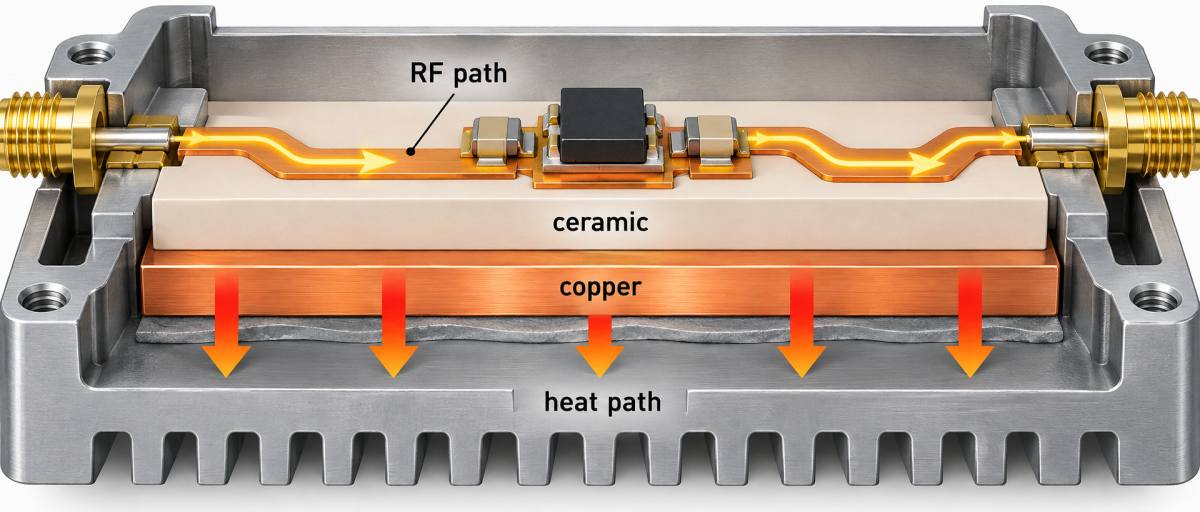
Aluminum Nitride PCB Thermal Paths for RF Power: Releasing Copper and Carrier Interfaces

A power amplifier module can have a favorable ceramic thermal value and still miss its temperature margin because the heat path is not released as a complete assembly. An Aluminum Nitride PCB shares heat and RF functions with copper, solder or braze, a carrier, and the enclosure. The project pain is usually an interface assumption:...

Ceramic PCB CTE and Moisture Decisions for Outdoor Radar and Sensor Modules

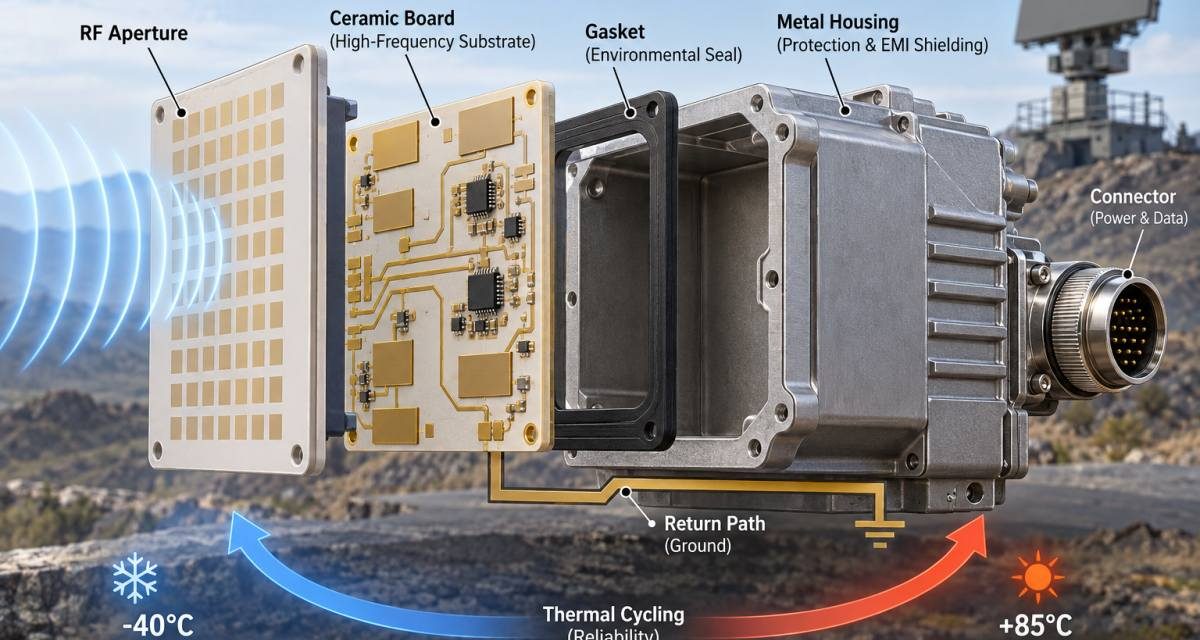
Outdoor radar and sensor hardware sees temperature swings, condensation risk, vibration, and repeated enclosure loads. A Ceramic PCB can reduce some dimensional and moisture-related uncertainty, but it does not remove the need to coordinate the ceramic, copper, seal, connector, and metal housing. The project pain appears when a material is chosen for a nominal dielectric...

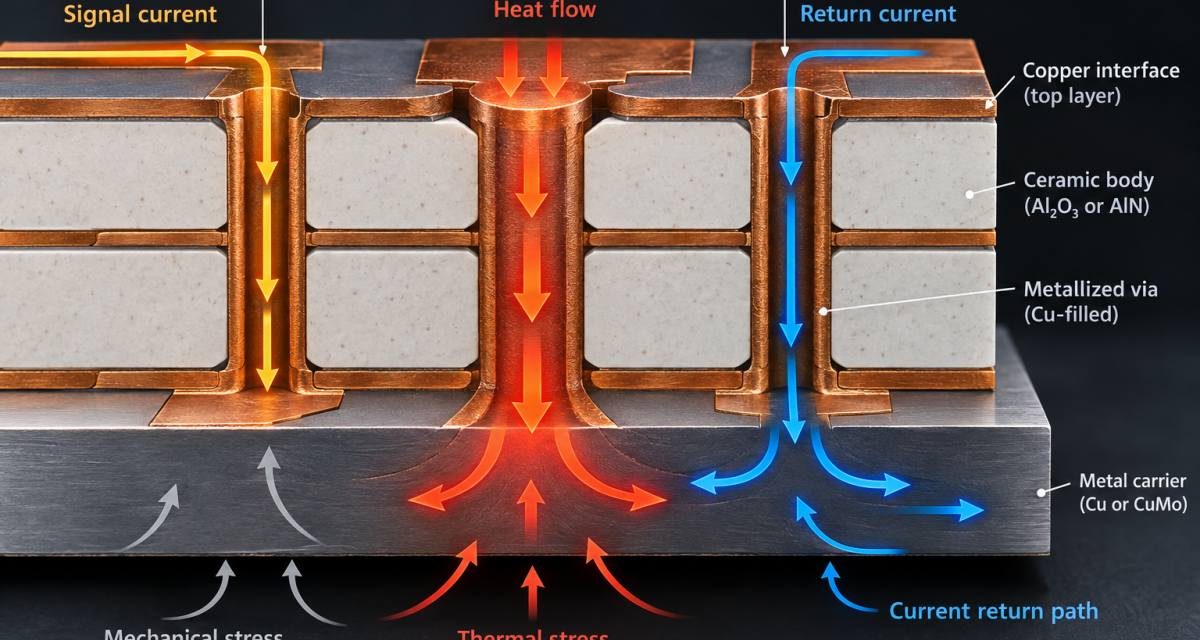
Ceramic PCB Metallization and Via Reliability: A Practical Review for RF Power Boards

A ceramic substrate can be electrically stable and thermally efficient while the interconnect still becomes the weak point. Metallization adhesion, plated or filled vias, copper thickness, and the transition to a connector or carrier all experience different mechanical strain. For a Ceramic PCB used in a power or microwave module, the correct question is not...

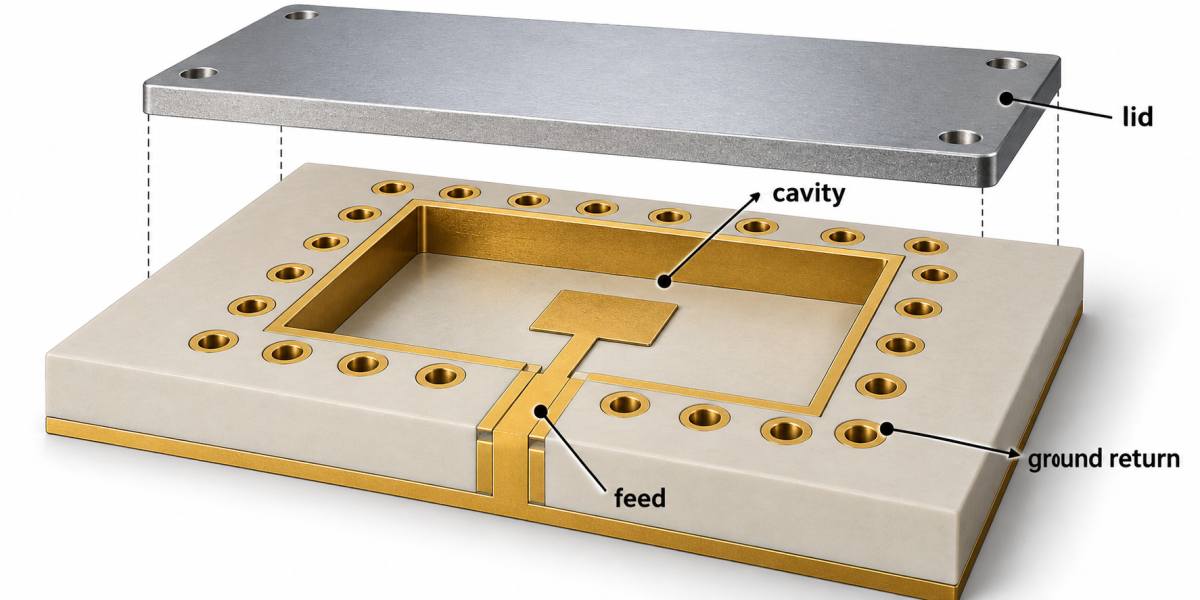
Ceramic PCB Antenna Cavities at mmWave: Controlling Geometry Before the First Build

At mmWave frequencies, the cavity, copper edge, connector launch, and antenna clearance become part of the circuit. A Ceramic PCB is often selected for its dimensional stability and integration potential, yet a cavity that is only slightly too deep or a ground fence that is interrupted by a tooling keep-out can move the resonance enough...

Ceramic PCB Thermal Interfaces for High-Power RF Modules: A Release Review

A high-power RF module can meet its electrical target and still fail in the field because the heat path was never released as a complete system. A Ceramic PCB changes the design conversation: the ceramic substrate, copper pattern, attach method, via or metallized interface, and the enclosure all share the same thermal boundary. The project...

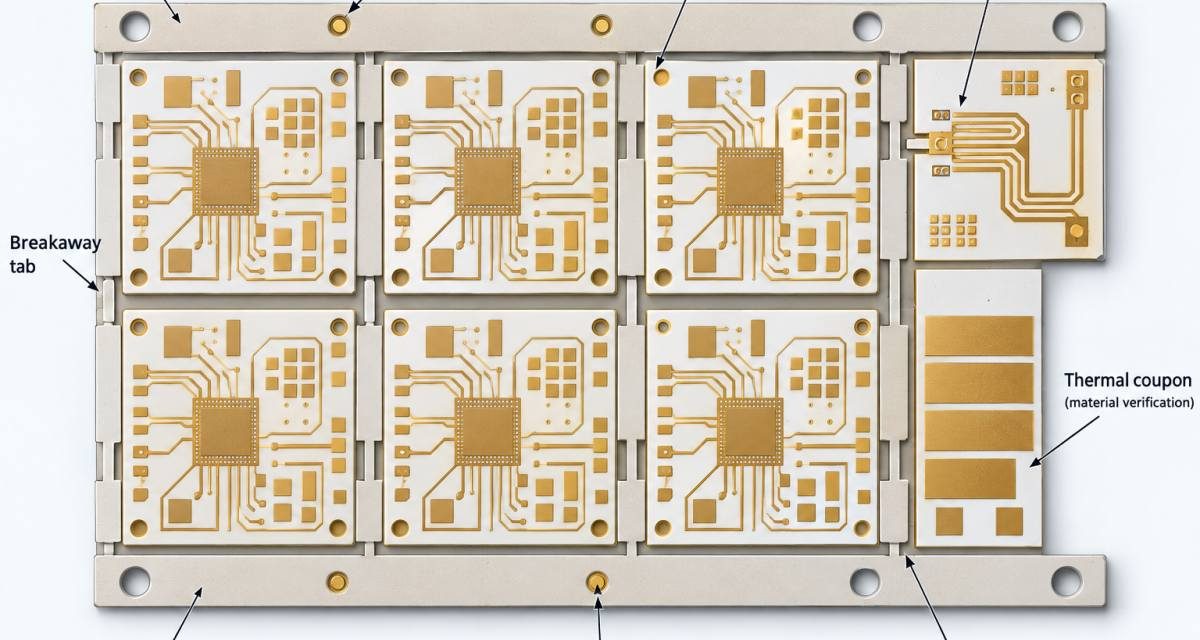
Ceramic PCB DFM and Procurement Release: Avoiding First-Build Surprises

Ceramic PCB programs often move from concept to purchase order faster than the manufacturing package matures. The layout may be complete, but the supplier still lacks a defined panel, edge condition, metallization note, inspection plan, or approved substitute rule. That gap creates schedule risk because a ceramic panel is not interchangeable with a conventional laminate...

Alumina PCB: High Thermal Conductivity Ceramic PCB Solutions for Power Electronics and RF Applications

1.Why Alumina PCB Technology Is Important Modern electronic systems continue demanding: Higher power density Better thermal management Greater reliability Higher operating temperatures Compact electronic integration Applications such as: Power electronics Automotive systems LED lighting modules RF communication equipment Aerospace electronics generate substantial heat during operation. Traditional FR4 PCB materials often struggle with: Limited thermal conductivity...

Satellite PCB: High-Reliability PCB Design for Space and Satellite Communication Systems

1. Introduction: The Role of Satellite PCB in Space Technology Satellite systems operate in one of the most extreme environments in engineering, including: Vacuum conditions Extreme temperature cycling High radiation exposure Long-term mission lifetimes without maintenance Because of these conditions, Satellite PCB design must meet extremely strict reliability, thermal, and electrical performance requirements. Modern satellite...

Ceramic PCB: High Thermal Conductivity Solutions for Power Electronics & LED Applications

What is a Ceramic PCB? A Ceramic PCB is a type of printed circuit board that uses ceramic materials as the substrate instead of traditional FR4. These materials provide exceptional thermal conductivity, electrical insulation, and mechanical stability, making them ideal for high-power and high-temperature applications. Unlike standard PCBs, ceramic boards can efficiently dissipate heat directly...