HomeTag

aerospace PCB - KKPCB

When EEE Parts Reach End of Life, Aerospace PCB Revision Control Matters

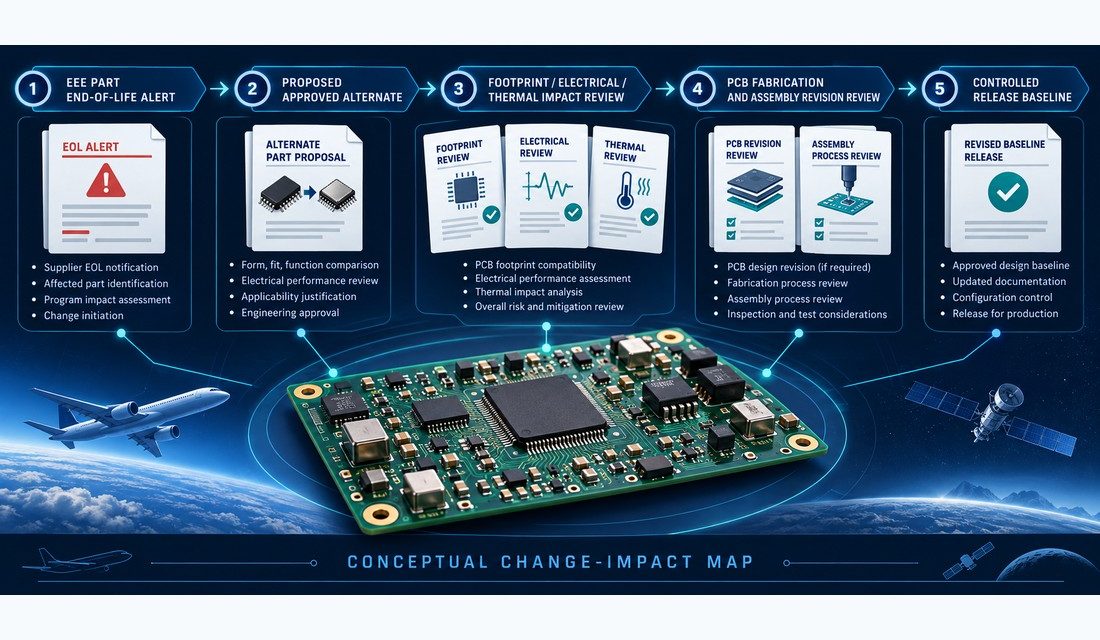
Aerospace PCB revision control for long-life programs begins before a substitute part reaches production. Risk appears when a component reaches end of life, procurement proposes an alternate, and the electrical design, land pattern, fabrication files, assembly instructions, and verification baseline no longer describe the same hardware. A Aerospace PCB release therefore needs a controlled change...
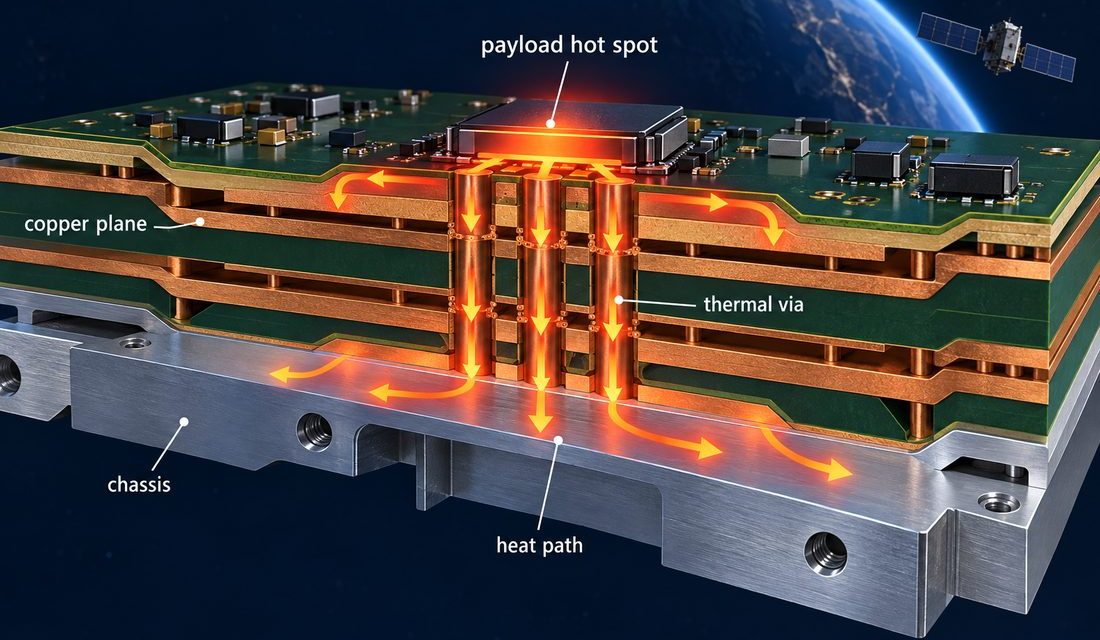
Satellite PCB Thermal Drift: Managing CTE, Copper Density, and Chassis Interfaces

Satellite PCB thermal drift becomes a mission risk when a board is treated as a flat electrical drawing instead of a constrained mechanical and thermal assembly. A payload can meet its schematic targets and still show connector strain, oscillator frequency movement, or intermittent solder fatigue after repeated hot-cold transitions. This Satellite PCB thermal drift problem...

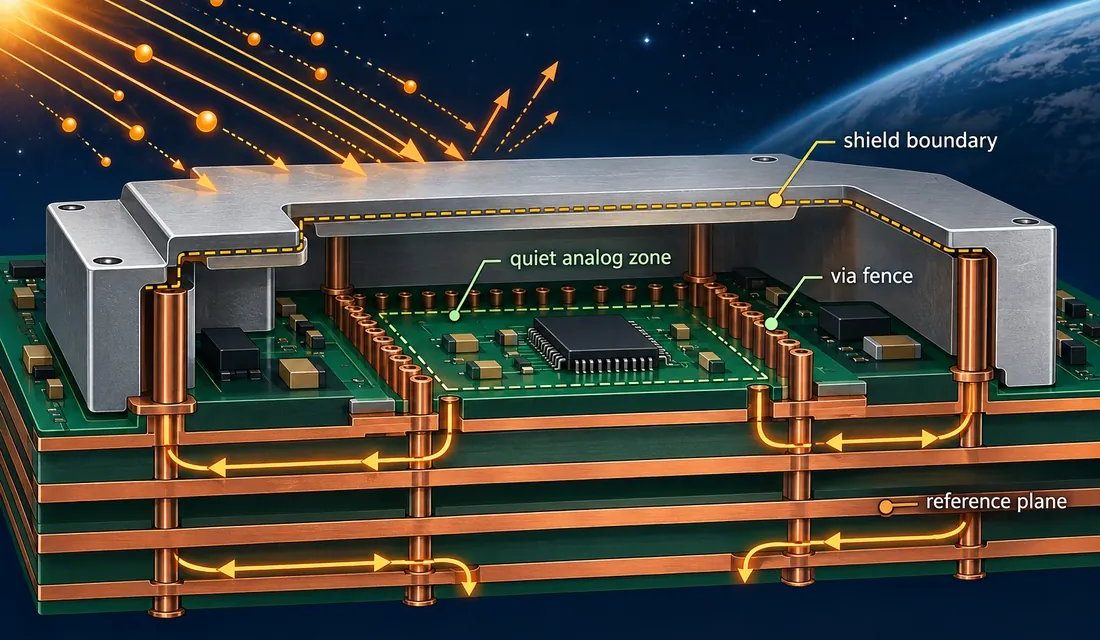
Satellite PCB Radiation Design for LEO Avionics: Dielectrics, Planes, and Shielded Returns

Satellite PCB radiation design for low-Earth-orbit avionics is often reviewed too late as a materials choice. The difficult question is not whether a board can route a signal; it is whether the dielectric, copper stack, enclosure bond, and return current still behave predictably after radiation exposure, thermal cycling, launch handling, and repeated engineering changes. A...

Aerospace PCB Rigid-Flex Bend Zones: Protect Copper and Connector Interfaces

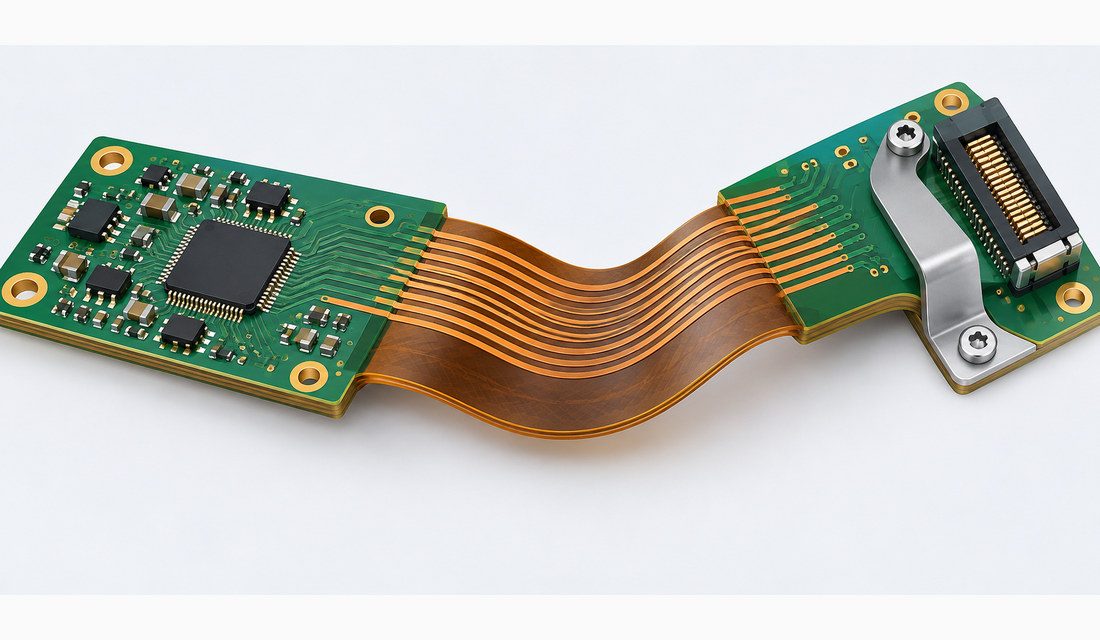
Aerospace PCB rigid-flex can remove a cable, reduce assembly volume, and simplify an avionics package, but it also moves risk into the board’s flex zone. The design can pass electrical checkout and still develop intermittent opens after deployment if the bend is treated as a packaging convenience rather than a controlled mechanical feature. For an...

Aerospace PCB RF Phase Stability: Practical AD9361 Clock Review

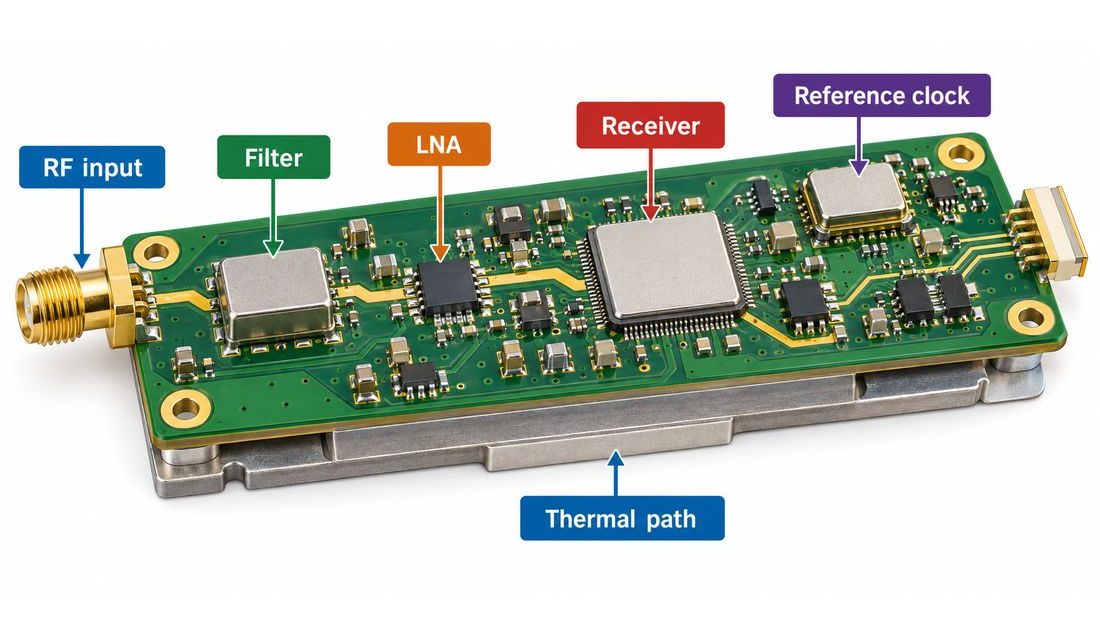
An Aerospace PCB for a navigation receiver must prevent small phase changes from becoming timing, bearing, or coherent-combining errors long before the board shows an obvious electrical failure. Engineers searching for an Aerospace PCB phase-stability solution should begin by separating clock behavior, RF path mismatch, thermal gradients, and calibration repeatability. The board cannot correct an...

Aerospace PCB Connector Grounding: Where the Board, Backshell, and Chassis Meet

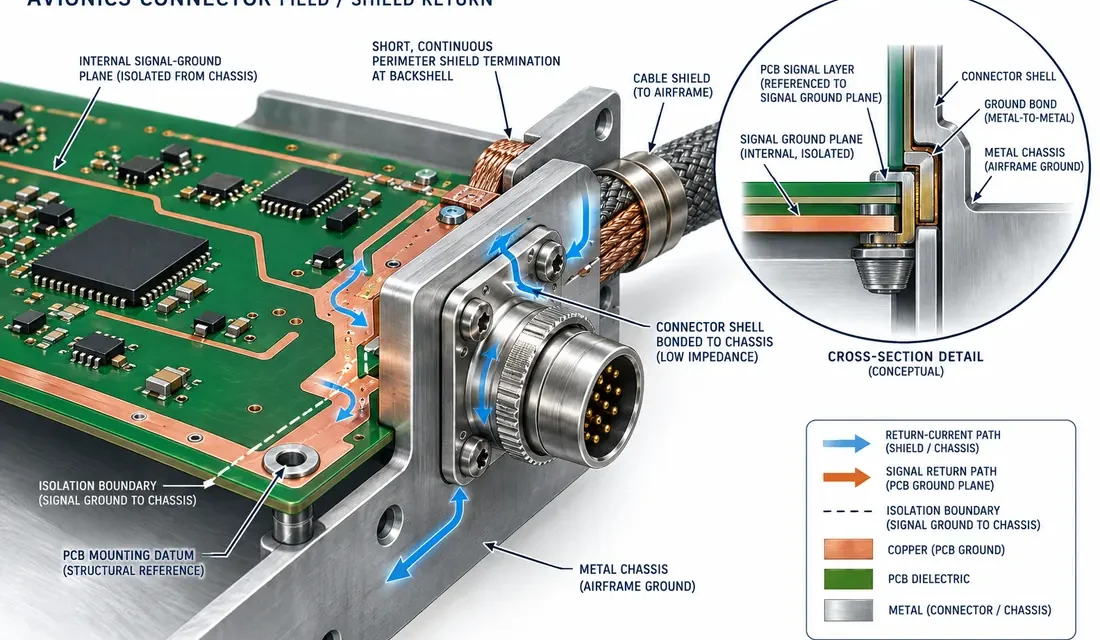
In an aircraft or spacecraft avionics bay, a connector is not merely a mechanical boundary. It is where fast edge currents, cable shields, PCB reference planes, enclosure metal, and installation tolerances meet. A board can pass a schematic review yet radiate or pick up interference after integration because the signal return is forced through a...

Aerospace PCB Design for FPGA Flight Computers: Stackup, PDN, and Return-Path Tradeoffs

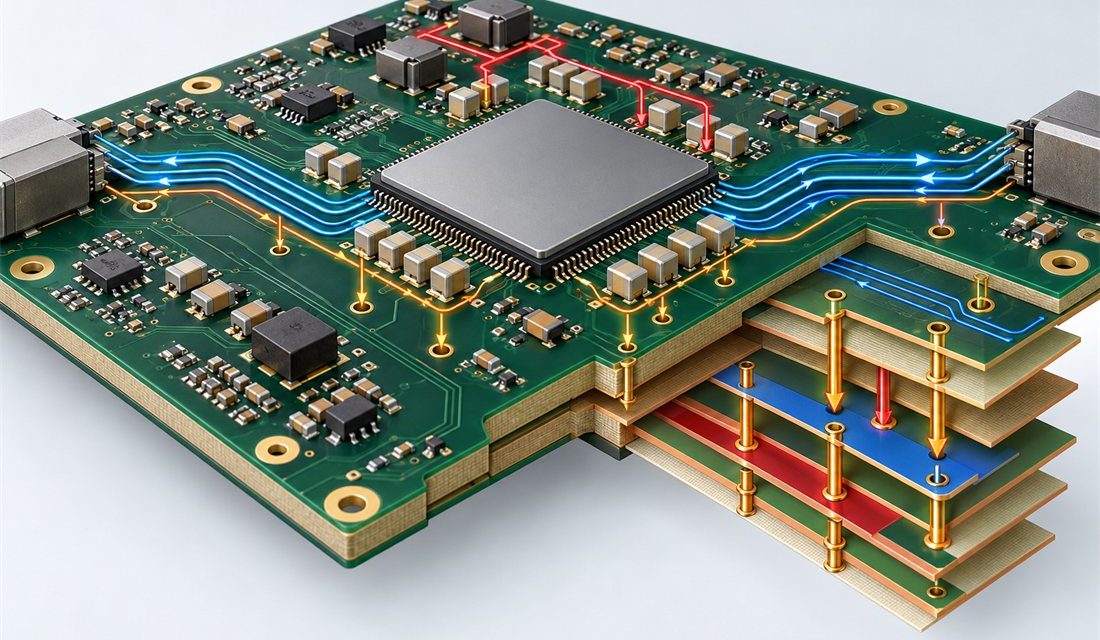
Table of Contents Why a flight-computer board needs an SI/PI-first layout study Build the stackup around the package escape and power loop Translate FPGA load steps into a PDN verification plan Protect high-speed returns through connectors and board boundaries Make the mechanical and manufacturing boundary explicit Use release evidence that survives a late component or...

Duroid 6010 PCB: High-Dielectric RF PCB Solutions for Microwave, Radar, and Aerospace Applications

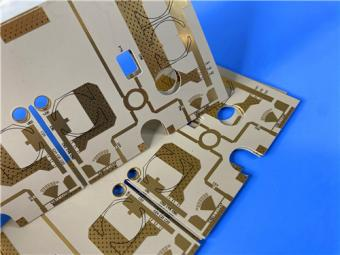
Why Duroid 6010 PCB Technology Is Important Modern RF and microwave systems are rapidly evolving toward: Higher operating frequencies Compact antenna integration Advanced radar systems High-density RF modules Miniaturized microwave electronics Applications such as: Aerospace communication systems Automotive radar platforms Satellite communication equipment Military RF electronics Microwave sensing systems require PCB materials capable of delivering:...

Duroid 5880 PCB: Ultra-Low-Loss High-Frequency PCB Solutions for RF and Microwave Applications

 Why Duroid 5880 PCB Technology Is Widely Used As modern electronic systems continue evolving toward: Higher operating frequencies Faster wireless communication Greater bandwidth capability Low-latency networking Advanced radar systems PCB materials must provide: Extremely low signal loss Stable dielectric performance Excellent RF transmission quality Reliable high-frequency stability Applications such as: Aerospace communication systems Automotive radar...

Satellite PCB: High-Reliability PCB Solutions for Aerospace and Space Communication Systems

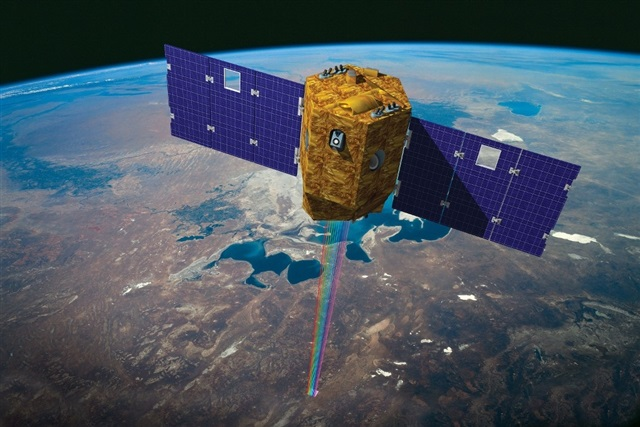
The Growing Importance of Satellite PCB Technology Modern satellite and aerospace systems are rapidly advancing toward: High-speed space communication Global satellite networking Deep-space exploration AI-powered aerospace systems High-frequency radar and sensing platforms Satellite electronics now support: Navigation systems RF communication payloads Earth observation platforms Aerospace control systems Military communication networks These complex systems require highly...