HomeTag

Aluminum Nitride PCB - KKPCB

Aluminum Nitride PCB Inverter Modules: DFM, Panel Handling, and Production Release Controls

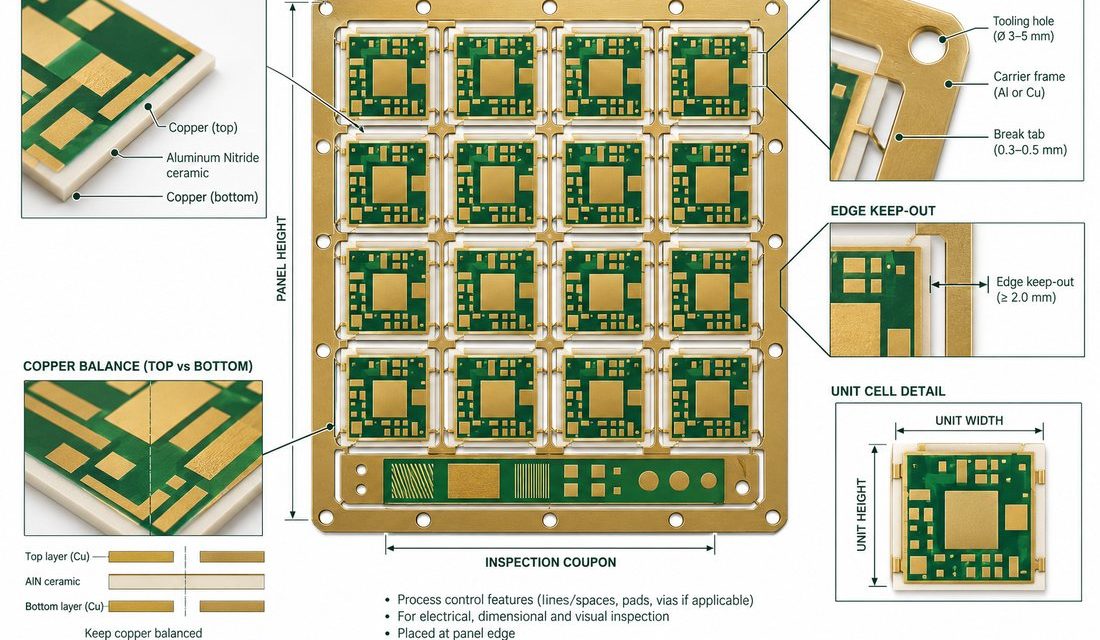
An Aluminum Nitride PCB inverter module release should connect panel handling, copper interfaces, and inspection evidence before production volume is authorized. Inverter modules expose the difference between a ceramic concept and a repeatable production process. Heavy copper, AlN substrate, switching devices, isolation clearances, carrier support, and inspection access all compete for the same panel area....
Aluminum Nitride PCB for mmWave Sensor Carriers: Geometry, Return Paths, and Thermal Margins

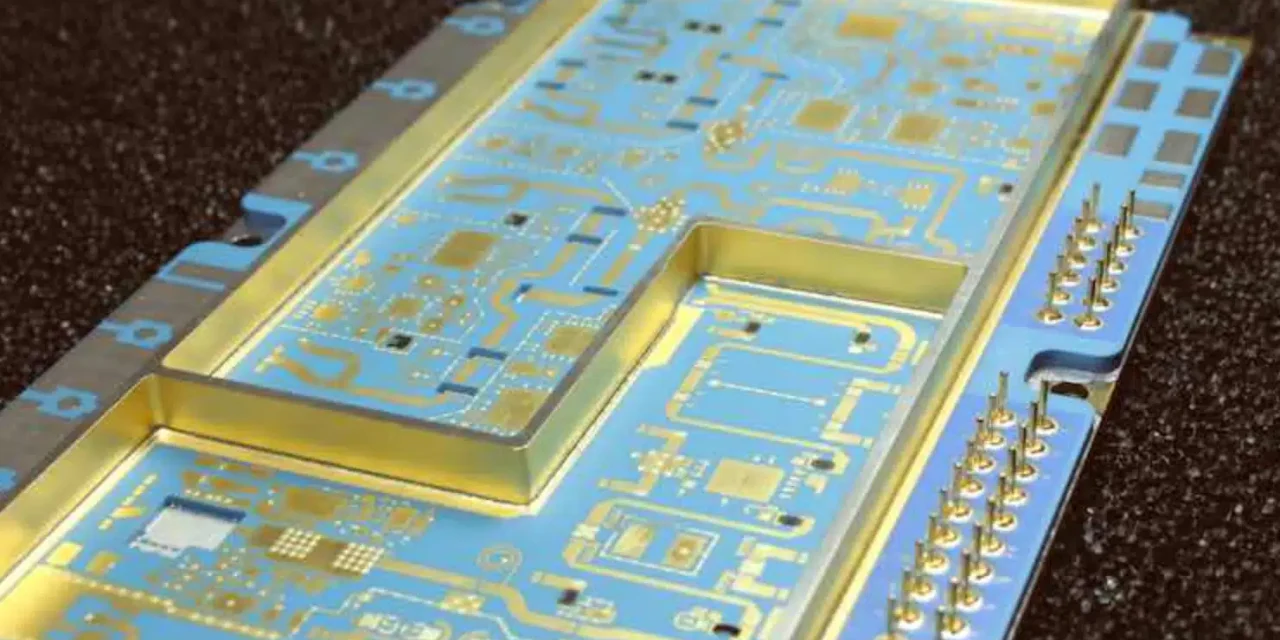
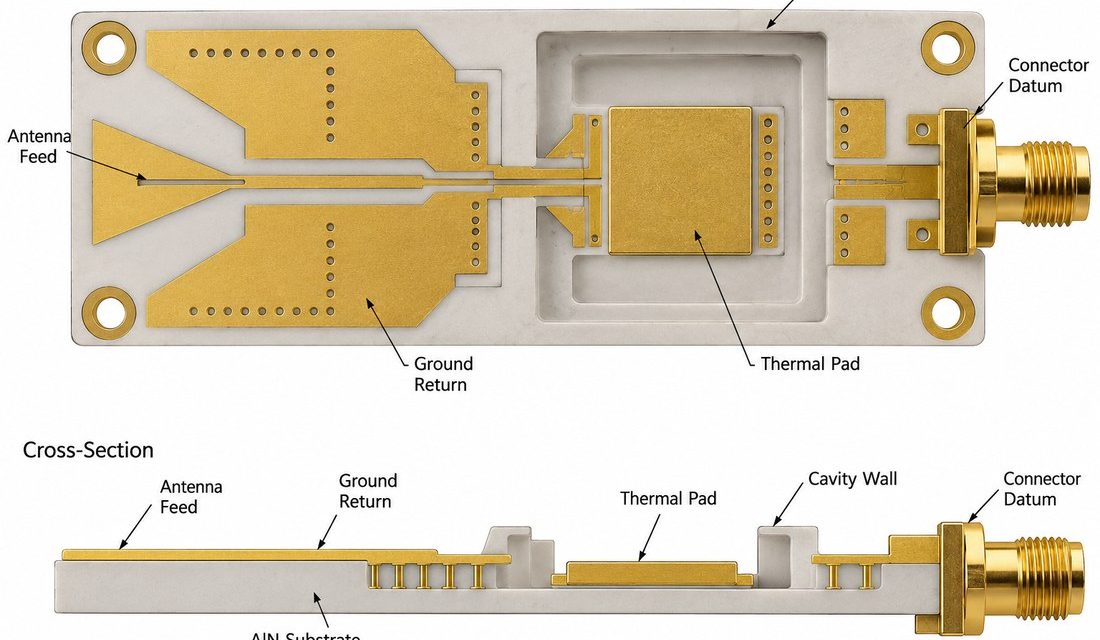
An Aluminum Nitride PCB sensor carrier must keep package geometry, RF return, and thermal margin visible in one controlled interface drawing. An mmWave sensor carrier must keep the feed geometry stable while moving heat away from the active device and preserving the enclosure datum. Aluminum nitride can support that combination, yet the first build can...

Aluminum Nitride PCB Direct-Bond Copper: Metallization and Via Reliability Before Qualification

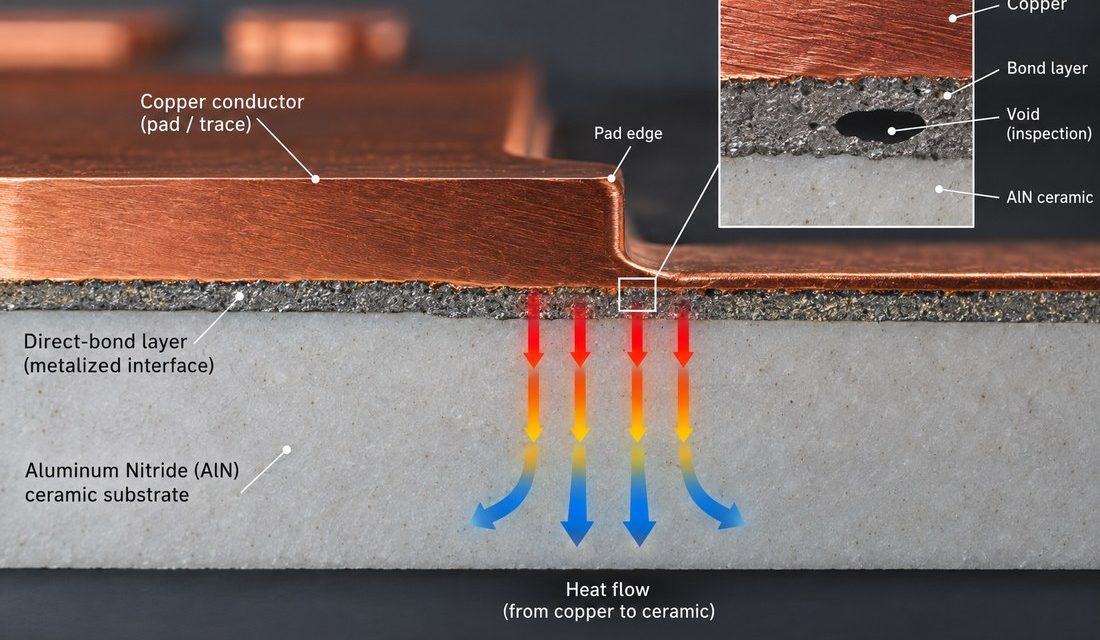
An Aluminum Nitride PCB direct-bond copper release needs a controlled metallization edge, via transition, and inspection record before qualification. Direct-bond copper can deliver a low-resistance thermal and electrical interface on aluminum nitride, but its edge, adhesion, and transition features must survive the same thermal history as the product. A qualification coupon that omits the heavy...

Aluminum Nitride PCB RF Power Layout: Separating Return Current from Heat Spreading

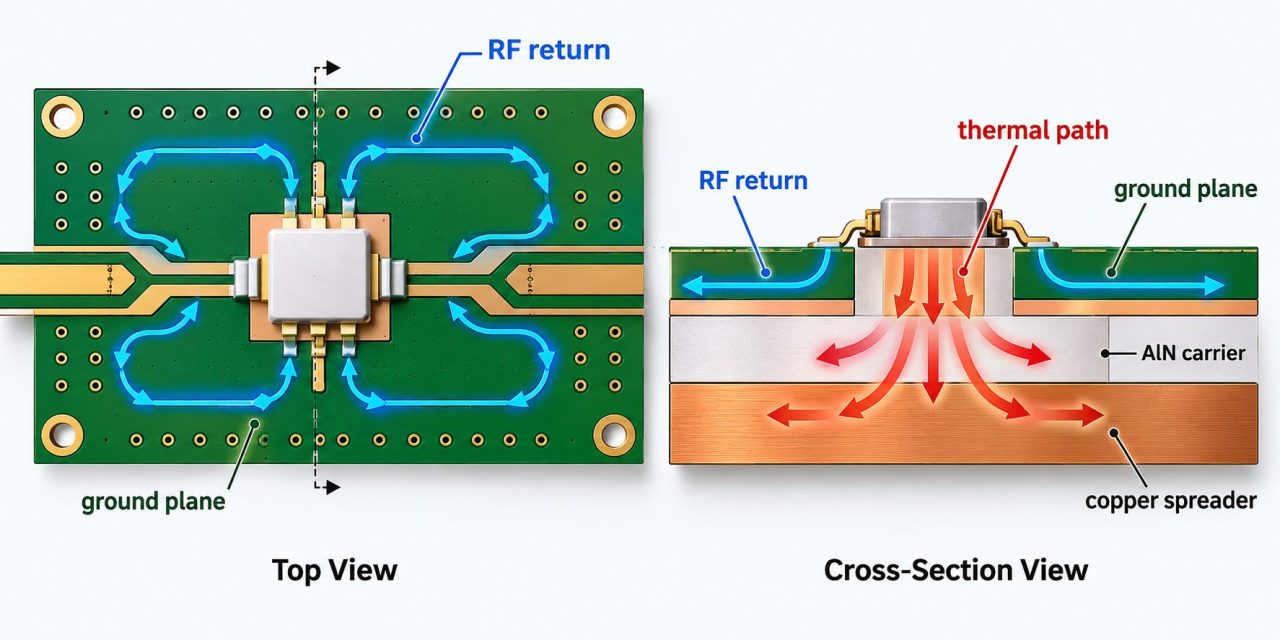
An Aluminum Nitride PCB power layout must release current return and heat through the same controlled interface before the module is approved. RF power boards built on aluminum nitride combine a low-loss electrical path with a high-conductivity thermal path, but the two paths do not always want the same copper geometry. A power island may...

Aluminum Nitride PCB Thermal Paths for RF Power: Releasing Copper and Carrier Interfaces

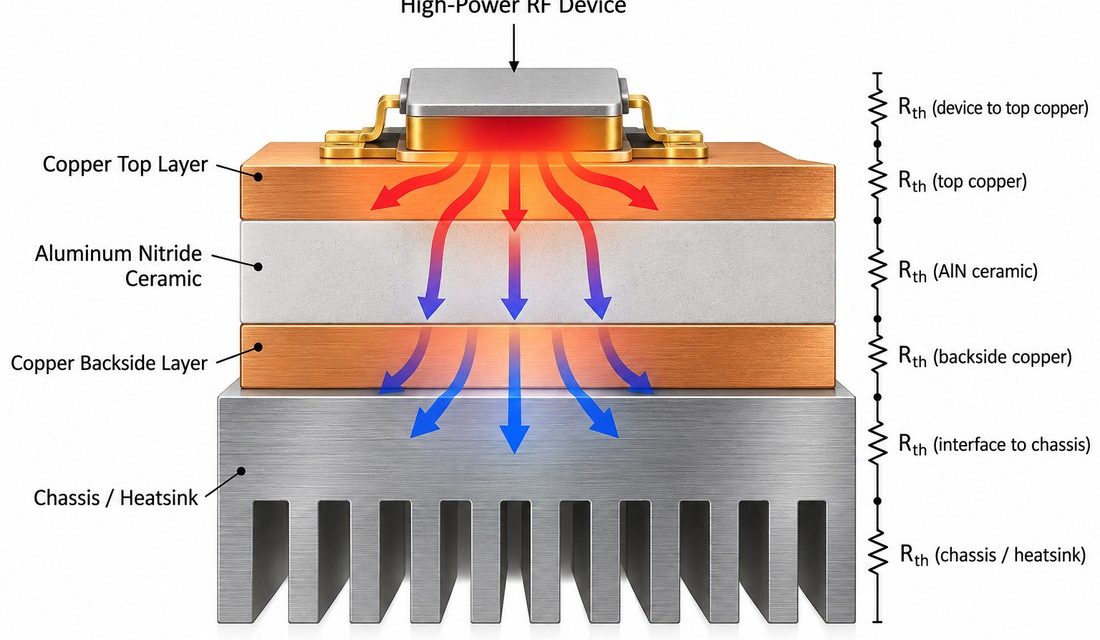
A power amplifier module can have a favorable ceramic thermal value and still miss its temperature margin because the heat path is not released as a complete assembly. An Aluminum Nitride PCB shares heat and RF functions with copper, solder or braze, a carrier, and the enclosure. The project pain is usually an interface assumption:...

Ceramic PCB: High Thermal Performance Solutions for Advanced Electronics

What Is a Ceramic PCB? A Ceramic PCB is a high-performance thermal PCB built on a ceramic substrate, designed for applications requiring efficient heat dissipation, electrical insulation, and high reliability. Unlike standard FR-4 or metal-core PCBs, a ceramic PCB uses materials such as: Aluminum Oxide (Al₂O₃) Aluminum Nitride (AlN) Beryllium Oxide (BeO) These ceramic substrates...

Aluminum Nitride PCBs: High-Thermal-Performance Solutions for Advanced Electronics

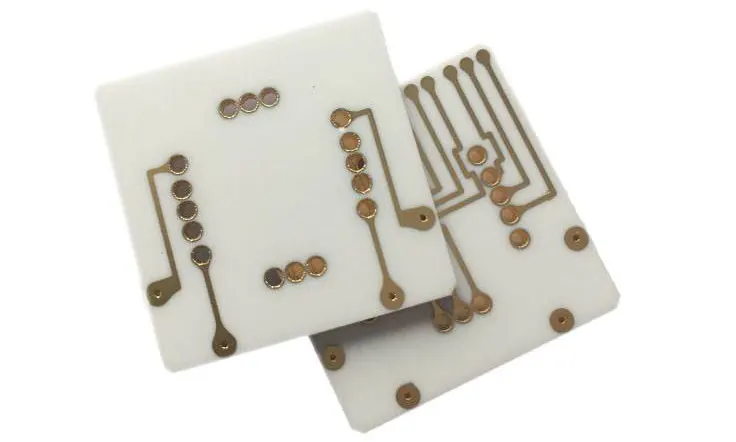
An Aluminum Nitride (AlN) PCB is a printed circuit board built using aluminum nitride substrates, which provide high thermal conductivity (up to 170–200 W/m·K) and excellent electrical insulation. These properties make AlN PCBs ideal for high-power devices, RF circuits, and applications requiring efficient heat dissipation in compact layouts. AlN PCBs are commonly used in: Power...

Ceramic PCBs: Optimized for High-Power and High-Frequency Applications

What is a Ceramic PCB? A Ceramic PCB is a printed circuit board built using ceramic substrates like alumina (Al₂O₃), aluminum nitride (AlN), or silicon nitride (Si₃N₄) instead of standard FR-4 or PTFE materials. These substrates are thermally conductive, electrically insulating, and mechanically robust, making them ideal for high-power electronics and RF/microwave applications. Ceramic PCBs...

Aluminum Nitride PCB: High-Thermal-Conductivity Solutions for Advanced Electronics

As electronic devices become more powerful and compact, heat management has become a critical design consideration. Aluminum Nitride (AlN) PCBs offer exceptional thermal conductivity, electrical insulation, and mechanical stability, making them the ideal choice for high-power modules, RF circuits, and industrial electronics. Unlike traditional FR4 or even standard ceramic PCBs, Aluminum Nitride PCBs efficiently dissipate...

Ceramic PCB: High Thermal Conductivity Solutions for Advanced Electronics

As electronic devices become more powerful and compact, effective heat dissipation has become one of the most critical challenges in PCB design. Ceramic PCBs provide a high-performance solution by combining excellent thermal conductivity with strong electrical insulation. Compared with traditional fiberglass-based circuit boards, ceramic substrates allow electronic systems to operate at higher power levels while...