HomeTag

PCB Design - KKPCB

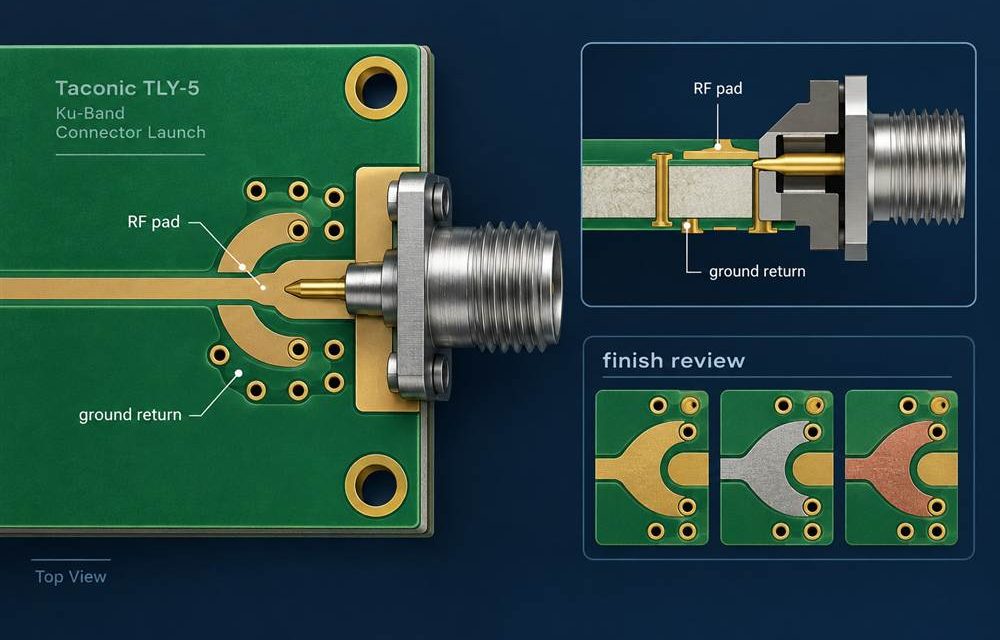
Taconic TLY-5 PCB for Ku-Band Antennas: Managing Phase Stability from Stackup to Launch

Table of Contents Why phase stability starts with the board stackup Translate antenna geometry into a manufacturable launch Control copper, mask, and reference-plane variation Release a verification package for production Ku-band antenna programs rarely fail because the laminate name was absent from the drawing. They fail when a small change in dielectric height, copper profile,...
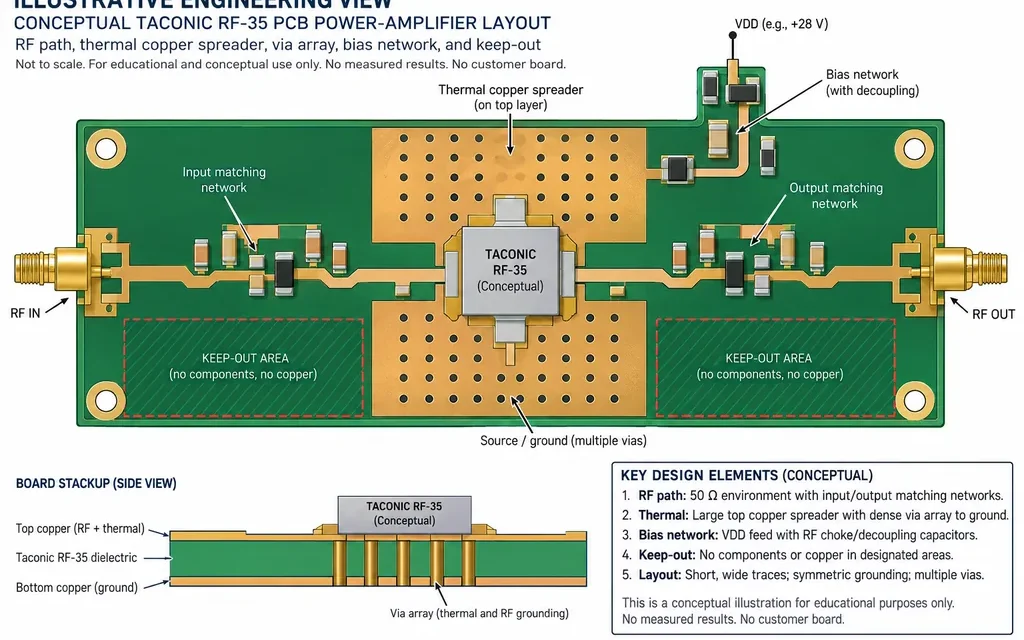
Taconic RF-35 PCB Power Amplifier Layout: A Robust Heat-Spreading Path That Protects RF Tuning

Taconic RF-35 PCB power amplifier thermal work must preserve two things at once: the device must shed heat, and the RF path must keep its intended impedance and return current. The common project failure is a late copper pour or thermal-via change that improves a temperature estimate but shifts the launch, bias isolation, or local...

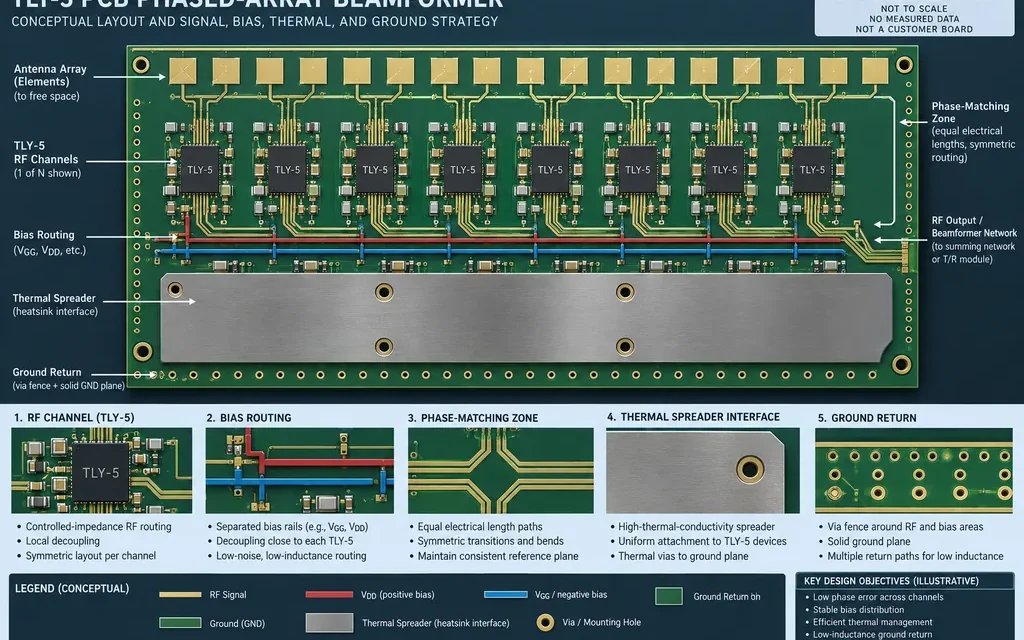
TLY-5 PCB in Phased-Array Beamformers: A Thermal and Bias-Routing Strategy

TLY-5 PCB beamformer thermal design is a coupled RF and power problem. In a phased array, each channel must preserve phase while bias networks, power amplifiers, control lines, and heat paths share a compact multilayer board. The engineering risk is not simply a hot spot; it is a hot spot that changes dielectric geometry, connector...

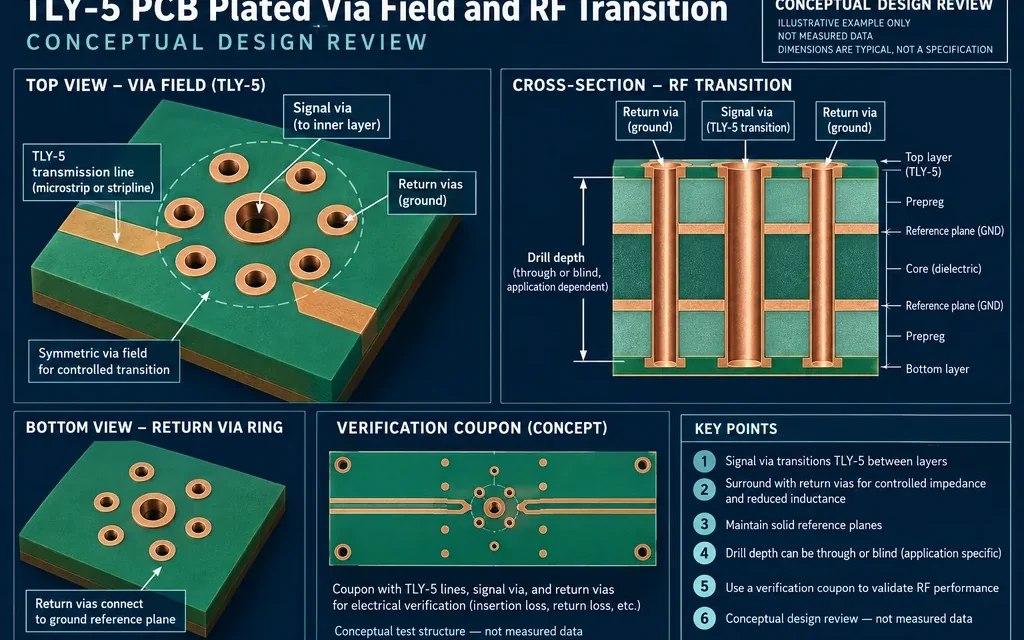
TLY-5 PCB Via Fields: Designing Plated Transitions Without Tuning Away the Real Problem

A TLY-5 PCB via field is not a cosmetic layout detail in a Ku-band module. The plated transition decides where the return current closes, how much barrel remains beyond the active layer, and whether the connector launch modeled by the RF team still represents the finished board. When this is released late, the first prototype...

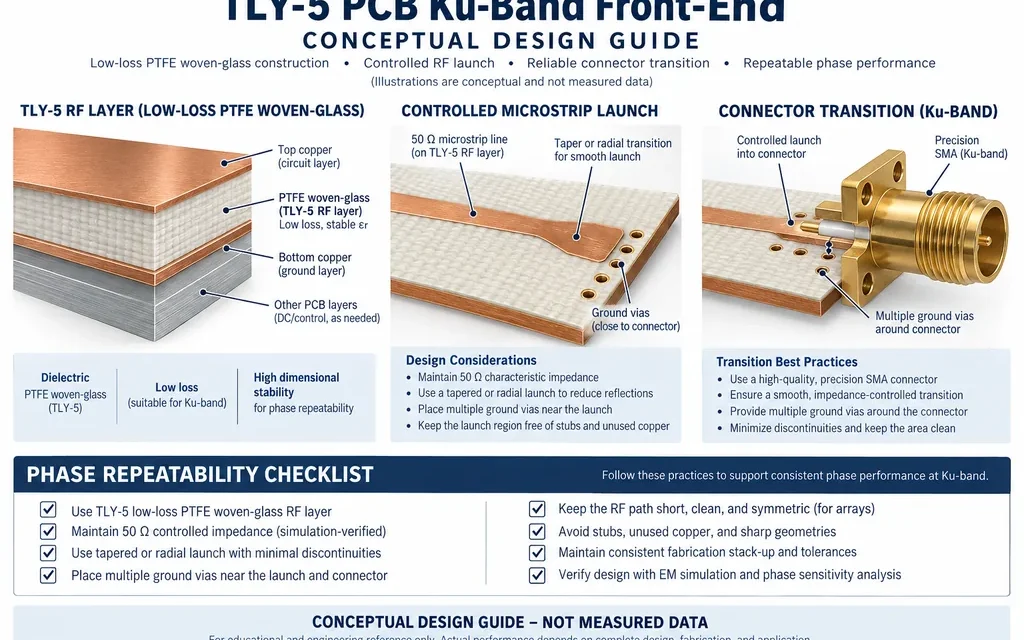
TLY-5 PCB for Ku-Band Front Ends: Managing Copper Roughness and Phase Repeatability

Ku-band TLY-5 PCB projects need a finished-board reference, not only a laminate name. Table of Contents Finished-board sensitivity Copper roughness Connector launch Phase repeatability Manufacturing handoff Release checklist TLY-5 PCB is often selected for a Ku-band front end because the laminate combines a low nominal dielectric constant with low dielectric loss. The difficult part is...

High Layer Count PCBs: Design Challenges and Manufacturing Solutions

High Layer Count PCBs (printed circuit boards with 8 layers or more) have become a cornerstone in advanced electronics design. From telecommunications and medical devices to automotive and aerospace systems, these boards allow engineers to pack more functionality into smaller footprints while maintaining high performance. However, as layer counts increase, both design and manufacturing complexities...

PTFE PCB: High-Frequency, Low-Loss Solutions for Advanced Electronics

As modern electronics demand faster data rates and higher frequencies, maintaining signal integrity becomes critical. PTFE PCBs (Polytetrafluoroethylene-based printed circuit boards) are specialized boards designed for low-loss, high-frequency, and microwave applications, making them indispensable in RF communication, satellite, 5G, and high-speed digital systems. PTFE’s low dielectric constant, minimal dissipation factor, and excellent thermal stability ensure...

Signal Integrity PCB: Ensuring Reliable High-Speed Performance

As electronic devices become faster and more complex, maintaining the quality of electrical signals on a PCB is critical. Signal Integrity PCBs are designed to preserve signal quality, minimize noise, and reduce data errors in high-speed circuits. Proper design and manufacturing of these boards are essential for reliable high-performance electronics, from telecommunications and computing to...

High Current PCB: Designing for Power and Reliability

Modern electronics often require boards capable of handling high currents safely and efficiently. High Current PCBs are specially designed to manage large amounts of electrical current while maintaining thermal stability, signal integrity, and mechanical reliability. These PCBs are widely used in power electronics, automotive systems, industrial machinery, and energy storage applications. What is a High...

Microvia PCB: The Ultimate Solution for HDI and High-Speed PCB Designs

In today’s rapidly evolving electronics market, devices are becoming smaller, faster, and more complex. To meet these demands, Microvia PCBs have become a critical solution in HDI PCB and high-speed PCB design. Microvias are extremely small vias that create precise interlayer connections, allowing for high-density routing, improved signal integrity, and reliable performance in modern electronic...