PCB Assembly (PCBA) Services | Turnkey Solutions - KKPCB
 
HomeCategory

PCB Assembly (PCBA) Services | Turnkey Solutions - KKPCB

SMT PCB Assembly: A Comprehensive Guide

Have you ever wondered how our gadgets have become so powerful yet so compact? The secret lies in a manufacturing marvel: Surface Mount Technology (SMT) for PCB assembly. In this guide, we’ll break down the essentials of SMT PCB assembly, why it’s the go-to method for modern electronics, and how it’s shaping the tech we rely on...

Advantages and Disadvantages of Surface Mount Technology (SMT)

The Importance of SMT in Modern PCB Assembly In modern electronics manufacturing, Surface Mount Technology (SMT) has become the dominant method for PCB assembly. By enabling compact designs and high-speed production, SMT PCB assembly plays a critical role in industries such as consumer electronics, automotive systems, and communication technology. However, like any PCB assembly technology,...

What is SMT? A Primer on Surface Mount Technology

Surface Mount Technology (SMT) has revolutionized the electronics industry by enabling compact, efficient, and cost-effective PCB assembly. Today, nearly all commercially manufactured electronic devices utilize SMT for its ability to pack more functionality into smaller spaces and improve manufacturing processes through automation. This guide provides a comprehensive overview of SMT, its evolution, benefits, challenges, and applications....

Overview of SMD Components and Their Characteristics

Introduction: The Importance of SMD Components in Modern Electronics In today’s electronics manufacturing industry, SMD components (Surface Mount Device components) are the foundation of modern SMT PCB assembly. As electronic products move toward miniaturization, high performance, and high-density integration, SMD components have become essential in nearly all PCB assembly processes. Understanding the characteristics of SMD...

Rigid PCB vs Flexible PCB: A Comprehensive Comparison

PCBs (Printed Circuit Boards) are essential in nearly every electronic device, forming the backbone of circuit design and functionality. They come in several forms, including rigid, flexible, and rigid-flex. In this article, we’ll explore the differences between rigid and flexible PCBs, their materials, costs, advantages, and disadvantages. What is a Rigid PCB? A rigid PCB is a solid,...

Printed Circuit Board Assembly (PCBA) – Process, Techniques, Tips, and Tools

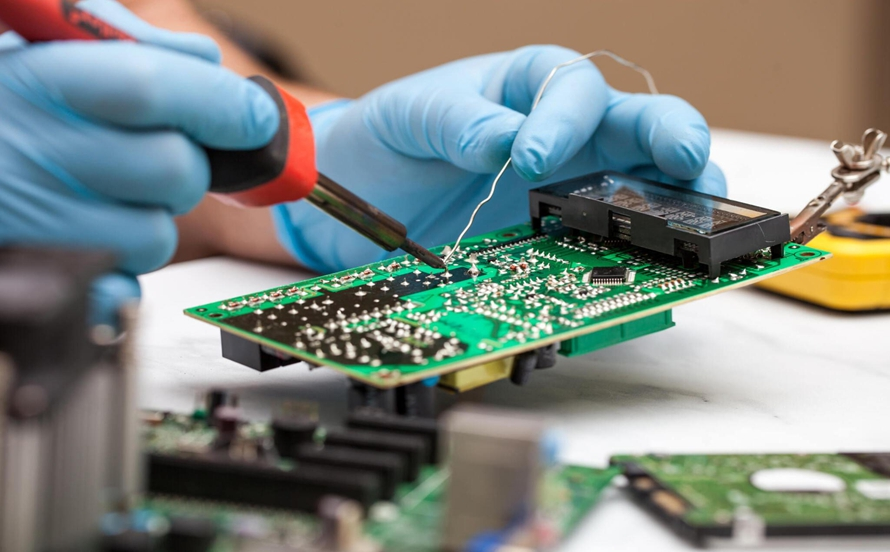
Printed Circuit Board Assembly (PCBA) refers to the process of soldering or assembling electronic components onto a PCB (Printed Circuit Board). After the components are soldered to the board, the circuit board is known as Printed Circuit Board Assembly (PCBA) or Printed Circuit Assembly (PCA). The assembly process involves a variety of techniques and tools, both manual and automated, to ensure...

Rigid-Flex PCB – Types of PCBs

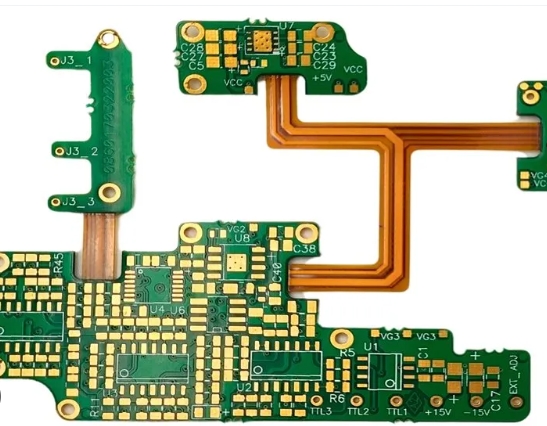
Rigid-Flex PCB is a hybrid of both rigid and flexible PCBs. In its simplest form, Rigid-Flex PCB consists of a rigid circuit board joined with a flexible circuit board, combining the advantages of both types. A Rigid-Flex PCB is made by laminating a rigid and a flexible substrate together to form a single board. Double-sided or multi-layer Rigid-Flex PCBs are interconnected by Plated Through Holes (PTH)....

Advanced PCBs – Design, Manufacturing, and Assembly

Advanced PCBs represent the cutting edge of printed circuit board technology, enabling compact, high-performance, and highly reliable electronic systems for demanding applications such as 5G/6G infrastructure, ADAS automotive radar, AI computing, aerospace electronics, Industrial IoT, and medical devices. These boards go far beyond standard FR-4 designs, incorporating HDI (High-Density Interconnect), rigid-flex, high-frequency low-loss materials, heavy...

Flexible PCB Manufacturing Process: Flexible Circuit Board (FPC)

Flexible PCB or Flexible Printed Circuit Boards (FPCBs) play a crucial role in modern electronics, offering flexibility, space-saving benefits, and reliability in a wide range of applications. In this article, we’ll explore the manufacturing process of flexible PCBs, from design to assembly, and discuss their diverse applications in electronic devices. What is a Flexible PCB (FPCB)? A flexible printed circuit...

Multilayer PCB Manufacturing Process: A Complete Step-by-Step Guide

Multilayer printed circuit boards (PCBs) are widely used in modern complex electronics. These PCBs consist of multiple layers of conductive materials stacked on top of each other, enabling the design of more complex circuits with higher functionality. Such complex PCBs are used in various fields such as industrial automation, aerospace, military and medical devices, computers, and...