HomeTag

power integrity - KKPCB

HDI PCBs: Unlocking High-Density Performance for Modern Electronics

High-Density Interconnect (HDI) PCBs are a key technology for today’s compact and high-performance electronics. With fine lines, microvias, blind and buried vias, and multiple layers, HDI PCBs allow designers to fit complex circuits into small form factors, supporting applications from mobile devices to 5G infrastructure, automotive electronics, aerospace systems, and industrial IoT devices. Advanced Design...
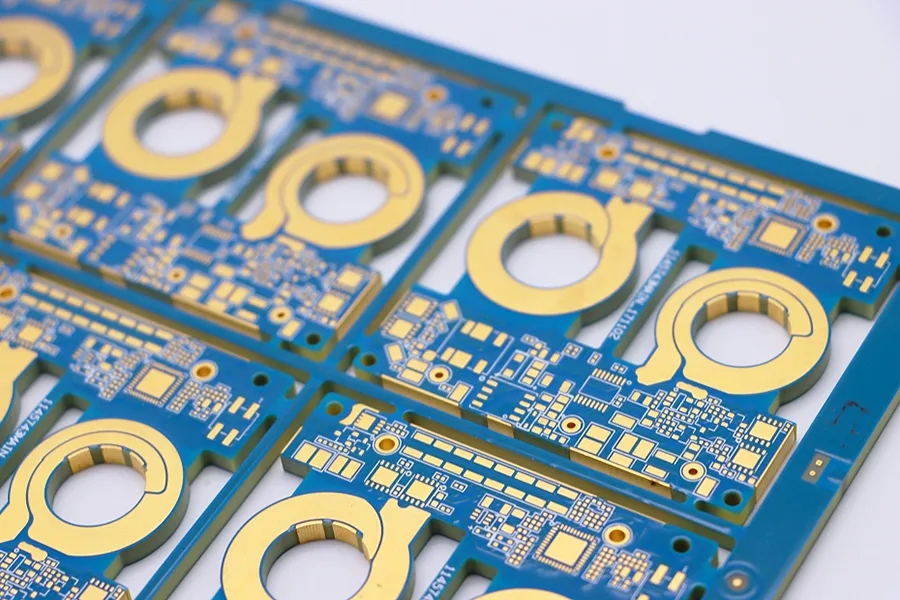
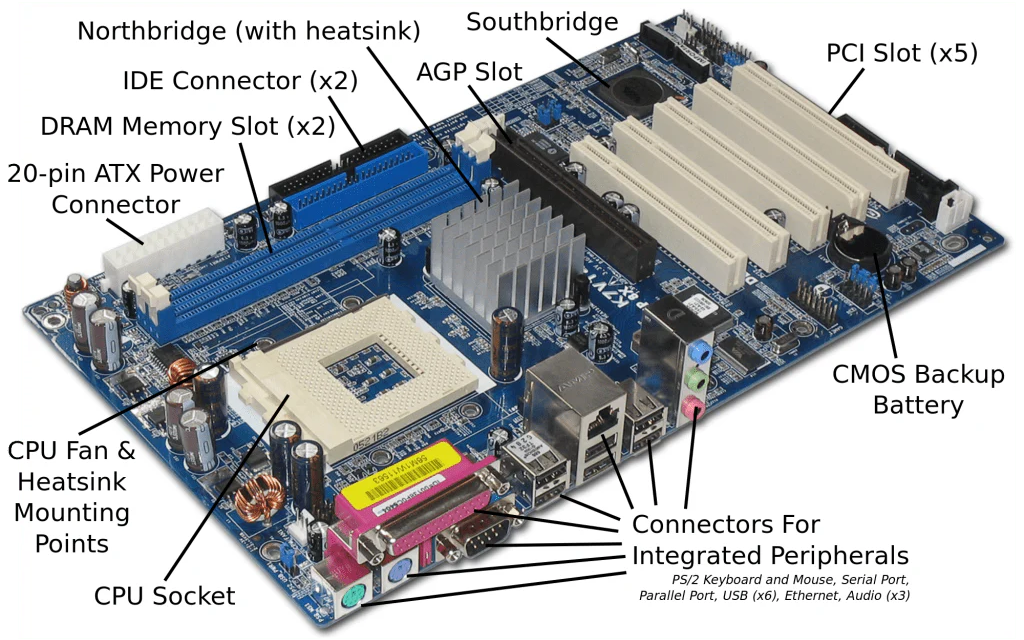
High-Density Power Integrity and Heat Dissipation Optimization Using Ceramic PCB Substrates in Laptop Motherboards and Wi-Fi 7 Systems

Engineering Context / Abstract   Modern laptop motherboards and Wi-Fi 7 modules demand exceptional power integrity and efficient thermal management due to the increasing density of integrated circuits, high-speed memory buses, and advanced RF front-end modules. Ceramic PCB substrates, featuring low dielectric loss (Df = 0.0015 @10GHz) and stable dielectric constant (Dk = 9.8 ±...

Optimizing Power Integrity and EMI Suppression Using Taconic TLY-5 PCB Substrates in High-Speed Laptop and Server Motherboards

1. Engineering Overview / Abstract   As laptop and server platforms evolve toward higher CPU core densities and faster DDR5 and PCIe 5.0 interfaces, maintaining stable power integrity and effective EMI suppression has become an engineering priority.  Taconic TLY-5 PCB substrates—PTFE-based laminates with ultra-low Df (0.0009 @ 10 GHz) and stable Dk (2.20 ± 0.02)—offer...

Improving Power Integrity and EMI Suppression with Taconic RF-35 PCBs in High-Speed Laptop and Server Motherboards

In high-speed laptop and server motherboards, maintaining power integrity (PI) and minimizing electromagnetic interference (EMI) are crucial for stable system performance and signal reliability. Taconic RF-35 PCBs, with their low-loss dielectric properties and excellent thermal stability, have emerged as a preferred solution for high-frequency, high-speed PCB design. By leveraging Taconic RF-35 PCB materials, designers can...

Ptimizing Power Delivery and EMI Suppression with TLY-5 PCB Substrates in High-Speed Laptop and Server Motherboards

1. Engineering Overview — Power and EMI Challenges in High-Speed Computing Boards   As laptops and enterprise servers transition to PCIe 5.0/6.0 and DDR5 architectures, maintaining power integrity (PI) and electromagnetic interference (EMI) control becomes a core constraint in multilayer PCB design.  The TLY-5 PCB, with its ultra-low Dk (2.20 ± 0.02) and low Df...

Hybrid Stackup Design Using Duroid 6010 PCB for High-Density RF and Microwave Packaging

Advanced RF Packaging Requires Hybrid PCB Stackup Technology As modern RF and microwave systems continue evolving toward: 5G and 6G communication millimeter-wave radar satellite communication aerospace RF electronics defense microwave systems high-density RF modules advanced phased-array antennas the demand for: higher integration density lower signal loss stable impedance control compact RF packaging has increased dramatically....

Basic Principles and Operations of PCB Wiring

PCB wiring, also known as PCB routing, is one of the most critical stages in printed circuit board design. It determines how electrical signals and power are transmitted between components and directly affects the performance, reliability, and manufacturability of electronic products. With modern electronic systems moving toward higher speed, higher density, and greater integration, PCB...

5 Key Points in PCB Design for Power Supply Applications

Power supply circuits are essential components in almost every electronic system, providing stable and reliable energy conversion for different functional modules. From consumer electronics and industrial equipment to automotive systems and renewable energy applications, the performance of the power supply PCB directly affects overall product reliability. Compared with ordinary signal PCBs, power supply PCB design...

High-Speed PCB Design Guide 5: Noise Reduction Technology for DSP Systems

Digital Signal Processors (DSPs) are widely used in applications that require high-speed data processing and real-time computation, including industrial automation, wireless communications, medical imaging, radar systems, machine vision, audio processing, and AI edge computing. As DSP clock frequencies and data rates continue to increase, maintaining signal integrity while minimizing system noise has become one of...

High-Speed PCB Design Guide 2: Avoiding Pitfalls in Mixed-Signal Systems

With the increasing integration of digital processing, wireless communication, sensing, and power management functions, modern electronic products often combine high-speed digital circuits with sensitive analog circuits on the same PCB. These mixed-signal systems are widely used in: Industrial control equipment Medical devices Automotive electronics Communication systems Data acquisition equipment IoT devices However, combining high-speed digital...