HomeTag

high-frequency PCB - KKPCB

Reliability and Phase Stability Enhancement of Ceramic PCBs in Automotive Radar and ADAS Sensor Modules

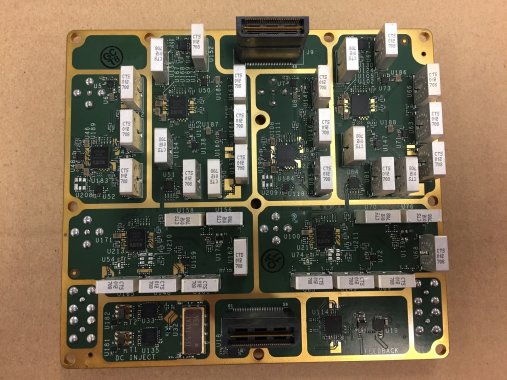
1. Engineering Overview   As modern vehicles advance toward full autonomy, automotive radar and ADAS (Advanced Driver-Assistance Systems) demand exceptional signal fidelity and real-time response under wide temperature ranges and mechanical stress. Within these radar transceiver modules, Ceramic PCB substrates play a pivotal role in ensuring phase stability, low dielectric loss, and long-term thermal reliability. ...

Dielectric Consistency and High-Frequency Performance of Megtron 7 PCBs for Aerospace Communication Payloads

1. Engineering Overview / Abstract   Modern aerospace communication payloads, including satellite transceivers and spaceborne RF modules, demand ultra-low-loss interconnects, tight impedance control, and phase-linear signal transmission across X- and Ka-bands.  Megtron 7 PCB laminates, with Dk = 3.45 ± 0.03 and Df = 0.0015 @ 10 GHz, provide superior dielectric consistency under extreme thermal...

Achieving Low-Loss Transmission and Thermal Reliability with Megtron 6 PCBs in Automotive Radar and ADAS Control Units

1. Low-Loss Signal Requirements in Automotive Radar Systems   Automotive radar and ADAS modules operate at 77–79 GHz frequencies, demanding minimal insertion loss and consistent phase integrity. Dense multilayer routing, compact stackups, and exposure to thermal cycles present challenges for signal fidelity.  Megtron 6 PCBs, with Dk = 3.45 ±0.02 and Df = 0.002 @10...

Improving Dielectric Consistency and RF Efficiency of Megtron 6 PCBs for Industrial IoT and Wireless Sensor Networks

In the fast-growing world of Industrial IoT (IIoT) and Wireless Sensor Networks (WSN), reliable wireless communication is essential for real-time monitoring, predictive maintenance, and smart factory operations. Megtron 6, Panasonic’s high-performance low-loss PCB material, is widely chosen for these applications because of its excellent dielectric properties: stable Dk (dielectric constant) around 3.2–3.6 and ultra-low Df...

Advancing Dielectric Uniformity and RF Efficiency of Taconic TLY-5 PCB Laminates for Industrial Wireless Sensor Networks

Enabling High-Performance Industrial Wireless Networks In industrial wireless sensor networks (IWSNs), PCB materials play a critical role in achieving reliable communication and efficient signal transmission. Taconic TLY-5 PCB laminates are engineered for high-frequency applications, offering exceptional dielectric uniformity, low dissipation factor, and excellent RF performance, making them ideal for industrial IoT and wireless sensor networks....

Low-Loss Interconnect and Thermal Reliability of TLY-5 PCBs for Automotive mmWave Radar and Advanced Driver-Assistance Systems

1. Engineering Overview — PCB Demands in Automotive mmWave Radar and ADAS   As vehicles move toward Level 3–5 autonomous driving, radar and vision-based sensing systems rely on 77–81 GHz mmWave modules and ultra-low-loss PCB interconnects. These radar PCBs must maintain electrical precision while enduring extreme temperature cycling, vibration, and humidity.   KKPCB integrates TLY-5...

RF Test PCB: Engineering Precision for High-Frequency Testing Systems

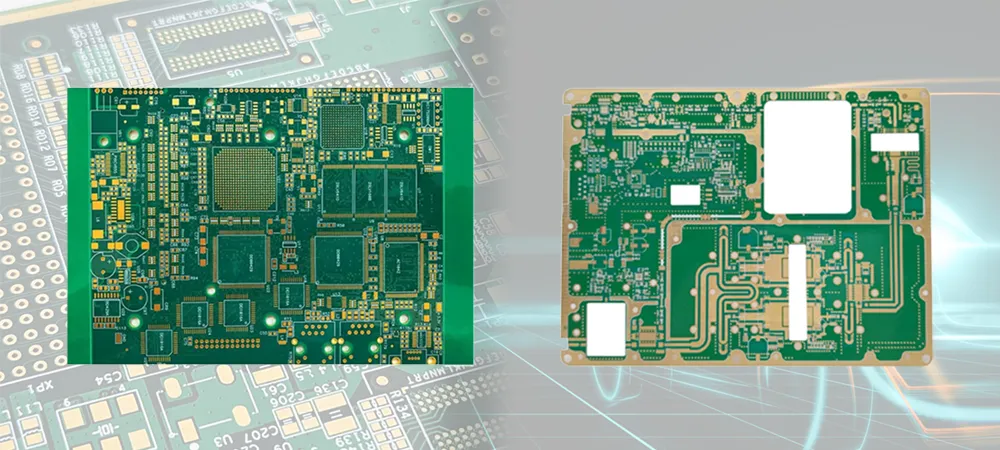
RF Test PCB: Engineering Precision for High-Frequency Testing Applications Introduction As wireless communication, semiconductor devices, and high-frequency electronics continue to advance, the demand for precise and reliable test platforms has increased dramatically. Among these platforms, the RF Test PCB plays a central role. It enables engineers to validate RF performance, measure high-frequency characteristics, and ensure...

Probe Card PCB: Engineering Precision for High-Accuracy Wafer-Level Semiconductor Testing

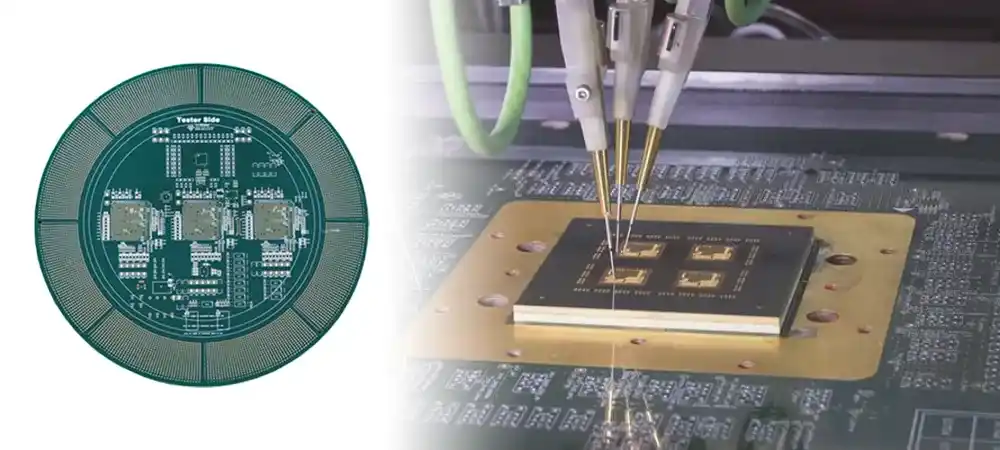
Probe Card PCB: Engineering Precision for Wafer-Level Testing Introduction At the wafer-level test stage, the probe card PCB serves as the indispensable interface between automated test equipment (ATE) and the semiconductor wafer. As device geometries continue shrinking and electrical performance requirements become more demanding, precision test interfaces have become essential. The probe card PCB establishes...

ADAS PCB Layout Guidelines for Automotive Radar Systems: Best Practices for High-Frequency Design

Advanced Driver Assistance Systems (ADAS) depend on high-performance automotive radar PCBs operating primarily at 77 GHz (and extending to 79 GHz) to deliver critical functions such as adaptive cruise control, automatic emergency braking, blind-spot detection, lane-change assistance, and 4D imaging. At these millimeter-wave frequencies, even minor imperfections in ADAS PCB layout can cause significant signal...