HomeCategory

PCB Manufacturing Services | High-Quality PCB & PCBA - KKPCB

Aerospace PCB Design for FPGA Flight Computers: Stackup, PDN, and Return-Path Tradeoffs

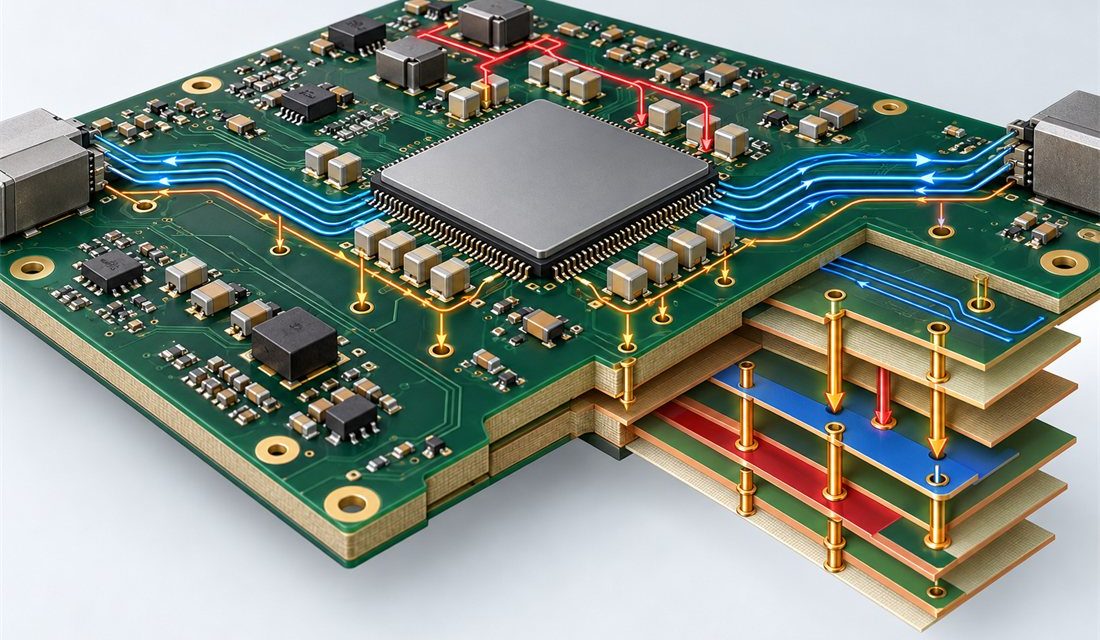
Table of Contents Why a flight-computer board needs an SI/PI-first layout study Build the stackup around the package escape and power loop Translate FPGA load steps into a PDN verification plan Protect high-speed returns through connectors and board boundaries Make the mechanical and manufacturing boundary explicit Use release evidence that survives a late component or...
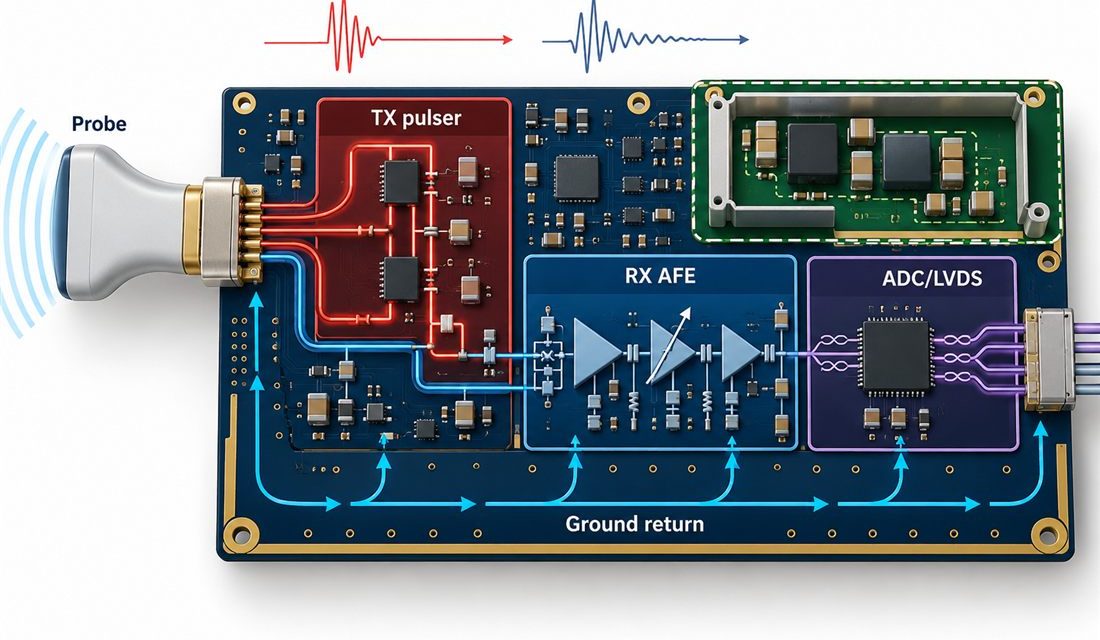
When Ultrasound Echoes Become Layout Noise: A Low-Noise Ultrasound PCB Release Plan

Ultrasound PCB design fails in a very specific way: the image can look acceptable on a bench and then lose contrast when transmit voltage, receive gain, clock activity, and patient-interface cabling are present at the same time. The difficult part is not choosing an expensive AFE; it is preserving the receive signal while the board...

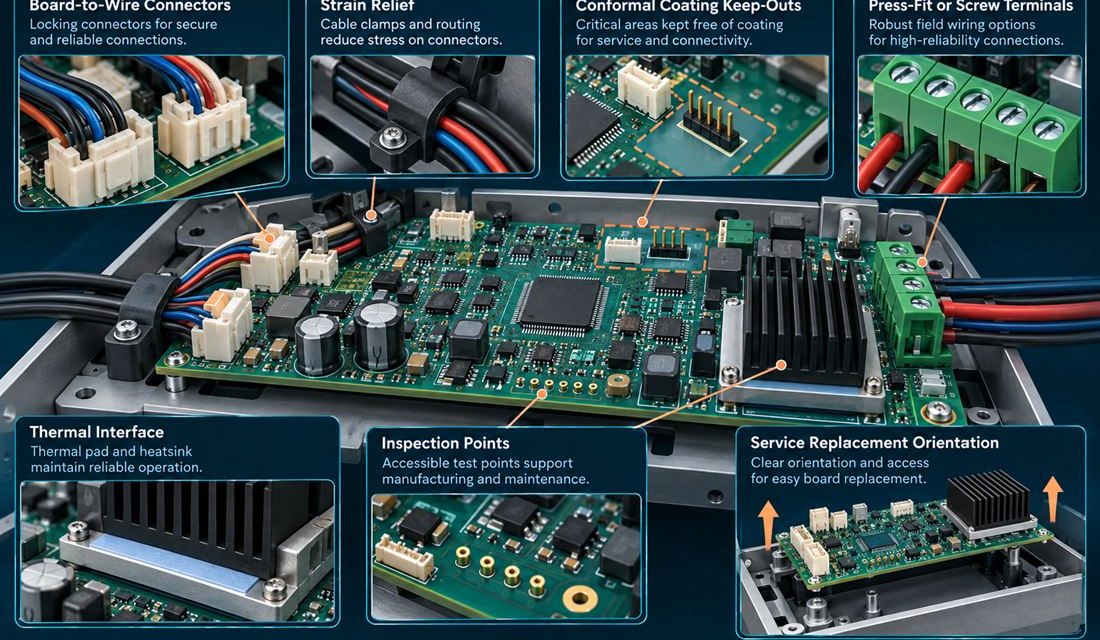
Robotics PCB Serviceability: Designing the Board for Repeatable Replacement

Table of Contents Why serviceability belongs in the PCB release Treat connectors and strain relief as one system Protect thermal and coating interfaces Make inspection repeatable Close the maintenance handoff A robot controller is rarely repaired on a quiet laboratory bench. A technician works inside a cabinet or joint enclosure, disconnects a harness, replaces a...

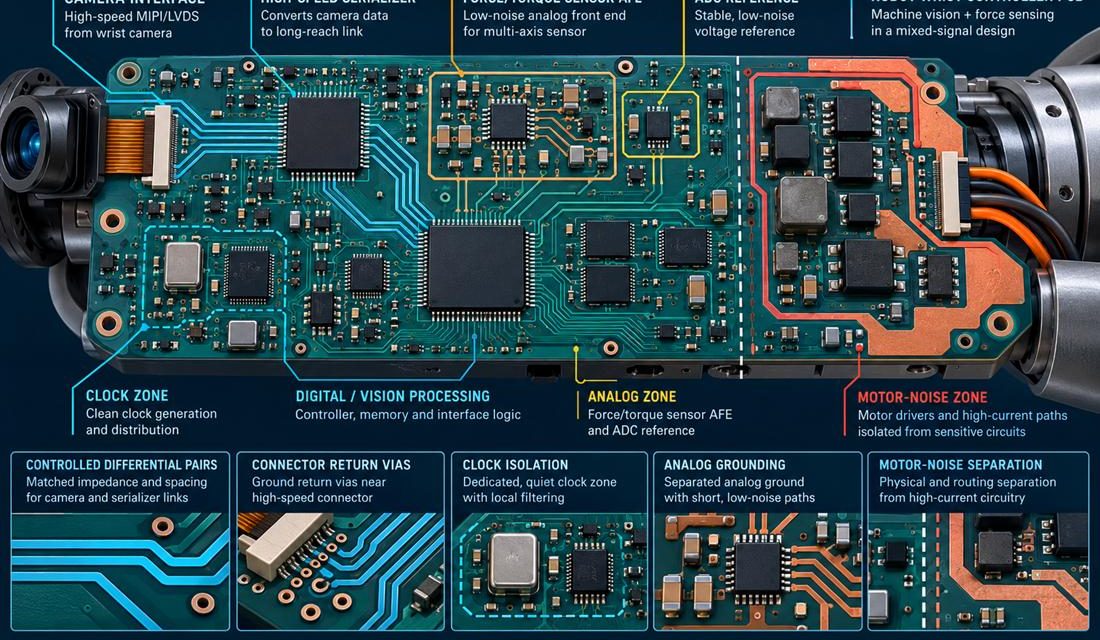
Robotics PCB Vision and Force Sensing: Keeping Mixed Signals Honest

Table of Contents Why vision and force signals fight on one board Partition clocks, analog, and motor noise Protect high-speed launches Calibrate the sensor chain Release a wrist module A robot wrist that combines a camera, a force/torque sensor, and a motor interface has three different definitions of “clean data.” The camera needs controlled differential...

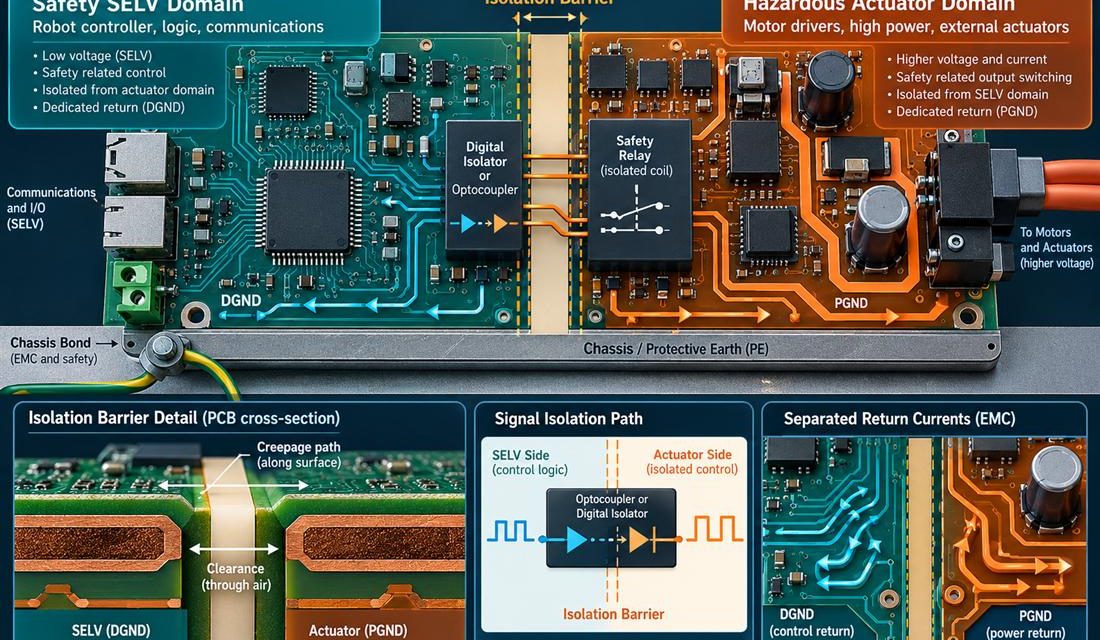
Robotics PCB Safety Isolation: Making the Barrier Manufacturable

Table of Contents Treat the isolation boundary as a system boundary Turn creepage into layout geometry Keep EMC current out of logic return Verify the fault state Release evidence without overclaiming A robot controller can pass a functional motion test and still carry a dangerous layout ambiguity. The problem appears where low-voltage logic, safety I/O,...

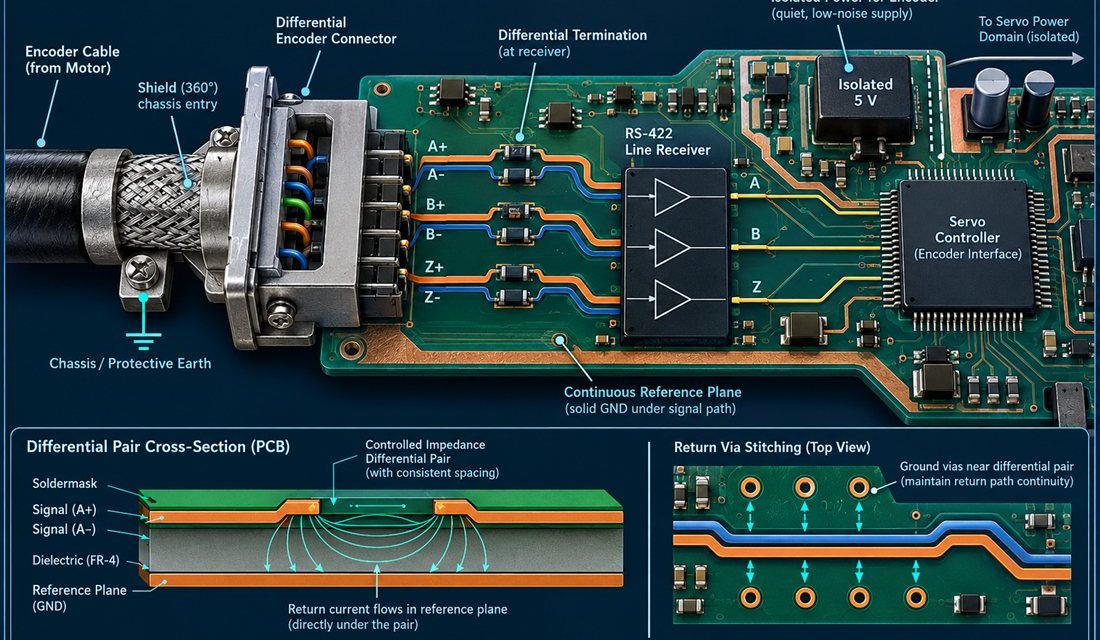
Robotics PCB Encoder Feedback: Keeping A/B/Z Phase Intact

Table of Contents Why encoder faults masquerade as software bugs Keep A/B/Z pairs phase-stable Close the shield and return path Test cable length and temperature Release feedback with evidence When a robot axis occasionally reports a position jump, the first suspect is often firmware. Yet many intermittent encoder faults are created at the connector launch,...

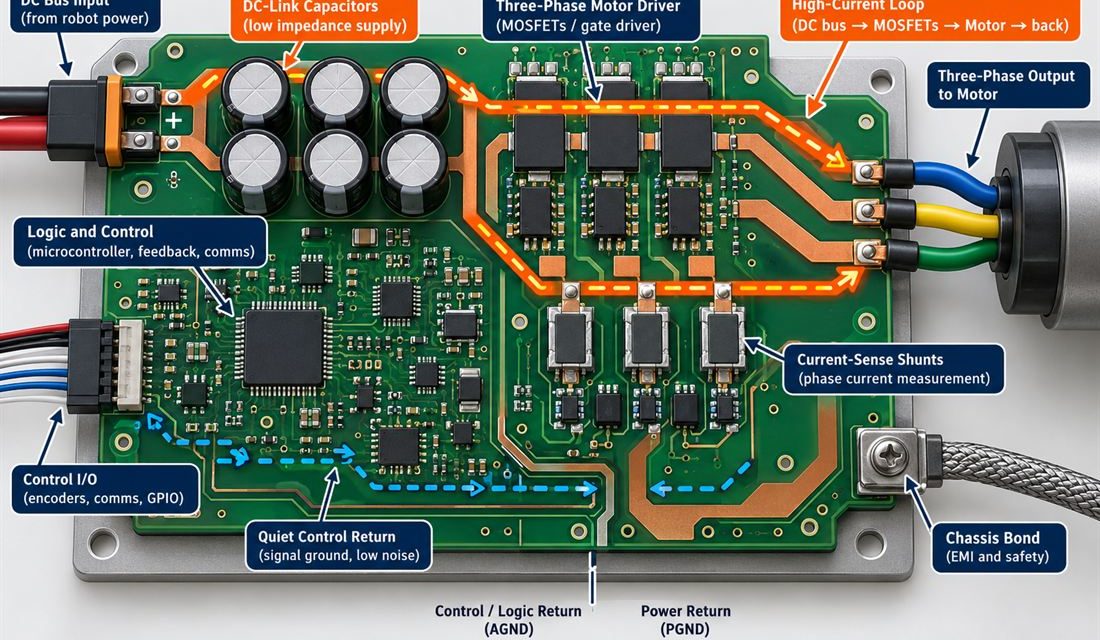
Robotics PCB Motor Drive Layout: Keeping Torque Commands Clean

Table of Contents Why motion errors begin in the power loop Shape the motor-current path Protect the control return Validate acceleration and braking Release a serviceable joint controller A robot joint can miss a taught position even when the control algorithm is unchanged. The hidden cause in a Robotics PCB is often a power-integrity problem:...

Smart Factory PCB Production Traceability: Linking Test Evidence to Every Build

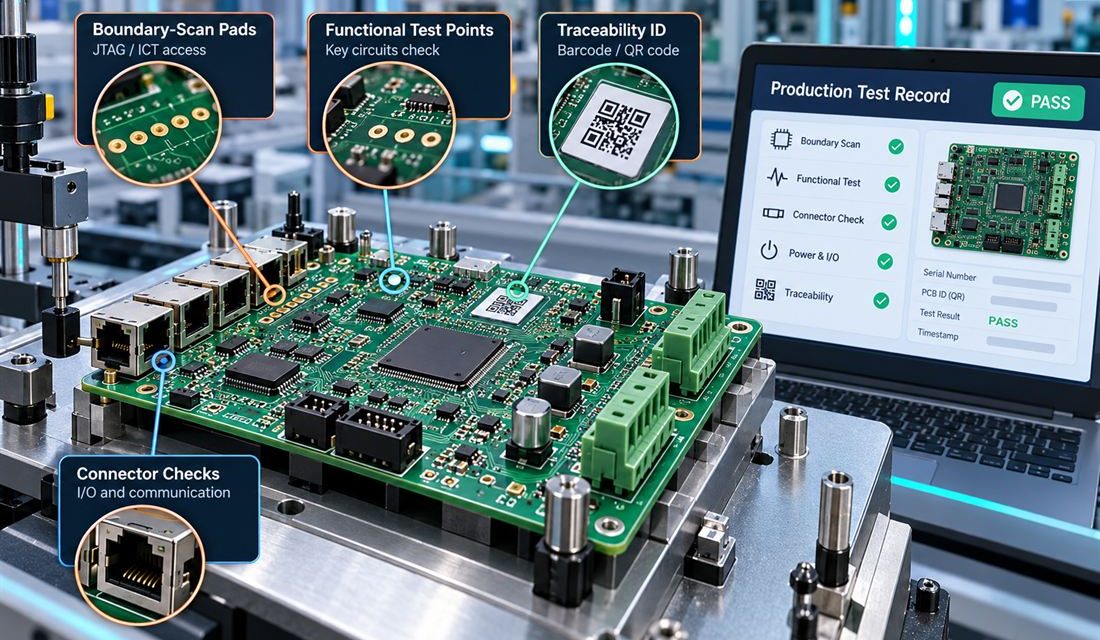
Table of Contents Why traceability starts in the PCB release Design test access into the layout Connect panel data to assembly evidence Close the service loop Five release gates Manufacturers often discover a traceability gap only after a field return: the serial number is known, but the team cannot prove which fabrication lot, assembly process,...

Smart Factory PCB Predictive Maintenance: Keeping Sensor Data Trustworthy

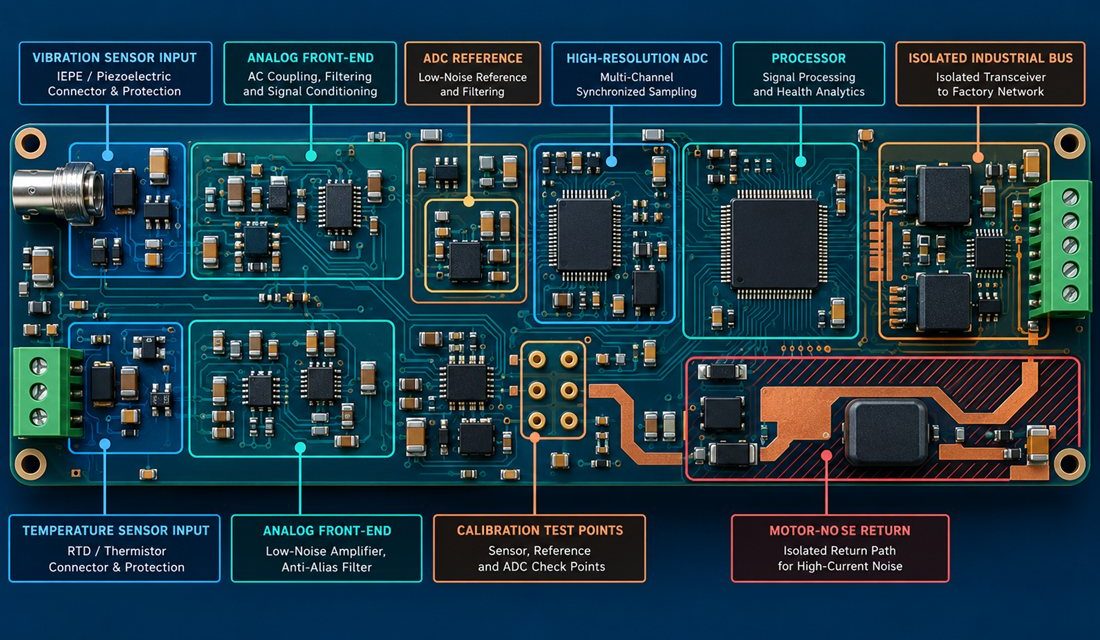
Table of Contents From sensor symptom to board-level cause Build a quiet analog island Keep the edge controller honest Validate drift before deployment Release a maintainable gateway A predictive-maintenance gateway only creates value when its sensor data remains trustworthy after months of vibration, temperature cycling, motor noise, and maintenance activity. A Smart Factory PCB in...