HomeCategory

Customer Cases | PCB & PCBA Success Stories - KKPCB

PCB Drawing: A Summary of Key Practices from Years of Experience

PCB drawing is a critical stage in electronic product development that transforms circuit concepts and schematic designs into physical circuit boards. Although modern PCB design software has significantly improved design efficiency, creating a reliable PCB drawing still requires extensive engineering experience. A PCB layout must not only achieve electrical connections but also consider signal integrity,...

Key Grounding Techniques in Electronic Design

Grounding is one of the most fundamental elements in electronic system design. A well-designed grounding structure provides a stable reference potential, ensures reliable current return paths, reduces electrical noise, and improves overall system performance. As electronic products continue developing toward higher operating frequencies, faster data transmission, and increased integration, grounding design has become more challenging....

Detailed explanation of three special PCB wiring methods

PCB routing is one of the most important stages in printed circuit board design. A well-designed routing strategy directly affects: Signal integrity Power integrity Electromagnetic compatibility (EMC) Thermal performance Manufacturing reliability With the increasing complexity of electronic products, traditional point-to-point routing methods are often insufficient for advanced applications. High-speed digital systems, RF circuits, power electronics,...

How to optimize PCB design to maximize the performance of superjunction MOSFETs

With the increasing demand for higher efficiency and power density in modern power electronics, superjunction MOSFETs have become an important semiconductor technology for applications such as: AC-DC power supplies Electric vehicle charging systems Industrial power converters Renewable energy equipment Motor drive systems High-efficiency switching regulators Compared with traditional MOSFET structures, superjunction MOSFETs achieve lower conduction...

Balanced PCB Stack-Up Design Method

As electronic products continue evolving toward higher integration, faster signal transmission, and more compact designs, PCB stack-up design has become a critical factor affecting electrical performance and manufacturing reliability. A PCB stack-up is not simply an arrangement of copper layers and dielectric materials. It determines: Signal integrity Power distribution performance Electromagnetic compatibility (EMC) Mechanical stability...

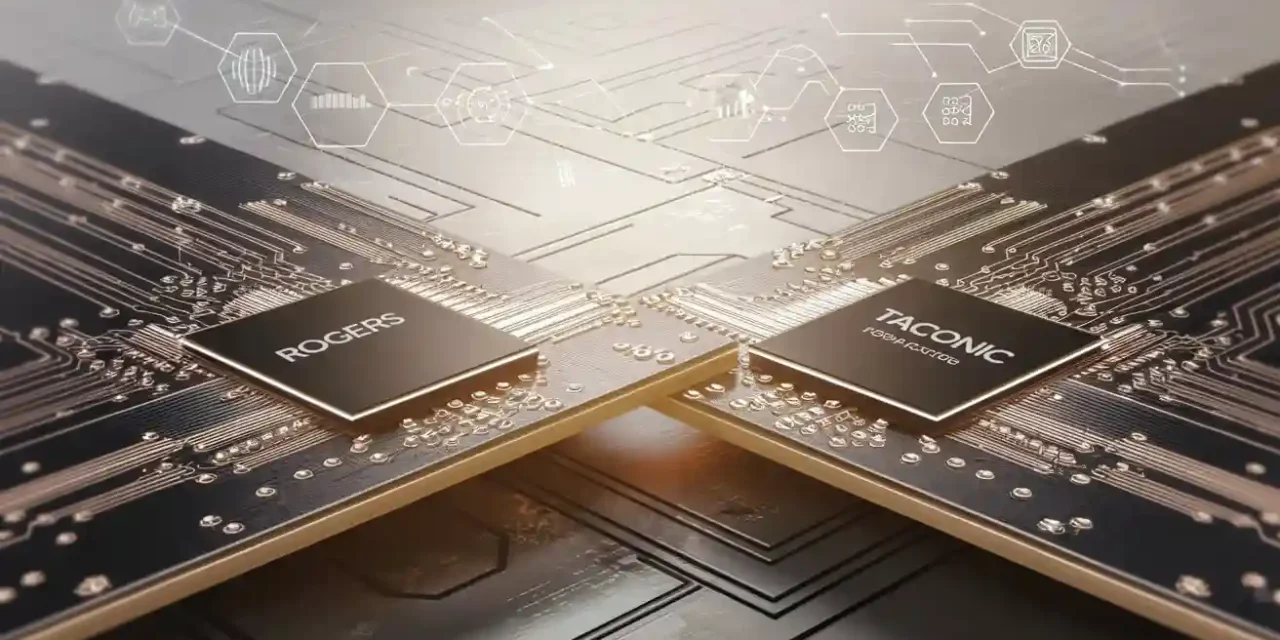
Understand the performance and applications of Rogers 6010 and aluminum based high-frequency PCB

Introduction: Choosing the Right High-Frequency PCB Material In modern high-frequency PCB design, material selection plays a decisive role in determining signal integrity, thermal performance, and overall system reliability. Among the most widely used materials, Rogers 6010 and aluminum-based high-frequency PCB solutions stand out for their unique advantages in RF applications, microwave circuits, and high-power electronic...

Enhancing Anti-Static ESD Function in PCB Design

With the increasing integration and miniaturization of electronic products, PCB designs are becoming more sensitive to external electrical disturbances. Among various reliability challenges, Electrostatic Discharge (ESD) is one of the most common threats that can affect electronic system performance and product lifetime. Static electricity generated during human contact, manufacturing processes, transportation, or environmental changes can...

PCB Design Principles for Single-Chip Microcontroller Control Boards

Single-chip microcontroller (MCU) control boards are widely used in industrial automation, consumer electronics, automotive systems, medical devices, smart sensors, and embedded control applications. Although MCU-based systems are relatively compact compared with complex computing platforms, their PCB design still requires careful engineering consideration. Factors such as power stability, clock signal quality, reset reliability, electromagnetic compatibility (EMC),...

PCB Design Wiring Rules: Best Practices for Optimal Performance

PCB wiring is one of the most critical stages in printed circuit board design. A well-planned routing strategy directly affects signal quality, power stability, electromagnetic compatibility, and manufacturing reliability. As electronic products continue developing toward: Higher operating frequencies Smaller form factors Greater circuit density Increased functional integration traditional wiring methods are no longer sufficient for...

Grounding Methods for Multi-Layer PCB Boards

With the increasing complexity of modern electronic systems, multi-layer PCB boards have become widely used in applications requiring high-density routing, high-speed signal transmission, and improved electrical performance. In multi-layer PCB design, grounding is not simply a connection between components and the power supply reference. A properly designed grounding structure directly affects signal integrity, electromagnetic compatibility...