
Flex PCB Benefits: Enabling Lightweight, Compact, and Reliable Electronics
With the rapid development of modern electronics, product designs are becoming increasingly compact, lightweight, and multifunctional. Traditional rigid PCBs may face limitations when applications require complex mechanical structures, limited installation space, or dynamic bending capability.
Flexible PCB (Flex PCB) technology provides an effective solution by using flexible substrates that allow circuits to bend, fold, and fit into irregular product designs. As a professional PCB and PCBA manufacturer, KKPCB supports customers with flexible PCB fabrication and assembly solutions for applications requiring high reliability, space optimization, and advanced integration.
What Is a Flex PCB?
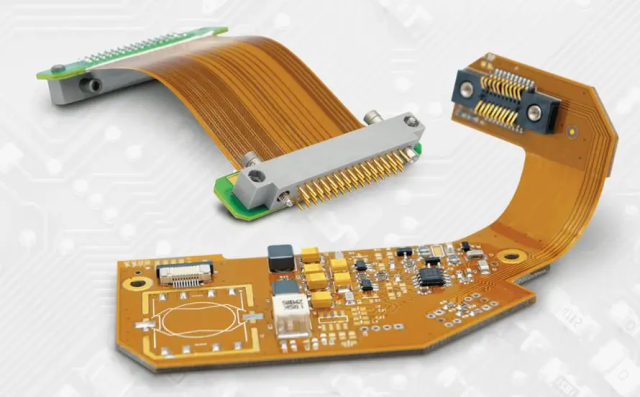
A Flex PCB is a printed circuit board manufactured with flexible insulating materials, typically polyimide (PI), allowing the circuit to maintain electrical performance while being mechanically flexible.
Unlike conventional rigid PCBs, flexible circuits can:
- Bend and fold according to product structures
- Reduce wiring limitations in compact designs
- Replace traditional wire harnesses and connectors
- Improve product reliability through fewer interconnection points
Flex PCBs are widely used in:
- Wearable electronics
- Medical devices
- Automotive electronics
- Industrial equipment
- Consumer electronics
- Aerospace and high-reliability systems
Key Benefits of Flex PCB Technology
1. Space Saving and Miniaturized Design
One of the biggest advantages of Flex PCB technology is its ability to support compact electronic designs.
Traditional wiring solutions often require additional connectors, cables, and mechanical support structures. Flex PCBs integrate multiple connection points into a single lightweight circuit, helping engineers achieve:
- Reduced product size
- Higher component density
- Improved internal space utilization
- Simplified system architecture
For applications where installation space is limited, flexible circuits provide greater design freedom compared with rigid PCB solutions.
2. Lightweight Construction
Flex PCBs use thin flexible materials instead of traditional rigid laminates and wiring assemblies.
This lightweight structure helps reduce:
- Overall product weight
- Mechanical complexity
- Assembly requirements
The weight reduction is particularly valuable for:
- Portable electronic devices
- Wearable products
- Automotive applications
- Aerospace equipment
By replacing bulky wire harnesses, Flex PCB solutions can improve both product efficiency and reliability.
3. Improved Mechanical Reliability
Traditional cable connections may experience reliability issues caused by:
- Vibration
- Mechanical stress
- Repeated movement
- Connector failures
Flex PCBs provide improved durability because the circuit and connection points are integrated into one structure.
Advantages include:
- Reduced connection failures
- Better vibration resistance
- Stable electrical performance under mechanical stress
- Improved product lifetime
For applications involving movement or frequent bending, flexible circuits offer significant reliability advantages.
4. Enhanced Design Flexibility
Flex PCBs allow engineers to design circuits around complex product structures.
Compared with rigid boards, flexible circuits can:
- Bend around corners
- Fit into irregular spaces
- Support three-dimensional assembly designs
- Reduce limitations caused by fixed board shapes
This flexibility enables innovative product designs where conventional PCBs may not be practical.
5. Reduced Assembly Complexity
By replacing multiple cables, connectors, and interconnection components, Flex PCBs can simplify product assembly.
Benefits include:
- Fewer assembly steps
- Reduced component count
- Lower potential failure points
- Improved production consistency
For manufacturers, simplified assembly can contribute to better production efficiency and improved product reliability.
Flex PCB Manufacturing Considerations
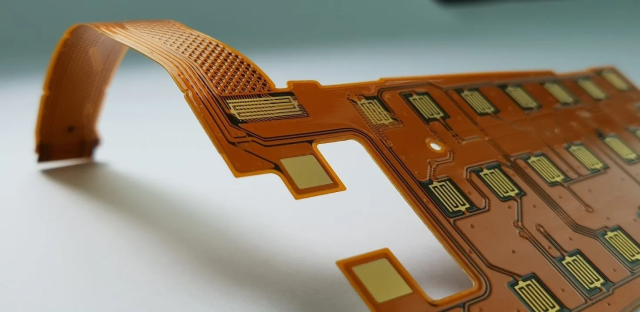
Although Flex PCB technology provides many advantages, manufacturing requires specialized processes and engineering experience.
Material Selection
Common Flex PCB materials include:
Polyimide (PI)
Polyimide is widely used due to:
- Excellent thermal stability
- Good mechanical flexibility
- High reliability under harsh conditions
Advanced Flexible Materials
For specialized applications, materials with improved:
- High-frequency performance
- Thermal resistance
- Dimensional stability
may be selected according to product requirements.
Stackup and Layer Management
Flexible PCB stackup design is critical for maintaining reliability.
Engineers need to consider:
- Flexible layer thickness
- Copper thickness
- Adhesive selection
- Coverlay structure
- Bend requirements
Proper stackup design helps achieve:
- Better mechanical durability
- Stable electrical performance
- Improved manufacturing yield
Bend Radius Control
For flexible circuits, mechanical stress management is essential.
Design considerations include:
- Minimum bend radius
- Copper routing direction
- Via placement
- Component positioning
To improve reliability:
- Avoid placing components in bending areas
- Keep traces perpendicular to bending directions
- Optimize copper distribution
These practices help reduce stress concentration and prevent circuit damage.
Flex PCB Applications
Wearable Electronics
Flex PCBs enable:
- Thin and lightweight structures
- Comfortable product designs
- Reliable sensor connections
Applications include:
- Smart watches
- Health monitoring devices
- Fitness electronics
Automotive Electronics
Modern vehicles require compact and reliable electronics.
Flex PCBs are used in:
- Dashboard systems
- Battery management systems
- Lighting modules
- Sensor connections
Their vibration resistance and space-saving advantages make them suitable for automotive environments.
Medical Devices
Medical electronics often require:
- Compact design
- High reliability
- Flexible installation structures
Flex PCB applications include:
- Patient monitoring equipment
- Diagnostic devices
- Portable medical systems
Industrial Electronics
Industrial equipment requires stable operation under demanding conditions.
Flex PCBs support:
- Compact control systems
- Sensor modules
- Automated equipment electronics
Flex PCB vs Rigid PCB
The choice between Flex PCB and rigid PCB depends on:
- Product structure
- Mechanical requirements
- Operating environment
- Cost considerations
KKPCB Flex PCB Manufacturing and Assembly Support
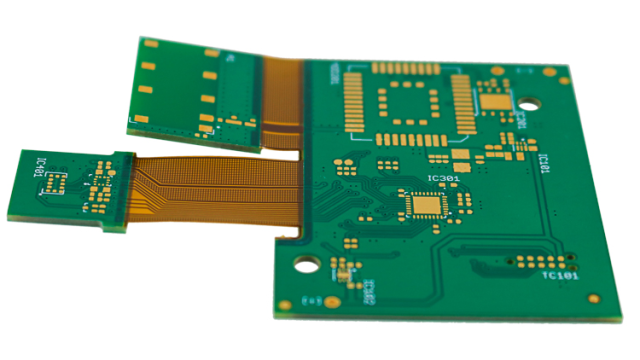
As a PCB and PCBA manufacturer, KKPCB provides flexible PCB solutions covering:
- Flex PCB fabrication
- Rigid-flex PCB manufacturing
- SMT assembly
- Component sourcing
- DFM analysis
- Functional testing
- Customized production support
Our engineering team helps customers optimize:
From prototype development to production manufacturing, KKPCB supports customers in building reliable and cost-effective flexible electronic solutions.
Conclusion
Flex PCB technology provides significant advantages for modern electronic products requiring compact size, lightweight structures, and reliable performance.
With benefits including:
- Space optimization
- Reduced weight
- Improved mechanical reliability
- Flexible product design
- Simplified assembly
Flex PCBs continue to play an important role in the development of next-generation electronics.
By combining advanced PCB fabrication capabilities with engineering support, KKPCB helps customers transform innovative product concepts into reliable manufactured solutions.
