HomeCategory

Advanced Engineering Technologies for PCB & PCBA Solutions - KKPCB

How to Hold Connector and Thermal Quality in Automotive Module PCB Assembly

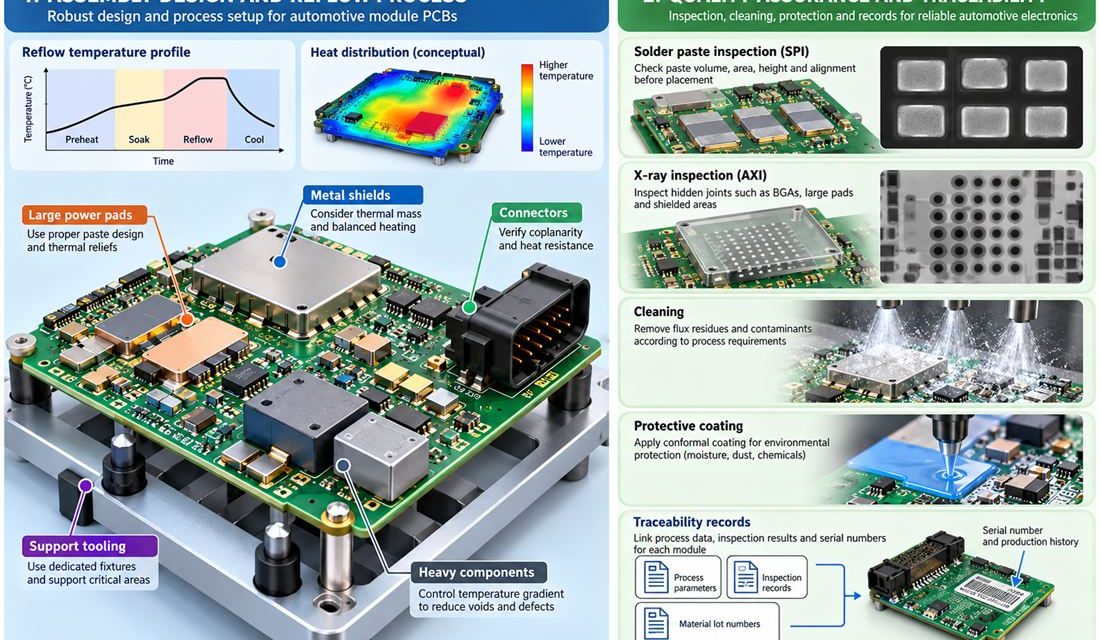
Automotive Module PCB — Fabrication can meet a drawing and assembly can still move the electrical result. Paste height, reflow warpage, shield force, cleaning chemistry, heat spreaders, and connector rework all act on vehicle modules that package communication, power, sensing, and control functions behind a connector-rich housing with tight mechanical and service constraints. This production...
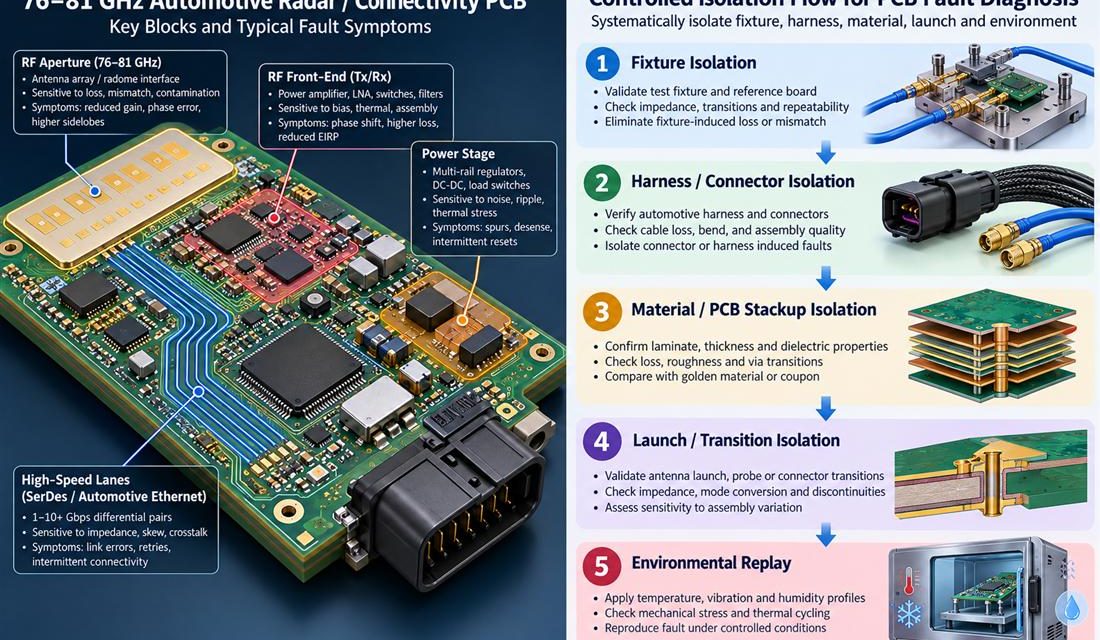
Finding the Physical Cause of Drift in an Automotive High Frequency PCB

Automotive High Frequency PCB — A vehicle program can report an intermittent reset, a communication dropout, a radar sensitivity loss, or a calibration value that moves only after the enclosure is closed. That symptom is not yet a PCB diagnosis. On a Automotive High Frequency PCB, the board shares its boundary with a harness, connector,...

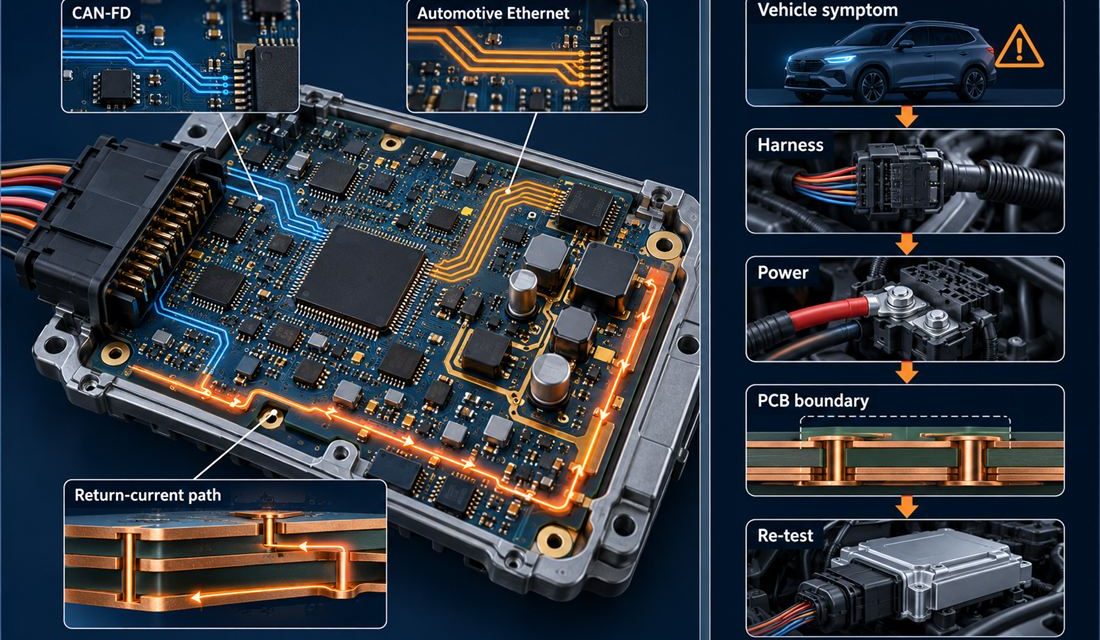
When an Automotive Electronics PCB Fails Only in the Vehicle: A Root-Cause Workflow

Automotive Electronics PCB — A vehicle program can report an intermittent reset, a communication dropout, a radar sensitivity loss, or a calibration value that moves only after the enclosure is closed. That symptom is not yet a PCB diagnosis. On a Automotive Electronics PCB, the board shares its boundary with a harness, connector, shield, heat...

An Assembly Control Plan for High-Reliability ADAS PCB Production

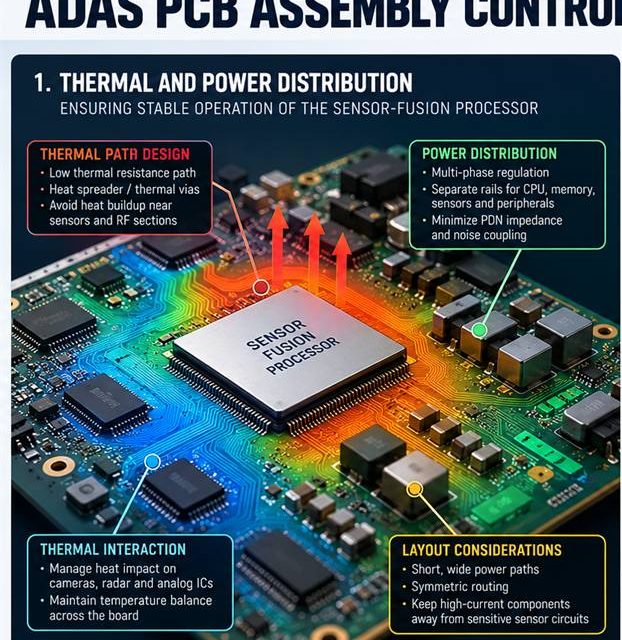
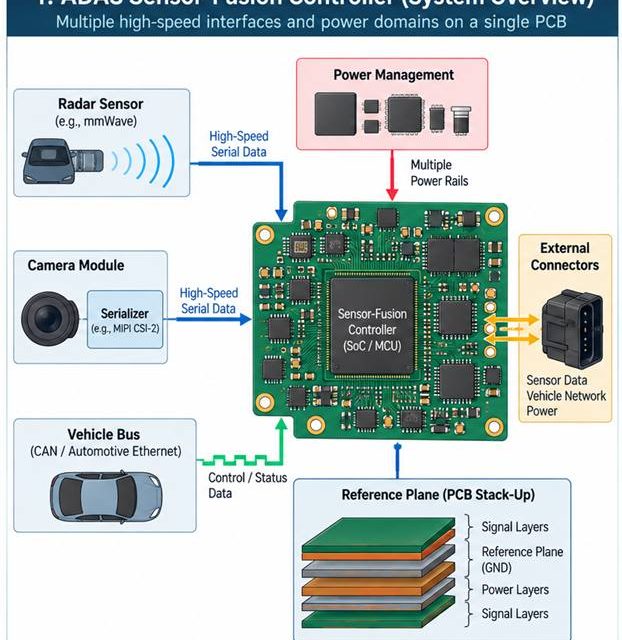
ADAS PCB assembly release begins by treating heat, solder, cleaning, and mechanical force as RF variables. An RF board can leave fabrication within drawing limits and still change during paste printing, reflow, shielding, cleaning, or mechanical assembly. That risk is amplified in camera, radar, and domain-controller electronics that must keep data paths deterministic while surviving...

Keeping High-Speed Sensor Links Quiet Through an ADAS PCB Connector Transition

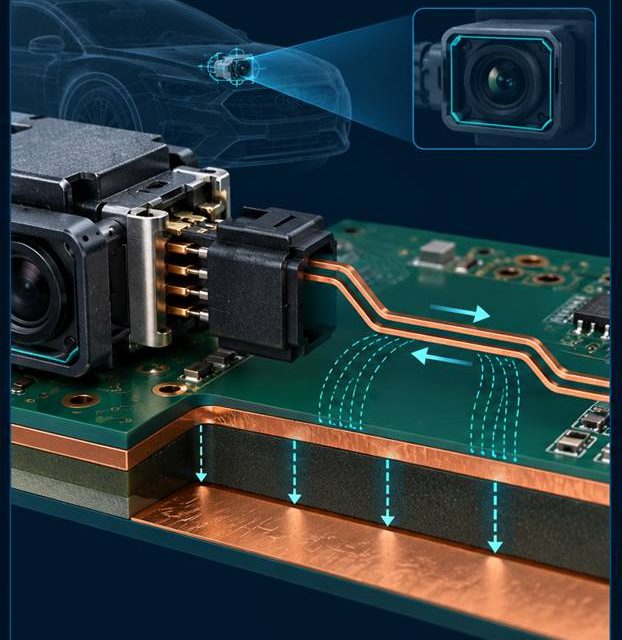
ADAS PCB launch design begins with a complete three-dimensional signal and return path. The boundary between a board and a connector, coax, antenna, or shield is where a clean schematic becomes a three-dimensional electromagnetic problem. In camera, radar, and domain-controller electronics that must keep data paths deterministic while surviving automotive assembly and service constraints, that...

Making an ADAS PCB Stackup Manufacturable Before the First Prototype

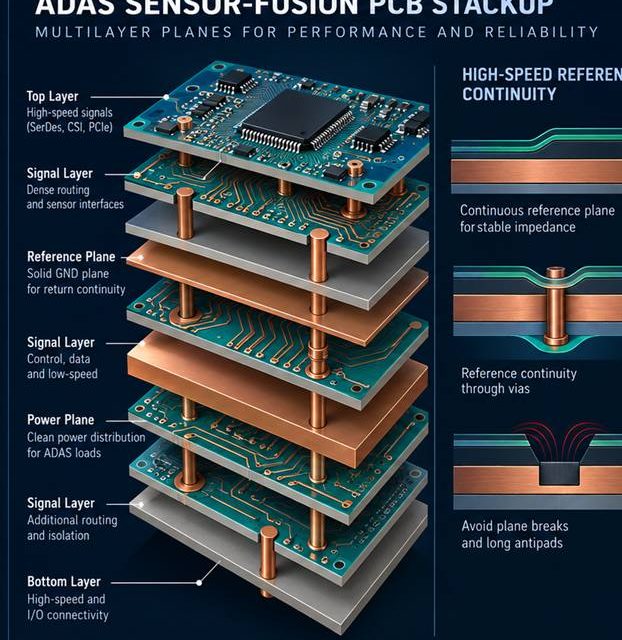
ADAS PCB stackup release begins by making every electromagnetic and manufacturing assumption visible. Stackup discussions fail when the drawing lists layer names but not the electromagnetic and manufacturing assumptions behind them. In camera, radar, and domain-controller electronics that must keep data paths deterministic while surviving automotive assembly and service constraints, the board must carry RF...

Diagnosing Intermittent Data Errors on an ADAS PCB During Vehicle Integration

ADAS PCB fault isolation begins at the physical boundary where the symptom is reproduced. A camera, radar, and domain-controller electronics that must keep data paths deterministic while surviving automotive assembly and service constraints can pass a schematic review and still fail in the chamber, the enclosure, or the vehicle. The failure often appears as a...

The Change-Control File Behind a Production-Ready Automotive Radar PCB

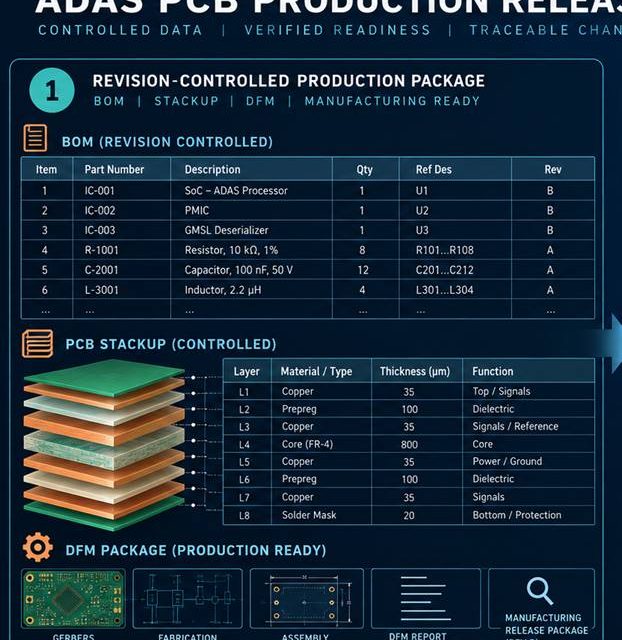
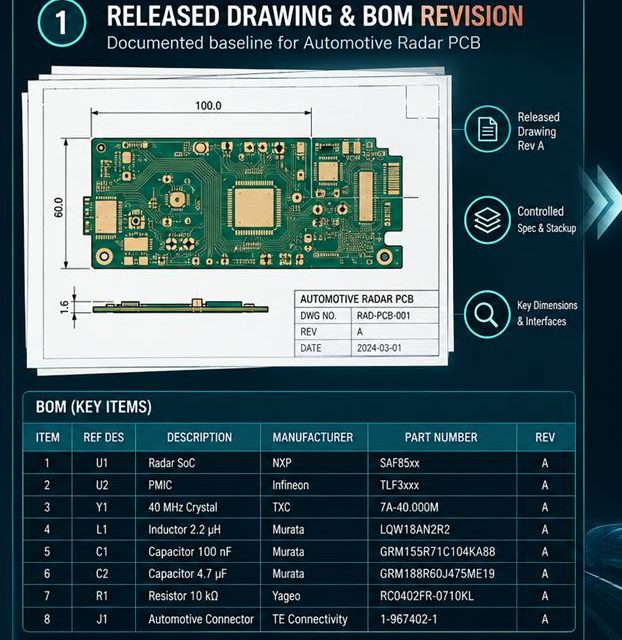
Automotive Radar PCB production release begins when design evidence, supplier capability, and change control agree. The last ten percent of a board program is rarely a single design change. It is the point where a prototype stackup, a supplier process, a connector choice, and an enclosure must become one controlled release. For front and corner...

Protecting RF Geometry During Automotive Radar PCB Assembly

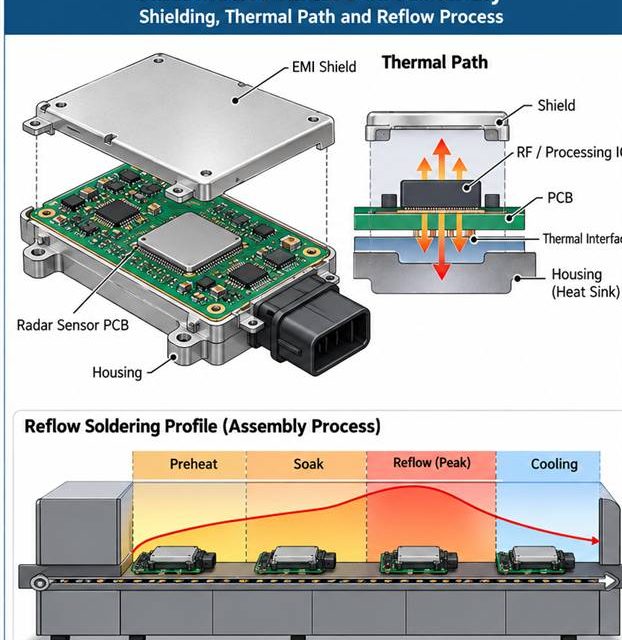
Automotive Radar PCB assembly release begins by treating heat, solder, cleaning, and mechanical force as RF variables. An RF board can leave fabrication within drawing limits and still change during paste printing, reflow, shielding, cleaning, or mechanical assembly. That risk is amplified in front and corner radar sensors exposed to vibration, temperature cycling, radome constraints,...