PCB Materials | FR-4, High-Frequency, Low-Loss & Heavy Copper - KKPCB
 
HomeCategory

PCB Materials | FR-4, High-Frequency, Low-Loss & Heavy Copper - KKPCB

High Speed PCB Engineering for Signal Integrity, Power Integrity, and Ultra-Low-Latency Electronic Systems

As modern electronics become faster, more compact, and more data-intensive, the High Speed PCB has evolved into a critical engineering platform for communication systems, servers, AI accelerators, radar units, embedded computing modules, and advanced industrial electronics. A well-engineered High Speed PCB ensures clean signal transmission, stable power behavior, and low-jitter operation across multi-gigabit channels. High-speed...

Smart Factory PCB Architecture for Intelligent Automation and Next-Generation Industrial Control

The transition to Industry 4.0 has redefined the requirements for industrial electronics. Modern Smart Factory PCB architecture is no longer just about basic logic; it is the neural network of intelligent automation. To support the demands of Industrial IoT (IIoT), real-time edge computing, and high-speed motion control, industrial control PCBs must integrate advanced data processing with rugged reliability. For manufacturers like KKPCB, building...

Duroid 6010 PCB Engineering: Ultra-High Dielectric, Low-Loss Design for RF, Microwave, and Aerospace Systems

Duroid 6010 PCB, based on Rogers RT/duroid® 6010LM material, is one of the most critical substrates used in microwave, RF, aerospace, satellite, and defense systems. Known for its ultra-high dielectric constant (Dk ≈ 10.2) and extremely low dissipation factor, Duroid 6010 PCB enables the miniaturization of RF paths, improved resonator stability, and enhanced signal precision...

Introduction: PCB Architecture as the Core of Robotics Systems In modern autonomous robotics and industrial robotics, the design of Robotics PCB architecture plays a decisive role in determining system performance, real-time responsiveness, and operational reliability. As robots become more intelligent, compact, and interconnected, the demand for high-density, high-speed, and high-reliability PCB solutions continues to grow....

SiC PCB Engineering: High-Temperature, High-Power, and High-Reliability Solutions for Next-Generation Electronics

Silicon Carbide (SiC) PCBs are rapidly becoming essential for advanced power electronics, electric vehicles, aerospace systems, and industrial automation due to their ability to operate at higher temperatures, voltages, and frequencies than traditional FR-4 or standard ceramic substrates. SiC PCBs integrate wide-bandgap semiconductor technology directly with optimized thermal and electrical performance to support next-generation applications....

Advanced Robotics PCB Design: Optimizing Signal Integrity, Power Distribution, and Sensor Integration for Industrial Automation

Modern industrial automation, autonomous robots, and collaborative robotic systems depend heavily on Robotics PCBs as the central electronic platform for control, sensing, and communication. Engineers designing Robotics PCBs face unique challenges: ensuring low-latency signal transmission, maintaining power stability for high-current actuators, integrating a diverse set of sensors, and protecting sensitive electronics from electromagnetic interference. 1....

Engineering Duroid 6010 PCB for Extreme High-Frequency, Low-Loss, and Ultra-Stable Microwave Applications

As microwave, satellite, radar, and millimeter-wave systems move deeper into high GHz operating regions, engineers require PCB materials with ultra-stable dielectric behavior, extremely high Dk, and exceptionally low loss. This is where Duroid 6010 PCB—based on Rogers RT/duroid® 6010LM—becomes a foundational choice for critical RF and microwave engineering. With a dielectric constant (Dk) of ~10.2,...

Smart Factory PCB Engineering for Intelligent Automation, Real-Time Control, and Industry 4.0 Connectivity

Engineering the Future: Smart Factory PCB Engineering for Industry 4.0 In the era of Industry 4.0 connectivity, the demand for intelligent automation and real-time control has transformed PCB design requirements. High-performance Rigid-Flex PCB technology is now the cornerstone of industrial robotics and smart sensing. However, sophisticated Rigid-Flex manufacturing can be capital-intensive. Mastering Rigid Flex PCB cost optimization is essential for companies looking to deploy scalable, high-tech automation solutions....

Engineering High Speed PCB for Signal Integrity, Low-Loss Routing, and Next-Generation Data Transmission

As digital systems move toward higher data rates, smaller form factors, and lower power consumption, the demand for High Speed PCB solutions continues to accelerate. From 10–112 Gbps SerDes links to DDR4/DDR5 memory buses and advanced communication modules, a High Speed PCB must deliver loss control, impedance stability, and electromagnetic reliability in increasingly complex environments....
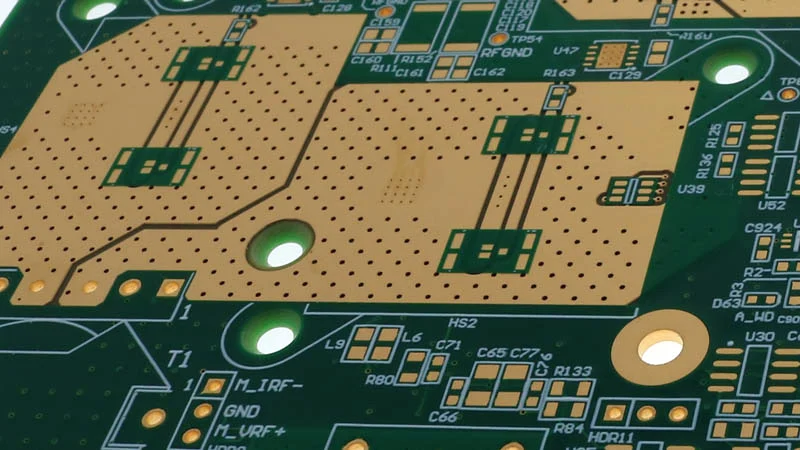
Engineering Double Layer HF PCB for Ultra-Stable RF Performance and Low-Loss Microwave Signal Integrity

As RF communication, IoT edge devices, automotive radar, and compact wireless modules continue to evolve, the Double Layer HF PCB has become a preferred architecture for delivering high-frequency stability, low insertion loss, and predictable electromagnetic performance. Although limited to two copper layers, a Double Layer HF PCB—when engineered correctly—can outperform many multilayer structures in signal...