HomeCategory

Advanced Engineering Technologies for PCB & PCBA Solutions - KKPCB

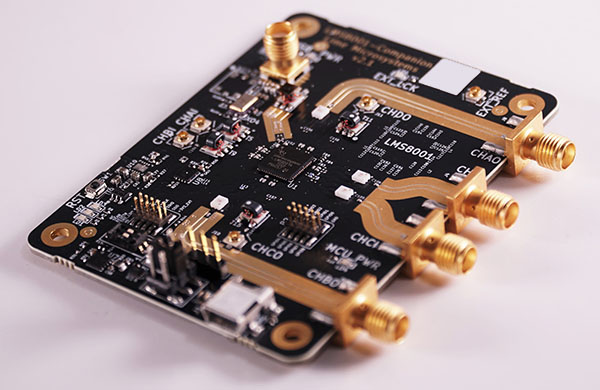
Enhance Phase Coherence and Thermal Stability in RF Transceiver PCB Stackups for Multi-Band Wireless Modules

Multi-band wireless modules are moving toward increasingly complex RF transceiver architectures, supporting simultaneous operation across sub-6 GHz, C-band, and mmWave channels. As bandwidth expands and carrier aggregation becomes standard, the performance of the RF transceiver PCB becomes a controlling factor in overall system efficiency. Maintaining phase coherence, thermal stability, and low-loss RF routing requires PCB...

Elevate Signal Integrity with Low-Loss Satellite PCB Architectures for Spaceborne RF Payloads

The shift toward high-throughput satellites, beam-steerable phased arrays, and broadband constellations has transformed how engineers design the satellite PCB at the core of every RF payload. In orbit, a PCB cannot rely on airflow, enclosure shielding, or serviceability. The board must deliver low-loss RF routing, stable dielectric behavior, and consistent electrical performance throughout years of...

Heavy Copper PCB: Enabling High-Current Reliability and Thermal Stability for Modern Power Electronics

Power electronics continue to advance toward higher efficiency, greater power density, and more compact architectures. From industrial motor drives to renewable energy inverters and high-current battery systems, modern equipment demands circuit boards that can withstand extreme electrical and thermal stress. At the core of these high-power platforms is the Heavy Copper PCB, a specialized board...

ADAS PCB: The Hidden Backbone Behind Safer, Smarter Driving

Advanced driver-assistance systems (ADAS) have shifted from premium features to mainstream safety requirements across global automotive platforms. Functions such as adaptive cruise control, automatic emergency braking, lane-keeping assistance, and highway piloting depend on a dense ecosystem of sensors and computing modules. At the center of this ecosystem lies a critical but often overlooked component: the...

Enhance Power Handling and Phase Stability Through Advanced Satellite PCB Materials in Ka- and Ku-Band Transceiver Modules

Ka- and Ku-band satellite transceivers demand high-frequency PCBs capable of handling elevated RF power while maintaining tight phase stability and low insertion loss. These modules operate in dense multilayer architectures, often within confined payloads, where thermal stress, EMI, and mechanical reliability directly impact signal fidelity and long-term performance. Advanced satellite PCB materials deliver low-loss dielectric...

Maximize RF Power Handling and Signal Integrity with Advanced RF Transceiver PCB Laminates in 5G/6G Networks

The Role of RF Transceiver PCB in Next-Generation Wireless Networks Modern 5G and emerging 6G communication systems require RF transceiver modules capable of supporting higher frequencies, wider bandwidths, and more complex multi-band operation. As wireless networks move toward mmWave frequency ranges, RF hardware must maintain excellent signal integrity, low insertion loss, phase stability, and thermal...

Achieve Long-Term Mechanical Integrity and Superior Heat Dissipation with Heavy Copper PCB Architectures for Energy Storage Systems

Energy Storage Systems (ESS)—from large-scale Battery Energy Storage Systems (BESS) to EV battery packs, industrial UPS units, and hybrid inverters—operate under sustained electrical and thermal stress. High charging currents, repeated load cycles, and fast switching from power semiconductors all demand a PCB platform that can withstand extreme conditions without degradation. This is exactly where Heavy...

Achieve Phase-Stable Multi-Gigabit Routing with Low Loss PCB Stackups for High-Speed Data Center Networks

Modern data center networks depend on multi-gigabit signal transmission, low-latency switching, and phase-coherent high-speed channels. As switching fabrics migrate from 25G/40G toward 100G/200G/400G architectures, even micro-scale distortions in dielectric properties or copper structures can degrade eye diagrams, reduce SNR, and trigger packet loss.This is why Low Loss PCB stackups—built with engineered dielectric materials and ultra-controlled...

mmWave Module PCB Engineering: Material Precision, RF Loss Control, and Manufacturing Realities

Next-generation RF transceivers—whether for 5G mmWave, SATCOM terminals, phased-array antennas, or short-range high-bandwidth links—place brutal demands on PCB materials. To maintain ultra-low insertion loss, wideband consistency, stable phase response, and clean radiation efficiency, mmWave module PCB materials must deliver precision alignment, ultra-low dielectric loss, tight Dk control, and minimal copper roughness across every layer. In...

Maximize High-Frequency Signal Integrity with Low Loss PCB Laminates in 5G mmWave Antenna Systems

High-frequency signal integrity is the defining performance factor in modern 5G mmWave antenna systems, where routing density, insertion loss, and phase stability determine overall RF efficiency. As 5G architectures transition to 26–29 GHz, 37–40 GHz, and 60 GHz mmWave bands, the electrical behavior of the Low Loss PCB stackup becomes just as important as the...