HomeCategory

Advanced Engineering Technologies for PCB & PCBA Solutions - KKPCB

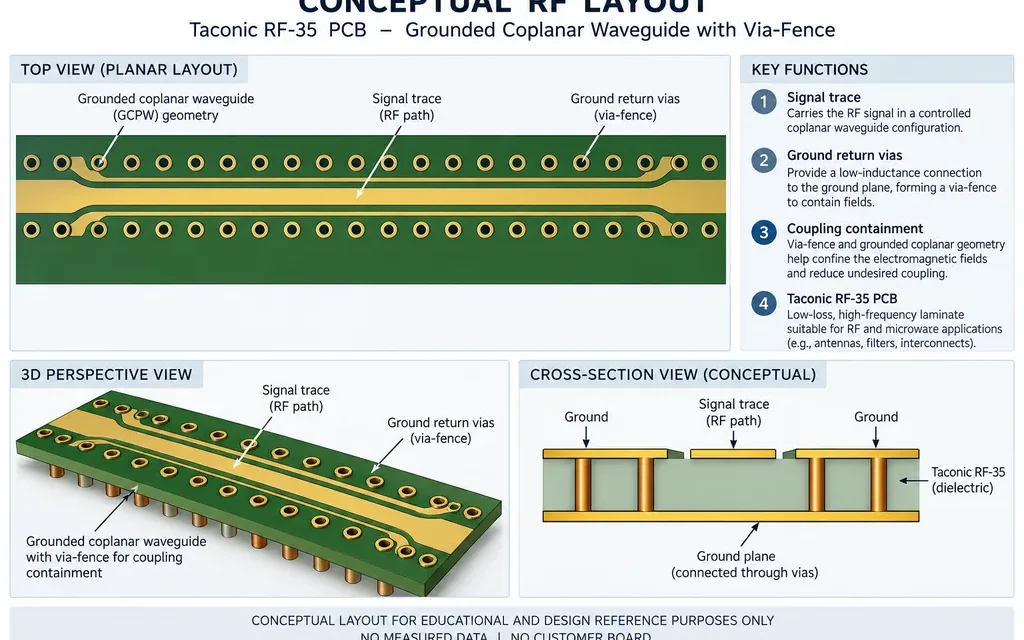
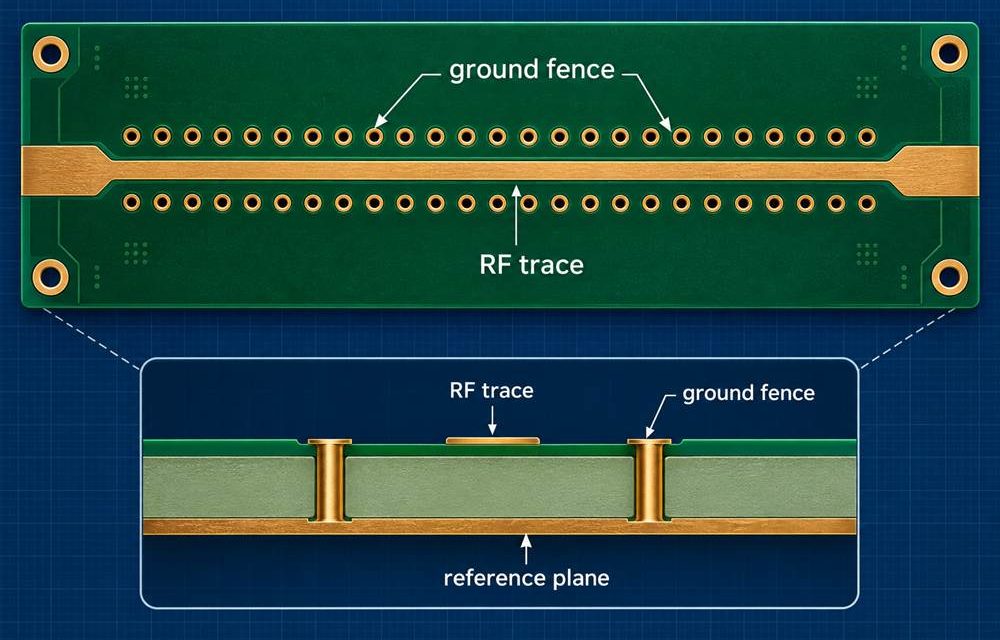
Taconic TLY-5 PCB Via-Fence Design: Containing Coupling Around RF Modules

Table of Contents Locate the coupling path before placing vias Build a repeatable fence and reference transition Coordinate shields, connectors, and assembly access Verify the fence in DFM and first article release Dense wireless modules often pass an electrical review and still show channel-to-channel coupling after the first hardware build. The cause is usually not...
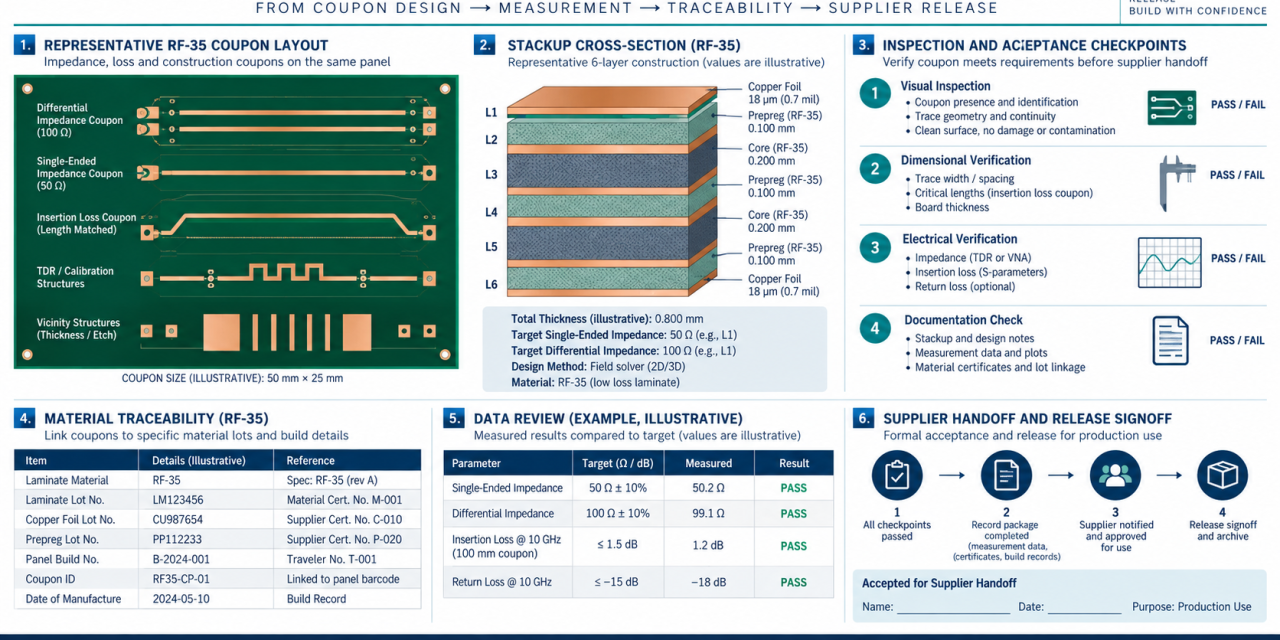
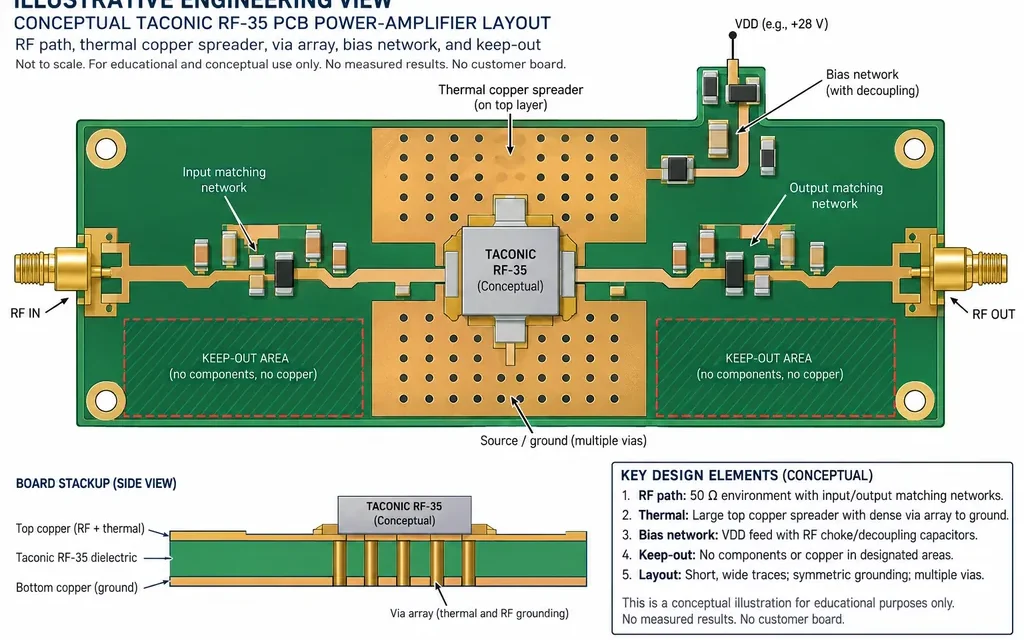
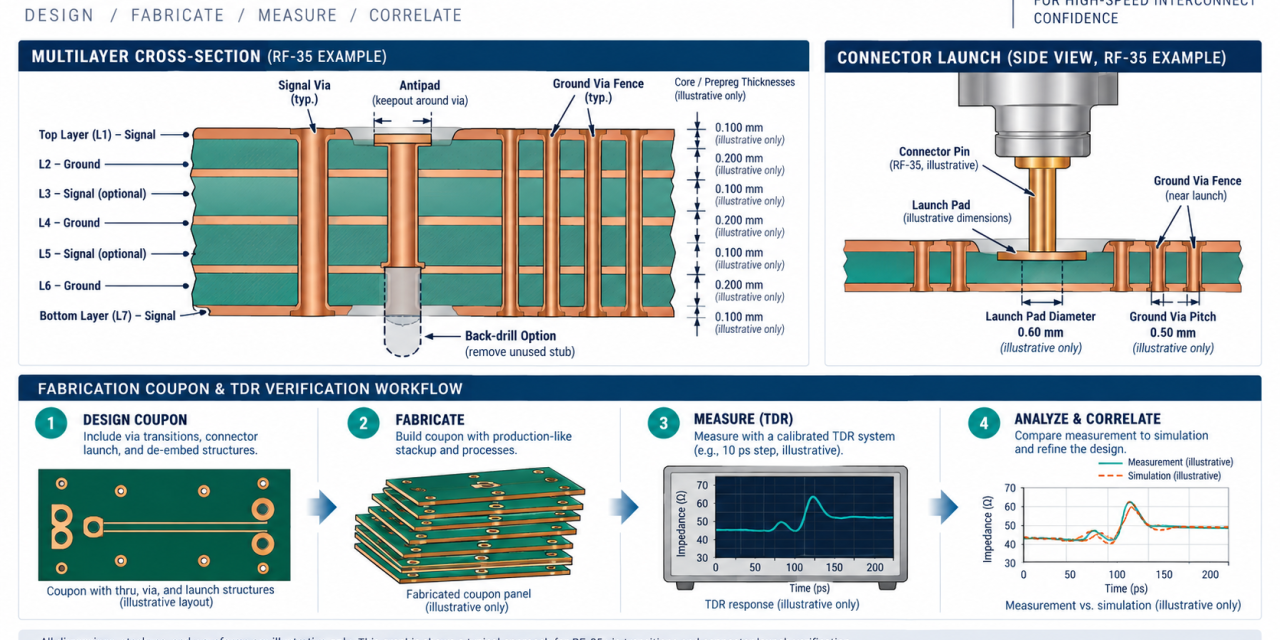
Taconic RF-35 PCB Coupon Design: Correlating Stackup, Impedance, and Production Release

Table of Contents Coupon decision and field geometry Measurement interface Data interpretation Production release gate An impedance coupon is valuable only when it represents the product path that the project team is trying to release. For a Taconic RF-35 PCB, a generic straight-line coupon may confirm a number while hiding the real risk in a...

Taconic RF-35 PCB Antenna Feed Keep-Outs: A DFM Method for Compact Wireless Modules

Table of Contents Feed field boundary Ground and shield continuity Connector and assembly access Manufacturing release Compact wireless modules rarely fail because the antenna feed is absent from the layout. They fail because the feed keep-out is treated as empty space instead of a controlled electromagnetic and manufacturing feature. A Taconic RF-35 PCB can provide...

Taconic RF-35 PCB Drill and Plating Control: Avoiding PTFE Via Reliability Escapes

Table of Contents PTFE drilling and stackup RF drill table and transition geometry Desmear and plating controls Coupons and assembly handoff A via can pass an electrical design review and still become the first reliability escape in a PTFE-based RF build. Drill wander on a Taconic RF-35 PCB, smear removal, rough hole walls, poor copper...

Taconic RF-35 PCB Copper Roughness: Turning Conductor Loss Into a Release Check

Table of Contents Copper profile and loss budget Drawing notes and finished geometry Cross-section inspection Procurement release gate Taconic RF-35 PCB projects often pass a schematic review and still lose margin at the first production build. The hidden variable is frequently conductor loss: copper roughness, finished trace width, etch shape, and the way the reference...

Taconic RF-35 PCB for Beamforming Networks: Holding Phase Balance Across a Multi-Channel Array

Table of Contents Electrical-length budget Stackup and return path Array routing and calibration Production release evidence Beamforming boards are often released as if they were ordinary controlled-impedance backplanes. That shortcut is risky. In a multi-channel array, a small phase error in one feed path changes the composite beam, reduces calibration margin, and can look like...

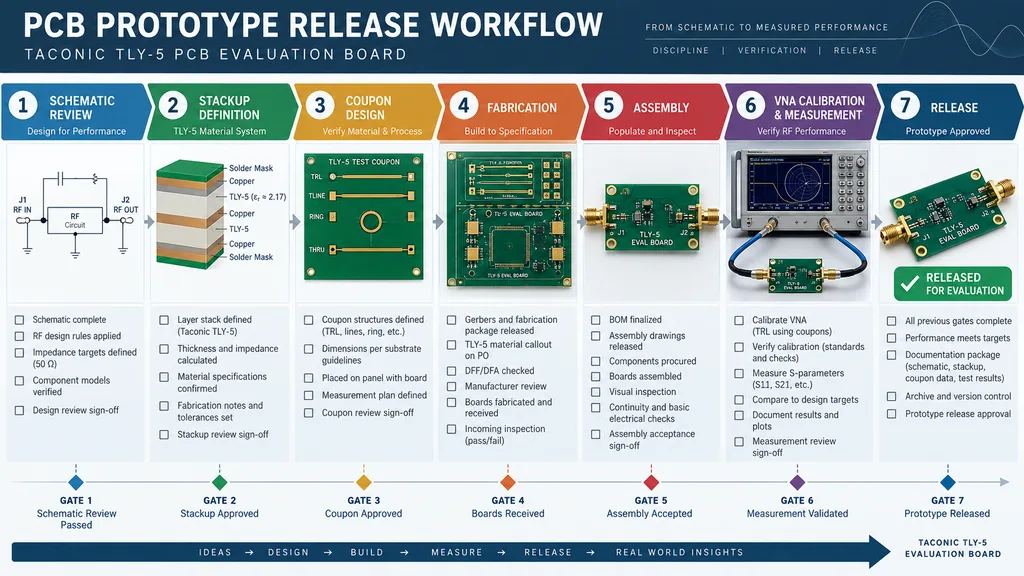
Taconic TLY-5 PCB Prototype Release: A Reliable Gate-by-Gate Checklist

Taconic TLY-5 PCB prototype release is where an RF evaluation board either becomes useful evidence or becomes an expensive collection of assumptions. The design may contain a capable laminate, but the team still needs a finished stackup, launch datum, representative coupon, assembly limits, calibration method, and a clear record of what is typical, calculated, targeted,...

Taconic TLY-5 PCB Thermal Cycling: Reading CTE Mismatch Before It Becomes a Registration Problem

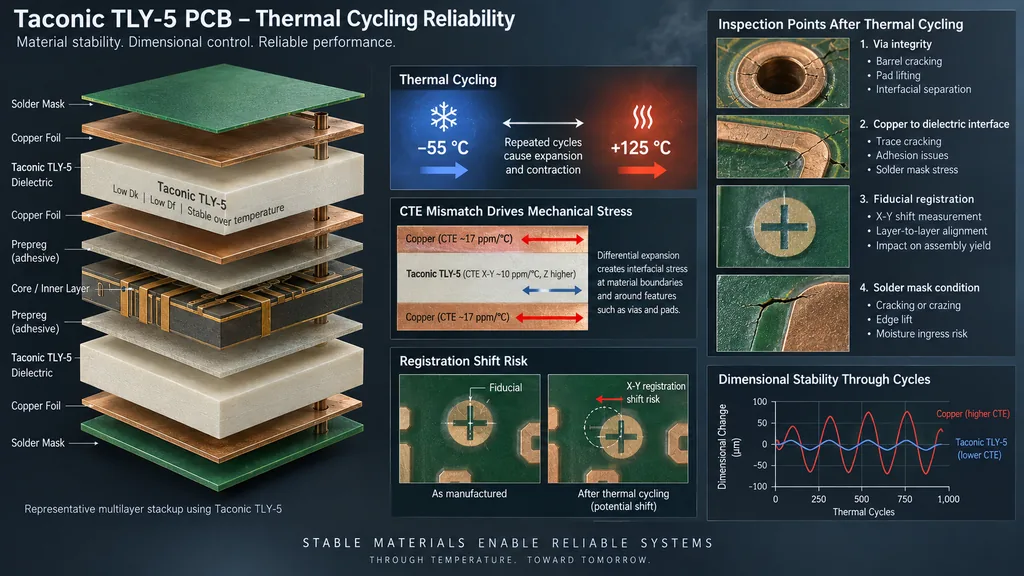
Taconic TLY-5 PCB thermal cycling can expose a registration problem long before a field failure is visible. Different copper, dielectric, mask, connector, and enclosure structures expand at different rates. In a multilayer RF board, that movement can change a via-to-pad relationship, connector datum, or phase-critical line. The right response is to read the CTE path...

Taconic TLY-5 PCB Differential Pairs: Reliable Reference-Plane Control

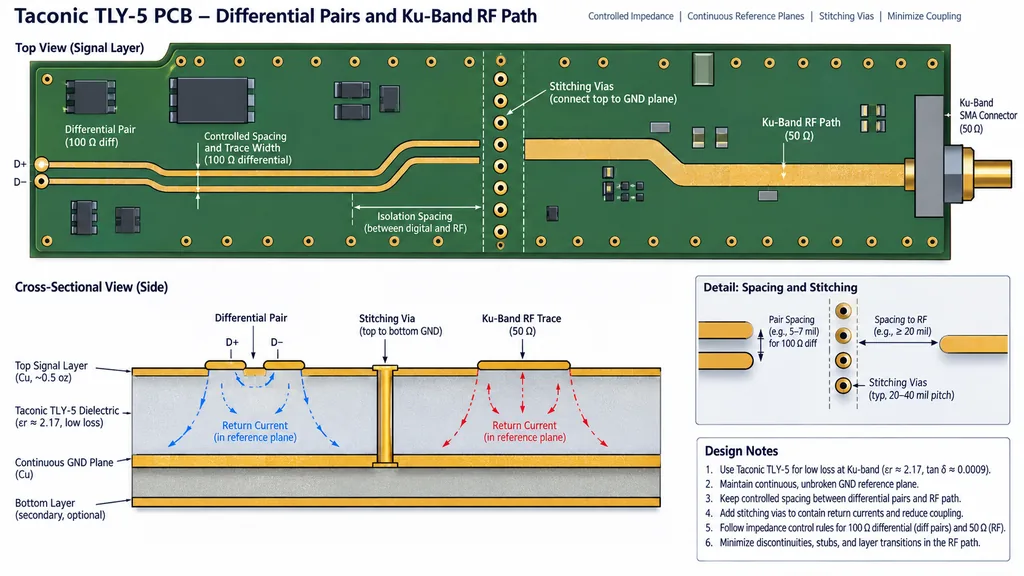
Taconic TLY-5 PCB differential pairs on a hybrid RF/digital board need a reference-plane strategy that respects both interfaces. The pair may be electrically balanced in isolation yet experience skew or common-mode conversion when it crosses a split, changes layer, or runs beside a phase-sensitive RF path. The project pain is often discovered at system integration,...

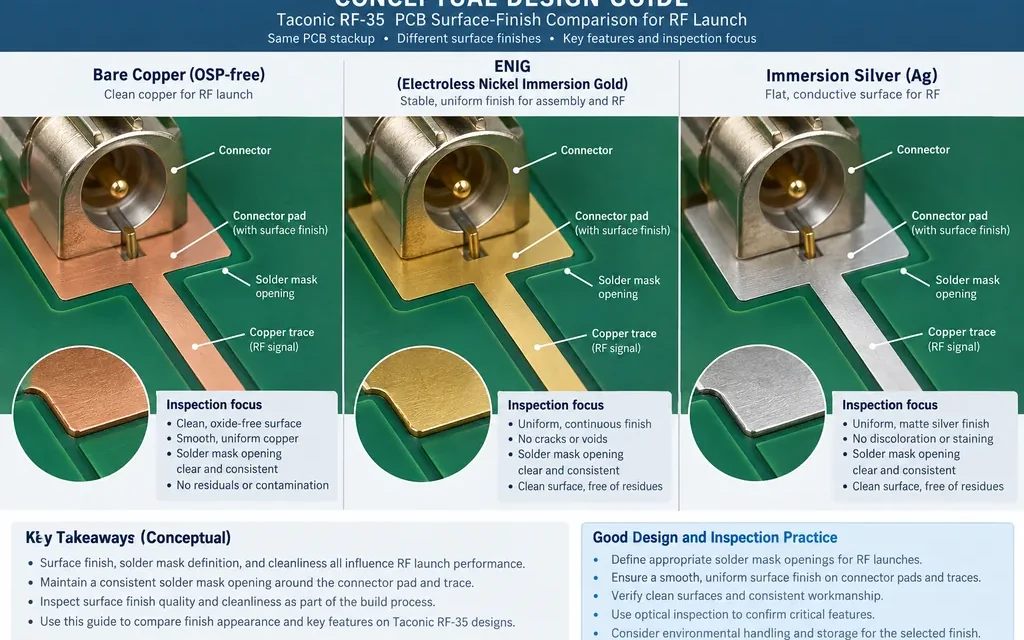
Taconic TLY-5 PCB Solder Mask Strategy: Reliable Open-CPW Decisions at Ku-Band

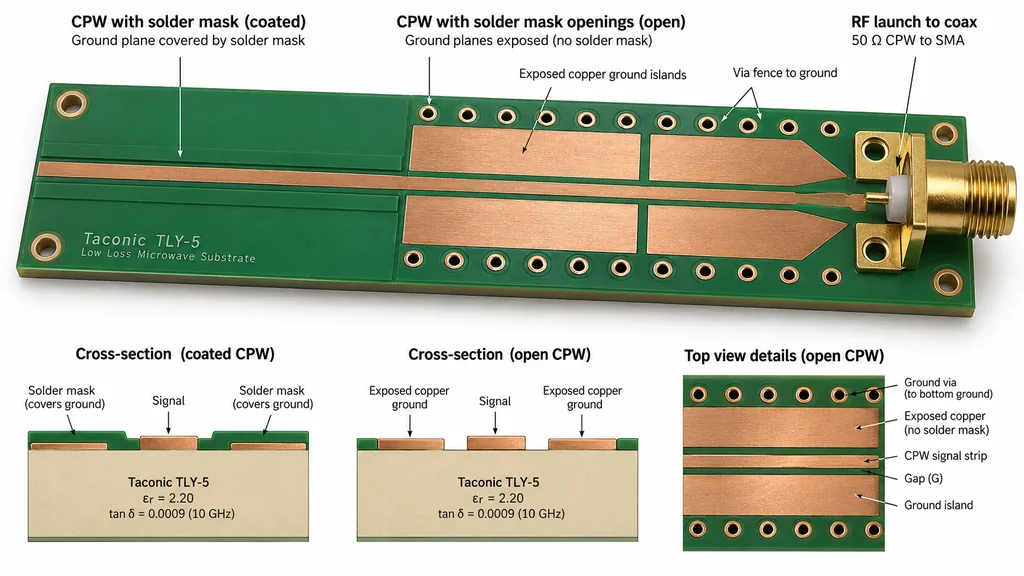
Taconic TLY-5 PCB solder mask decisions can change grounded coplanar waveguide more than a layout review suggests. A blanket coating adds dielectric material above the line, while an open region exposes copper to assembly, handling, and contamination concerns. The correct answer depends on frequency, geometry, finish, process capability, and how the connector or probe references...