HomeTag

PCBA - KKPCB

PCB Turnkey Services: A Complete One-Stop Solution for PCB Manufacturing and Assembly

Engineering Context As electronic products become increasingly complex, managing multiple suppliers for PCB fabrication, electronic components, SMT assembly, testing, and logistics introduces significant risks to project schedules, product quality, and overall cost. Communication gaps between suppliers often result in engineering inconsistencies, sourcing delays, production defects, and extended time-to-market. PCB Turnkey Services provide a comprehensive manufacturing...
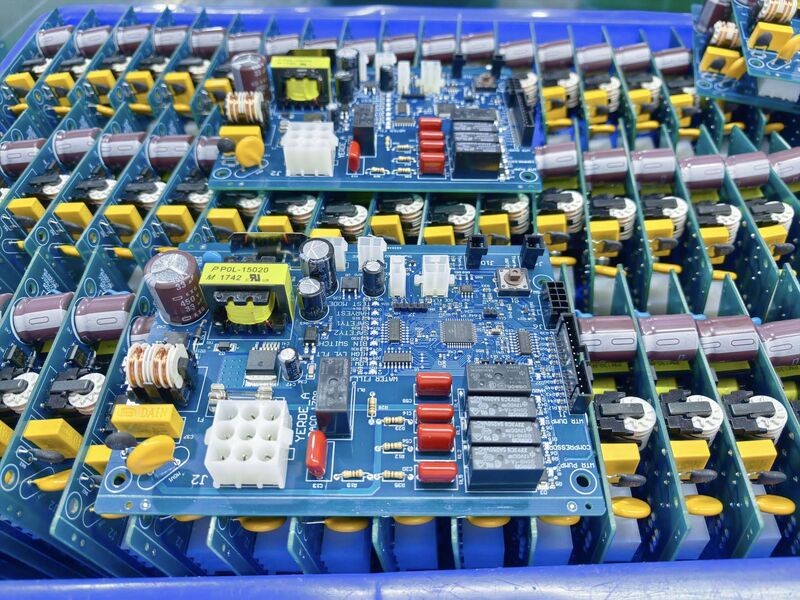
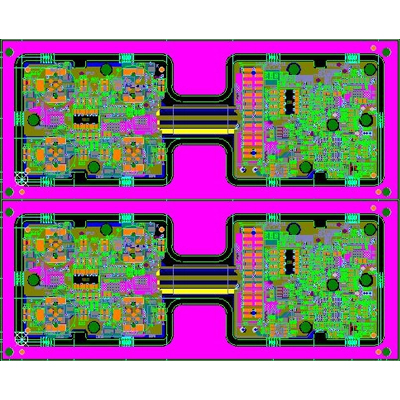
Turnkey PCB Assembly: KKPCB’s One-Stop Solution for Efficiency, Quality, and Innovation

What Is Turnkey PCB Assembly? When startups and technology innovators bring new products to life, they often face the same challenge — how to efficiently and affordably assemble printed circuit boards (PCBs) without maintaining a massive parts inventory or in-house production team.Turnkey PCB assembly solves this problem by offering a complete electronic manufacturing service in...

Medical-Grade PCB Technologies: Precision, Reliability, and Innovation by KKPCB

The Evolution of Medical PCBs Printed circuit boards (PCBs) have become the backbone of modern electro-medical technology. From pacemakers and defibrillators to MRI systems and wearable glucose monitors, the demand for compact, high-performance, and highly reliable electronic assemblies continues to rise. At KKPCB, we understand that medical electronics are not just products—they are lifelines. Every...

Pros and Cons of Through-Hole PCB Assembly vs. SMT PCB Assembly

Introduction: Choosing the Right PCB Assembly Method In modern electronics manufacturing, selecting the right PCB assembly method is critical for achieving optimal performance, cost efficiency, and product reliability. The two most common methods—Through-Hole PCB Assembly (THT) and SMT PCB Assembly (Surface Mount Technology)—each offer distinct advantages and limitations. Understanding the pros and cons of Through-Hole...

Advanced PCBs – Design, Manufacturing, and Assembly

Advanced PCBs represent the cutting edge of printed circuit board technology, enabling compact, high-performance, and highly reliable electronic systems for demanding applications such as 5G/6G infrastructure, ADAS automotive radar, AI computing, aerospace electronics, Industrial IoT, and medical devices. These boards go far beyond standard FR-4 designs, incorporating HDI (High-Density Interconnect), rigid-flex, high-frequency low-loss materials, heavy...

Advantages and applications of single-sided PCB

The Single-Sided PCB (Single-Layer PCB) is the most fundamental and widely used type of circuit board in the electronics industry. Featuring a single layer of conductive copper laminated onto a rigid base material (typically FR-4 or CEM-1), these boards are the backbone of high-volume, cost-sensitive electronics. For PCB manufacturing partners like KKPCB, the single-sided board remains a staple for projects...

Industrial PCB Production

Industrial PCB Production In today’s rapidly evolving industrial landscape, Printed Circuit Boards (PCBs) serve as the critical backbone of automation systems, control equipment, heavy machinery, robotics, and smart manufacturing solutions. Industrial PCB production demands far higher standards than consumer electronics. Boards must deliver exceptional reliability, durability under extreme conditions (vibration, temperature fluctuations, humidity, and dust),...

Pressure Sensor PCBA Solution Case Study for Industrial Control Equipment

1.Background Overview A client from Europe, engaged in the development of industrial automation systems, required integration of a high-precision pressure sensor module in their next-generation process control system. The module needed to detect subtle changes in gas or liquid pressure in real time to enable dynamic control and safety alerts. Given the complex environment in...

PCBA Solution Case Study for Motor Driver

With the increasing adoption of industrial automation, robotics, intelligent equipment, and electric motion systems, motor drivers have become essential components for precise and efficient motion control. A motor driver PCBA serves as the control and power interface between a controller and an electric motor. It manages: Motor speed regulation Torque control Direction control Current management...

KKPCB Success Story: Robotic Servo Drive Module PCBA

With the rapid development of industrial robotics, smart manufacturing, and automated production systems, robotic motion control technology has become increasingly important for achieving higher precision, speed, and efficiency. The servo drive module is one of the core electronic units in robotic systems. It controls motor operation by precisely regulating: Position Speed Torque Acceleration and deceleration...