Blog

Explore the KKPCB Blog for the latest PCB manufacturing and assembly news, industry insights, expert tips, and technology trends, helping you stay informed and optimize your electronics projects.
Megtron 7 PCB Connector Launches: A Back-Drill and Ground-Return Review for Multi-Gigabit Ports

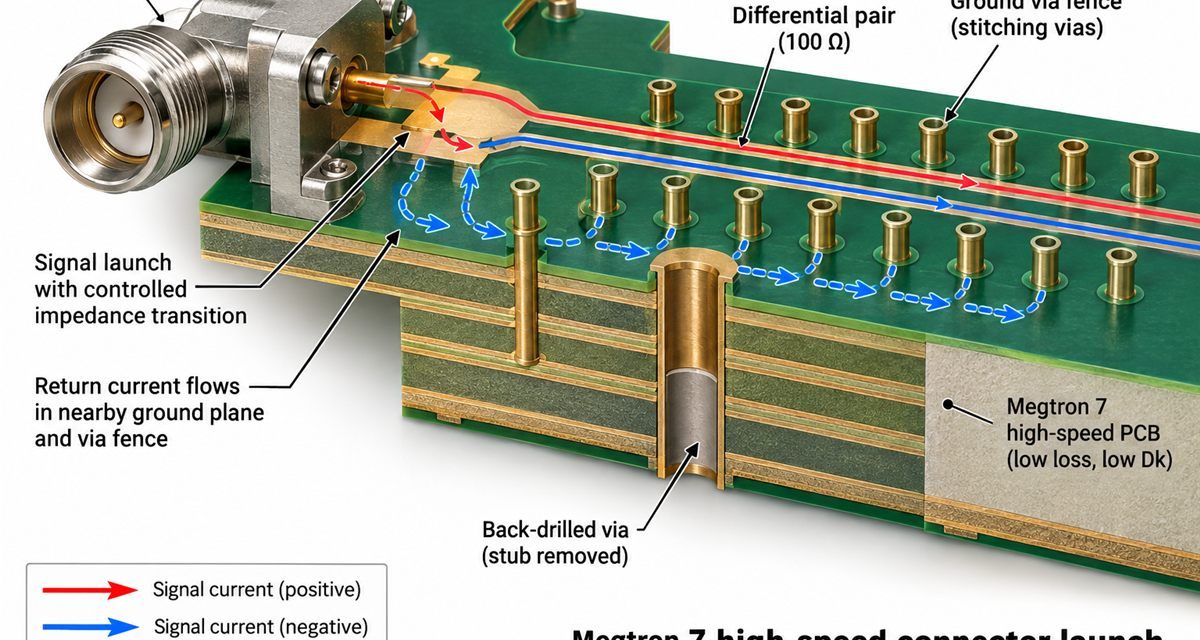
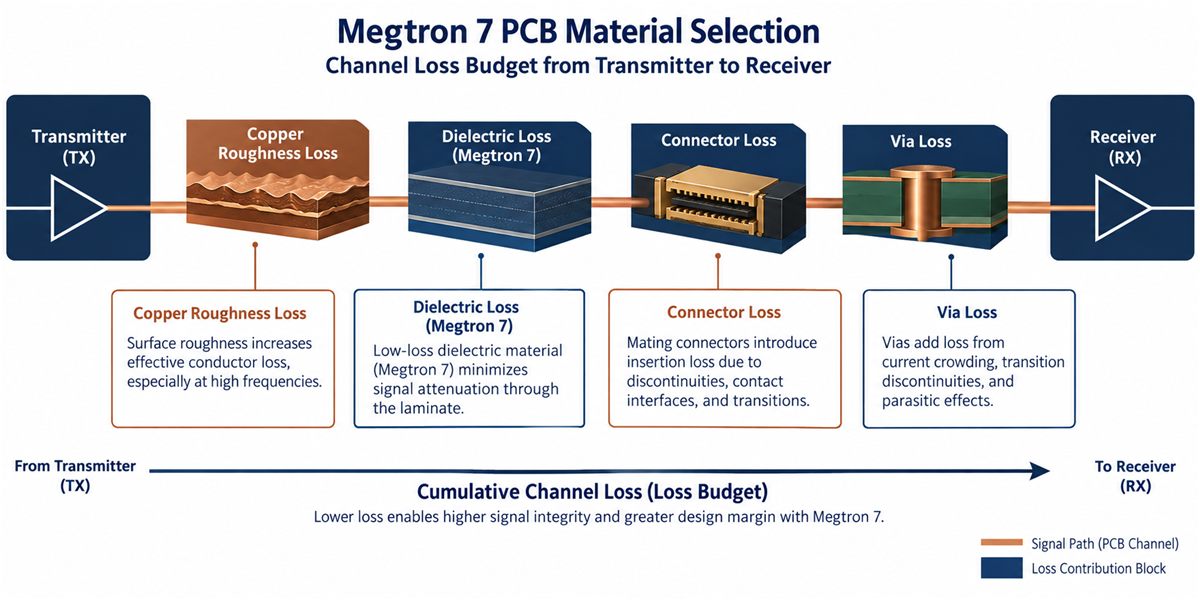
Connector launches often become the hidden bottleneck in a high-speed program. The laminate may have a low loss tangent, but an unused barrel stub, a broken reference plane, or an asymmetric ground-via pattern can dominate the transition. Treat every Megtron 7 PCB as a small RF structure with its own geometry, datum, and verification plan....
How to Freeze a Megtron 7 PCB Stackup When Layer Count and Impedance Must Move Together

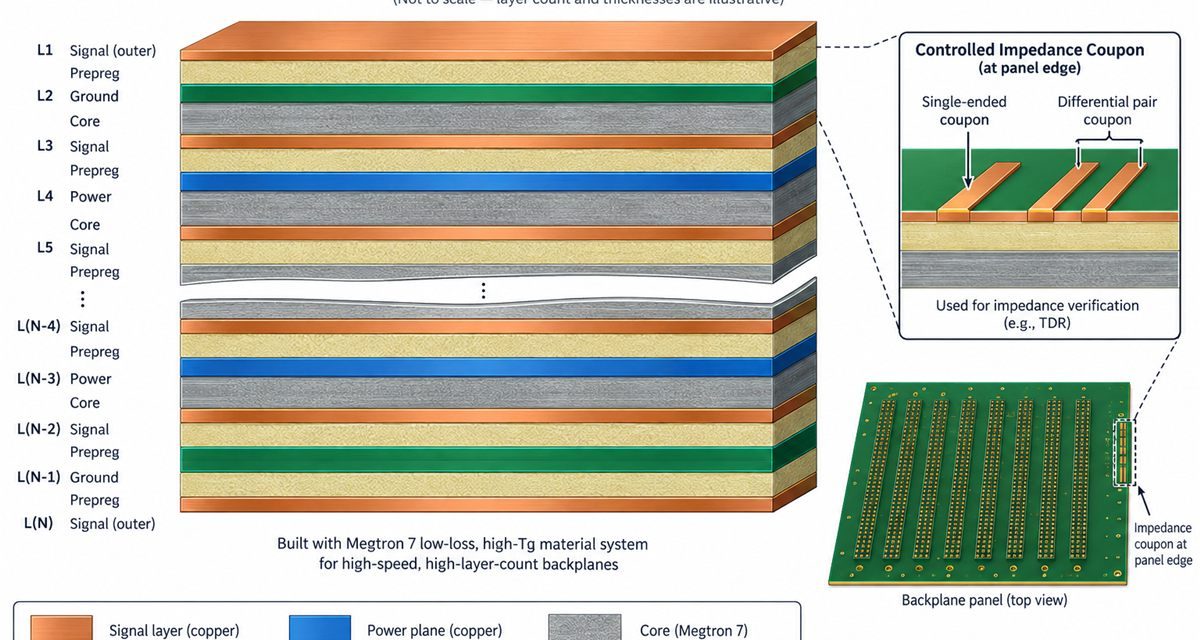
A Megtron 7 PCB stackup must be frozen as an electrical and manufacturing contract before layer count or impedance changes are approved. High-layer-count digital boards rarely fail because an engineer forgot to draw a trace. They fail when a late layer move changes dielectric thickness, resin distribution, or reference-plane continuity and the impedance model is...

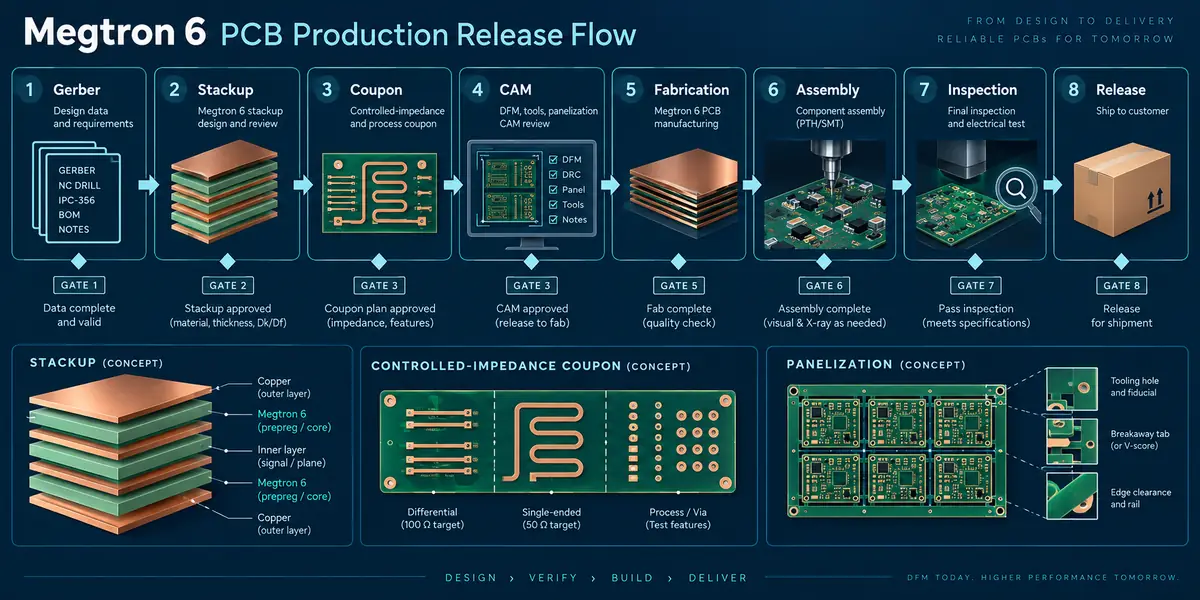
Megtron 6 PCB DFM Release: The Production Checks That Protect High-Speed Yield

The released Megtron 6 PCB construction is the reference for the DFM package. Any supplier change to a Megtron 6 PCB must carry the same stackup and coupon revision, so procurement can compare capacity without changing electrical intent. Megtron 6 PCB DFM release work is where a high-speed design becomes a repeatable production definition. A...

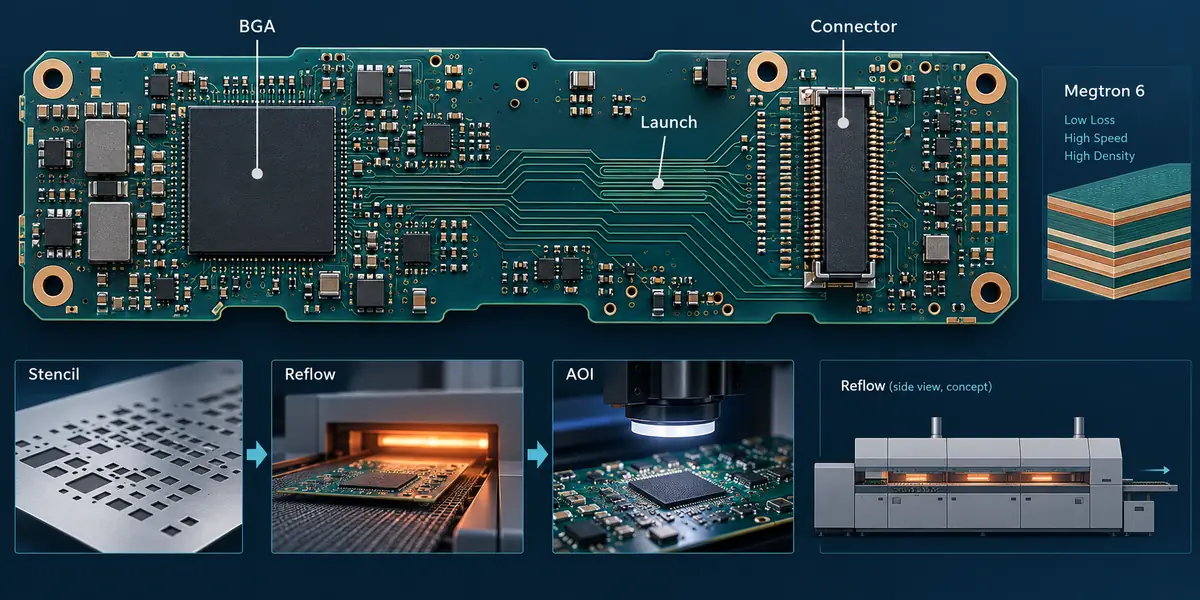
Megtron 6 PCB Assembly: A Reflow and Connector-Launch Plan for High-Speed Modules

The Megtron 6 PCB connector launch remains the shared datum for SI and assembly inspection. The production Megtron 6 PCB callout should travel with the reflow and inspection package. A connector change on a Megtron 6 PCB is an electrical and assembly change, not only a mechanical edit. For the release team, a Megtron 6...

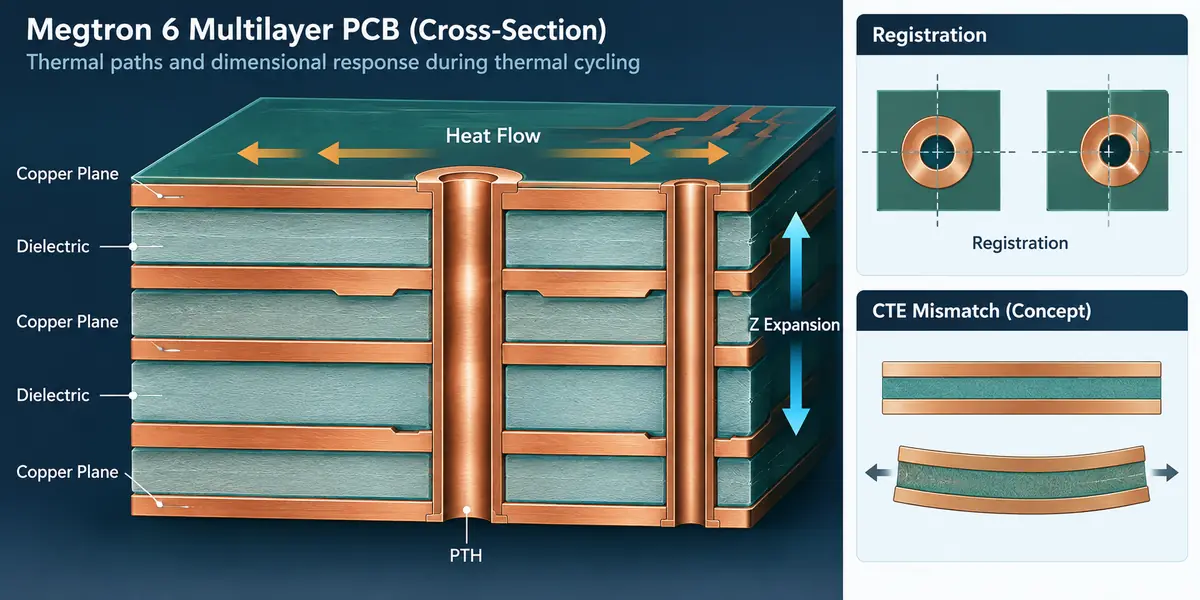
Megtron 6 PCB Thermal Cycling: Keeping Dense Multilayer Registration Predictable

The controlled Megtron 6 PCB datum should be reviewed before thermal cycling begins. For a dense compute Megtron 6 PCB, copper balance and registration targets belong in the same release package. A second Megtron 6 PCB construction should never be approved without a revised coupon plan. Megtron 6 PCB thermal reliability is a registration problem...

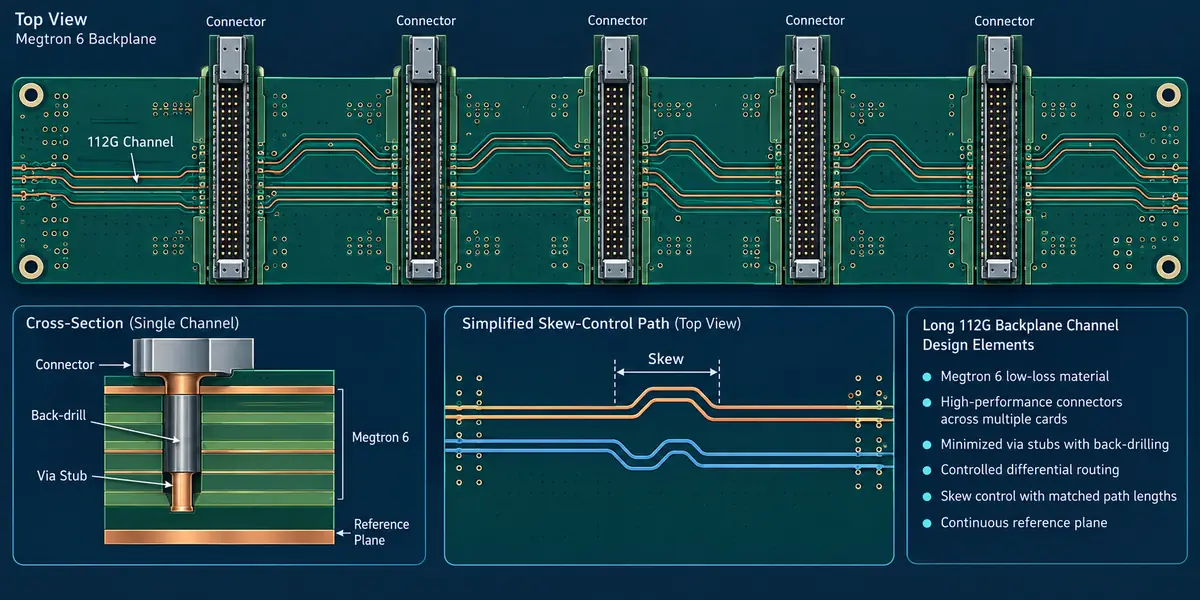
Megtron 6 PCB for 112G Backplanes: Managing Skew, Vias, and Reference-Plane Continuity

Table of Contents Channel construction Skew and weave control Via and plane continuity Coupon and release checks The released Megtron 6 PCB stackup must keep the 112G lane assumptions visible to design and fabrication. At this data rate, a small skew shift, a poorly referenced via field, or a connector launch that changes between panels...

Megtron 6 PCB Material Selection: Turning Loss Budgets into a Manufacturable Stackup

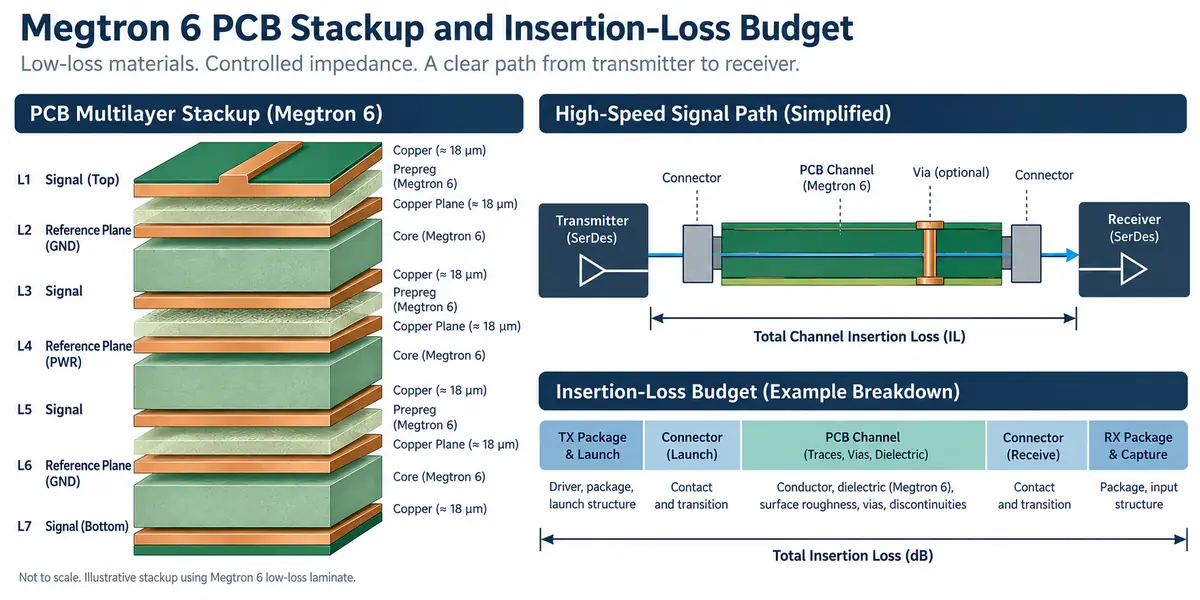
Megtron 6 PCB projects often fail late for a simple reason: the electrical loss budget was written before the stackup, copper profile, and connector geometry were frozen. A material family can support demanding high-speed channels, but the released board still depends on resin content, finished dielectric thickness, reference-plane continuity, copper roughness, and fabrication capability. This...

Taconic TLY-5 PCB Production Release: Linking DFM, Coupons, and Engineering Change Control

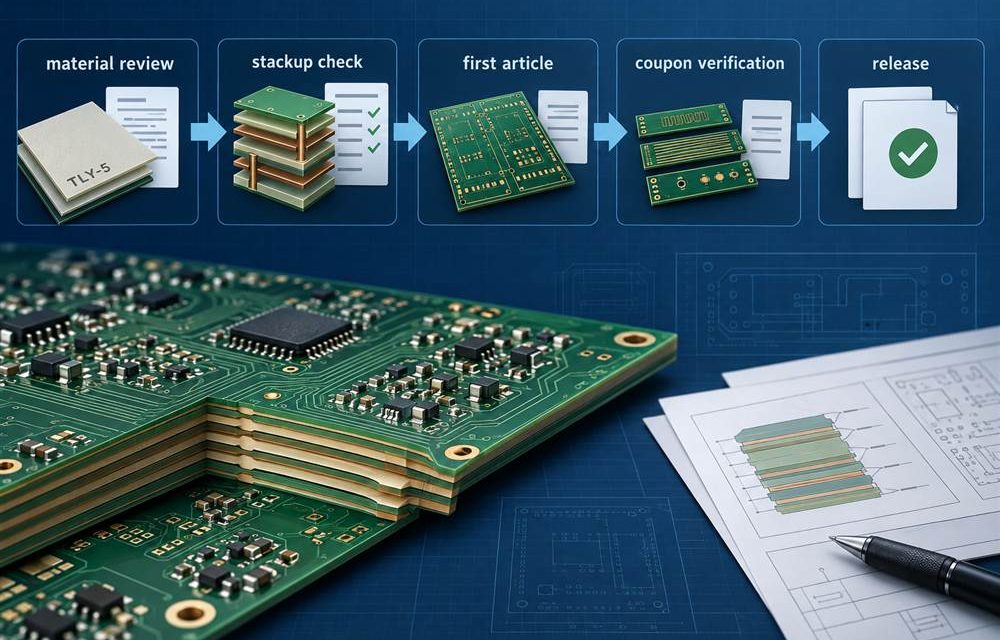
Table of Contents Turn the RF model into a release package Use coupons that correlate to product risk Control material and process changes Make the production handoff auditable Prototype success does not automatically create a repeatable production baseline. A material substitution, a different panel orientation, or a “small” drill-table change can move an RF launch...

Taconic TLY-5 PCB Assembly Window: Reflow and Connector Workmanship for RF Builds

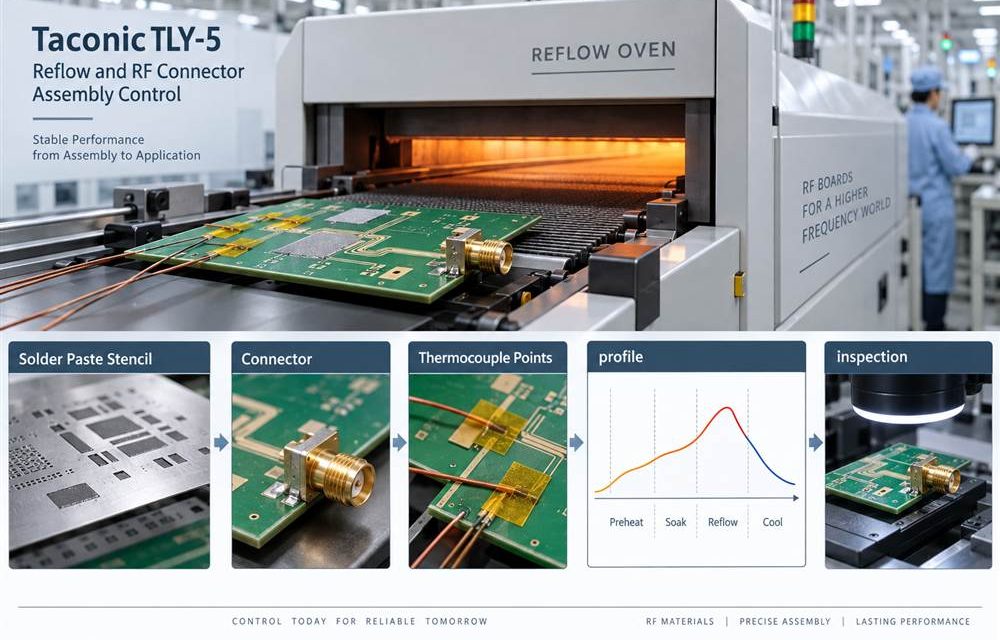
Table of Contents Define the RF assembly window before quoting Protect the connector launch through reflow Inspect solder and cleanliness without disturbing RF geometry Control rework and release evidence RF boards can meet bare-board inspection and still miss the project target after assembly. A connector pin may pull a launch pad, solder mask can creep...