PCB Materials | FR-4, High-Frequency, Low-Loss & Heavy Copper - KKPCB
 
HomeCategory

PCB Materials | FR-4, High-Frequency, Low-Loss & Heavy Copper - KKPCB

Characteristics of RF Interfaces and RF Circuits in PCB Design

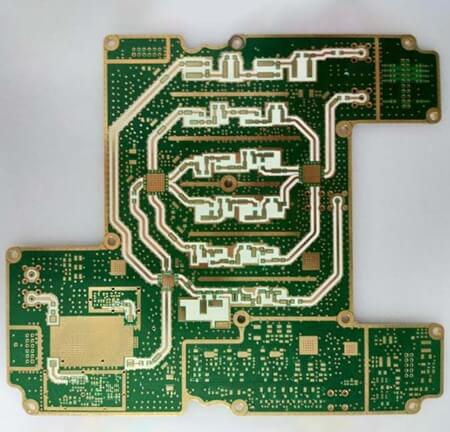
Understanding RF PCB Design in Modern High-Frequency Electronics As wireless communication technology rapidly advances toward: 5G and 6G communication millimeter-wave systems satellite communication automotive radar IoT wireless networks aerospace RF systems the importance of advanced RF PCB design has become increasingly critical. Unlike conventional digital PCB systems, RF circuits in PCB design operate at: high...

High-Frequency Circuit Design Solution Based on RT/duroid® 6010.2LM Material for Miniaturization

Discover the advantages of RT/duroid® 6010.2LM high-frequency PCB material for compact RF and microwave circuit designs. With a high dielectric constant (Dk 10.7), low loss tangent (0.0026 @10 GHz), excellent thermal stability, and superior mechanical properties, KKPCB helps you achieve miniaturized circuits with high signal integrity for 5G, satellite communications, and high-density PCBs.

PCB Prototyping Services

In modern electronics development, PCB prototyping services play a critical role in transforming circuit concepts into functional hardware. Whether for high-speed PCB design, RF PCB development, or industrial electronics, fast and accurate PCB prototype manufacturing ensures design validation, reduces risks, and accelerates time-to-market. Professional PCB prototyping services provide engineers with rapid turnaround, high-quality fabrication, and...

How to Choose the Right Material for Flexible LED PCB

Introduction: Why Material Selection Matters in Flexible LED PCB In modern LED lighting applications, selecting the right material for a flexible LED PCB is critical to achieving optimal thermal performance, flexibility, and long-term reliability. As LED products continue to evolve toward thin, lightweight, and bendable designs, the importance of choosing the correct flexible PCB material...

Rigid-Flex PCBs: Features, Benefits and Challenges

Introduction: The Rise of Rigid-Flex PCB Technology As modern electronics continue to evolve toward miniaturization, high reliability, and complex system integration, Rigid-Flex PCBs have become a key solution in advanced PCB design and manufacturing. By combining the strengths of rigid PCBs and flexible PCBs, Rigid-Flex PCB technology enables innovative product designs that are both compact...

Aluminum PCB vs. Standard PCB: A Complete Guide to Finding the Right One for You!

1. Introduction: Why PCB Material Selection Matters In modern PCB design and manufacturing, material selection plays a decisive role in product performance, especially in applications involving high power density, heat dissipation, and reliability requirements. Two of the most commonly compared options are: Aluminum PCB (Metal Core PCB, MCPCB) Standard FR4 PCB Each type has unique...

Optimizing Thermostat PCB Design: Ensuring Efficient and Reliable Temperature Control Performance

In modern HVAC systems, smart homes, industrial automation, and building management, thermostats play a critical role in precise temperature regulation, energy efficiency, and user comfort. At the heart of every advanced thermostat lies a well-optimized PCB (Printed Circuit Board) that integrates sensors, microcontrollers, power management, wireless connectivity, and user interface elements. Poor PCB design can...

PCB Assembly for Industrial Controls and How to Make Industrial PCBs?

Industrial PCB Assembly as the Backbone of Automation Systems In modern industrial control systems, PCB assembly (PCBA) is the core foundation that ensures reliable operation of automation equipment, PLC systems, motor drives, robotics controllers, and industrial IoT devices. Compared with consumer electronics, industrial PCBs must withstand harsh environments, including high temperature, electrical noise (EMI), vibration,...

Multilayer PCB Manufacturing Process: A Complete Step-by-Step Guide

Multilayer PCBs (Printed Circuit Boards) are the heart of complex modern electronics, consisting of three or more conductive copper layers separated by insulating dielectric materials. Unlike simpler boards, they offer higher circuit density and improved signal integrity, making them essential for everything from smartphones to aerospace technology. Step 1: Design and Data Preparation The process...