
In modern HVAC systems, smart homes, industrial automation, and building management, thermostats play a critical role in precise temperature regulation, energy efficiency, and user comfort. At the heart of every advanced thermostat lies a well-optimized PCB (Printed Circuit Board) that integrates sensors, microcontrollers, power management, wireless connectivity, and user interface elements. Poor PCB design can lead to temperature drift, inaccurate readings, electromagnetic interference (EMI), power inefficiency, or premature failure — issues that directly impact system reliability and energy savings.
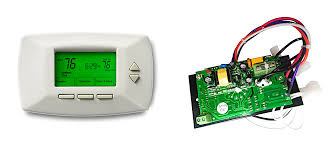
At KKPCB, we specialize in optimizing thermostat PCBs for both consumer smart thermostats and rugged industrial temperature control applications. Our engineering team helps customers achieve stable performance, compact layouts, low power consumption, and long-term reliability through expert design-for-manufacturability (DFM) and high-quality fabrication.
Key Challenges in Thermostat PCB Design
Thermostat PCBs must address several unique requirements:
- High-Accuracy Temperature Sensing — Minimal self-heating from nearby components and stable sensor placement.
- Mixed-Signal Integration — Combining sensitive analog sensor circuits with digital MCUs, displays, and wireless modules (Wi-Fi, Bluetooth, Zigbee, LoRa).
- Power Efficiency — Especially important for battery-powered or low-voltage smart thermostats.
- Thermal Management — Preventing heat from power components or processors from affecting temperature sensors.
- Environmental Durability — Resistance to humidity, dust, vibration, and wide temperature ranges in industrial settings.
- EMC/EMI Compliance — Ensuring the board does not interfere with its own sensors or external systems.
- Cost-Effective Miniaturization — Balancing compact size with manufacturability for high-volume production.
Best Practices for Optimizing Thermostat PCB Design
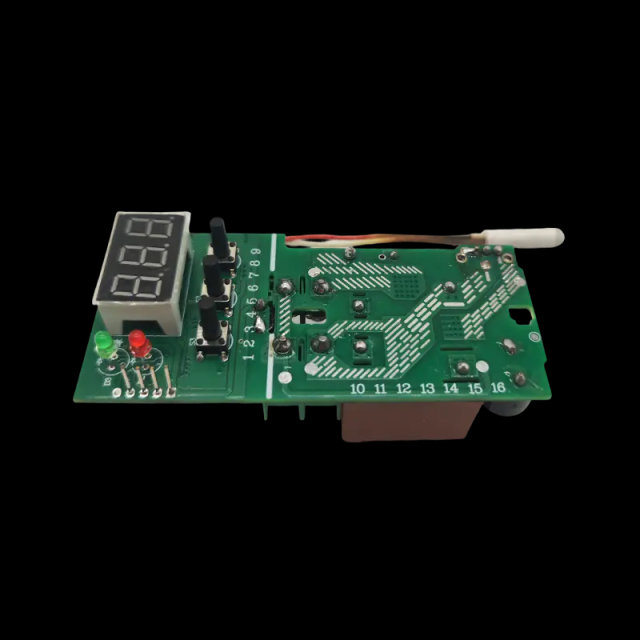
Here are proven strategies that KKPCB recommends and implements for superior thermostat performance:
- Sensor Placement and Thermal Isolation Position temperature sensors (NTC thermistors, DS18B20, TMP series, etc.) far from heat-generating components such as voltage regulators, processors, or relays. Use thermal vias, cutouts, or slots in the PCB to create thermal barriers. Keep sensor traces short and shielded to reduce noise pickup.
- Layer Stack-Up and Grounding Strategy Adopt a 4-layer or 6-layer stack-up with dedicated ground and power planes. A solid ground plane beneath the analog sensor section helps reduce EMI and provides stable reference. Implement star grounding or split analog/digital grounds to prevent digital noise from contaminating sensitive temperature readings.
- Power Management Optimization Use high-efficiency DC-DC converters or LDOs with low quiescent current. Separate power domains for the MCU, wireless module, and sensors. Incorporate sleep modes and proper decoupling capacitors close to every IC to minimize power ripple that could affect sensor accuracy.
- Component Selection and Layout Choose low-drift, high-precision sensors and reference components. Route high-speed digital signals (I2C, SPI) away from analog traces. Keep clock lines short and impedance-controlled if necessary. Place relays or switching elements on the edge of the board to isolate mechanical and thermal effects.
- Thermal Management Techniques Add copper pours, thermal vias, or heatsinks for power-dissipating parts. In industrial thermostats, consider metal-core PCBs (MCPCB) or thicker copper (2 oz or higher) for better heat spreading while maintaining sensor isolation.
- EMC and Signal Integrity Implement proper filtering (ferrite beads, capacitors) on power and I/O lines. Use guard rings or grounded shielding around sensitive analog areas. Simulate and verify layouts with signal integrity tools to avoid crosstalk.
- Material and Surface Finish Choices Standard FR-4 is often sufficient for consumer thermostats, but industrial versions benefit from high-Tg FR-4 or halogen-free materials for improved reliability under humidity and temperature cycling. ENIG surface finish is preferred for better solderability and corrosion resistance.
- Design for Manufacturability (DFM) and Testability Follow IPC standards for trace widths, spacing, and annular rings. Include test points for functional verification of sensor circuits and communication interfaces. Consider panelization that minimizes warpage during reflow.
KKPCB’s Advantages in Thermostat PCB Production
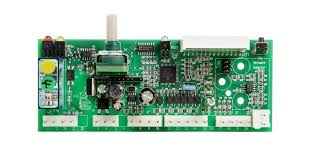
- End-to-End Support — From schematic review and layout optimization to PCB fabrication, component sourcing, and full PCBA (SMT + DIP + functional testing).
- Precision Manufacturing — Tight tolerances on trace geometry, impedance control (if RF modules are used), and multilayer registration to ensure consistent sensor performance.
- Quality Assurance — 100% electrical testing, AOI, X-ray inspection, and burn-in testing for high-reliability industrial thermostats.
- Flexible Production — Rapid prototyping (as fast as 24–48 hours) and seamless scaling to mass production with consistent quality.
- Certifications — IPC-A-610 Class 2/3, ISO 9001, IATF 16949 — meeting requirements for both consumer and industrial-grade devices.
With optimized thermostat PCB designs from KKPCB, customers achieve:
- Temperature accuracy within ±0.5°C or better
- Extended battery life in wireless models
- Reduced field failure rates
- Faster certification and time-to-market
Future Trends in Thermostat PCB Design
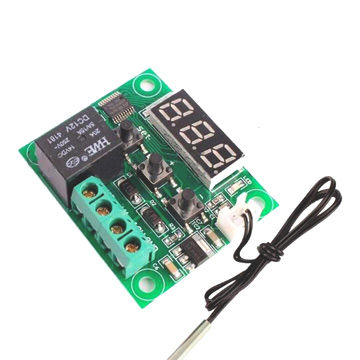
Emerging designs are moving toward greater integration with AI-based predictive control, multi-sensor fusion (temperature + humidity + occupancy), edge computing, and Matter/Thread connectivity. KKPCB stays ahead by supporting finer-pitch components, HDI layouts, and hybrid rigid-flex structures for space-constrained smart thermostats.
Ready to optimize your thermostat PCB for better efficiency and reliability? Share your schematic, requirements, or target specifications with the KKPCB engineering team. We provide free DFM feedback, thermal analysis recommendations, and competitive quotes — helping you deliver accurate, energy-efficient, and durable temperature control solutions.
Tags:
