
1. Introduction: Why PCB Material Selection Matters
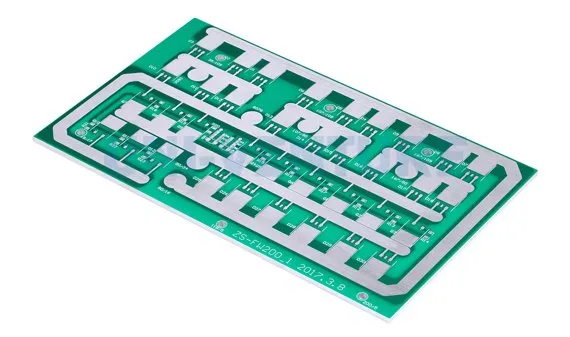
In modern PCB design and manufacturing, material selection plays a decisive role in product performance, especially in applications involving high power density, heat dissipation, and reliability requirements.
Two of the most commonly compared options are:
- Aluminum PCB (Metal Core PCB, MCPCB)
- Standard FR4 PCB
Each type has unique strengths and limitations, making them suitable for different electronic applications.
At KKPCB, both aluminum PCB and FR4 PCB solutions are widely used across industrial, automotive, and consumer electronics markets.
2. What is an Aluminum PCB?
An aluminum PCB, also known as a metal core PCB (MCPCB), is a printed circuit board that uses an aluminum substrate as the base material.
It typically consists of:
- Circuit layer (copper foil)
- Dielectric insulation layer
- Aluminum base layer (heat spreading layer)
Key Feature:
Excellent thermal conductivity, enabling fast heat dissipation from high-power components.
3. What is a Standard PCB (FR4 PCB)?
A standard PCB usually refers to FR4-based fiberglass epoxy boards, which are the most widely used PCB material globally.
Structure includes:
- Copper circuit layer
- FR4 insulating substrate (glass fiber + epoxy resin)
- Optional multilayer stacking
Key Feature:
Balanced performance in cost, electrical insulation, and mechanical strength.
4. Aluminum PCB vs FR4 PCB: Key Comparison
4.1 Thermal Performance
- Aluminum PCB:
- Excellent heat dissipation
- Ideal for high-power LEDs and power electronics
- Reduces thermal resistance significantly
- FR4 PCB:
- Poor thermal conductivity
- Requires external cooling (heatsinks, fans)
4.2 Electrical Performance
- Aluminum PCB:
- Suitable for low-to-medium frequency circuits
- Limited for high-speed signal transmission
- FR4 PCB:
- Excellent signal integrity
- Suitable for high-speed digital and RF circuits
4.3 Mechanical Strength
- Aluminum PCB:
- Strong and rigid
- Resistant to vibration and thermal stress
- FR4 PCB:
- Good mechanical stability
- Slightly more flexible under thermal cycling
4.4 Cost Comparison
- Aluminum PCB: Higher manufacturing cost due to metal base and thermal layer processing
- FR4 PCB: Cost-effective and widely mass-produced
4.5 Manufacturing Complexity
- Aluminum PCB:
- Requires specialized lamination process
- More strict thermal management in fabrication
- FR4 PCB:
- Mature, standardized production process
- Supports high-layer count designs
5. Application Scenarios
5.1 Aluminum PCB Applications
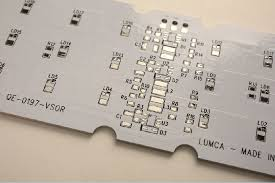
Aluminum PCBs are widely used in:
- LED lighting systems
- Power supply modules
- Automotive headlamps
- Motor control systems
- High-power converters
They are ideal when heat dissipation is the main design challenge.
5.2 FR4 PCB Applications
FR4 PCBs dominate most electronics industries:
- Consumer electronics (phones, laptops)
- Communication devices
- Industrial control boards
- IoT devices
- RF and high-speed digital systems
They are ideal for general-purpose and high-frequency designs.
6. Design Considerations When Choosing PCB Type
When selecting between aluminum PCB and FR4 PCB, engineers must consider:
- Power density of components
- Operating temperature range
- Signal frequency requirements
- Cost constraints
- Mechanical stress conditions
A wrong selection can lead to:
- Overheating failures
- Signal degradation
- Reduced product lifespan
7. Hybrid Solutions in Modern PCB Design
In advanced applications, hybrid structures are increasingly used:
- FR4 + metal core combination
- Thermal vias in FR4 boards
- Embedded heat spreaders
This approach balances thermal performance and electrical functionality.
8. KKPCB Engineering Support for PCB Material Selection
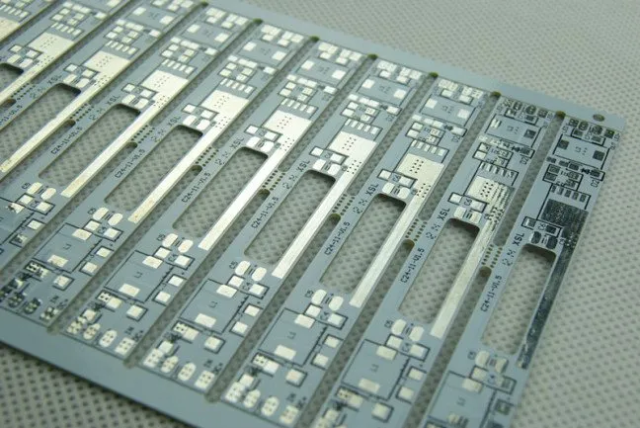
At KKPCB, engineers assist customers in:
- Material selection optimization (FR4, aluminum, copper core)
- Thermal simulation and analysis
- DFM (Design for Manufacturing) evaluation
- Cost-performance balancing
- Application-specific PCB stack-up design
This ensures each project achieves the best thermal reliability, electrical performance, and cost efficiency.
9. Conclusion
The choice between aluminum PCB and standard FR4 PCB depends entirely on application requirements.
- Choose Aluminum PCB for high-power, high-heat environments
- Choose FR4 PCB for high-speed, cost-sensitive, and general-purpose electronics
A well-informed material selection ensures better thermal reliability, electrical stability, and product longevity.
