KKPCB Blog – PCB & PCBA Insights, News, and Tips - KKPCB
 

Blog

Explore the KKPCB Blog for the latest PCB manufacturing and assembly news, industry insights, expert tips, and technology trends, helping you stay informed and optimize your electronics projects.
Flexible PCB Manufacturing Process: Flexible Circuit Board (FPC)

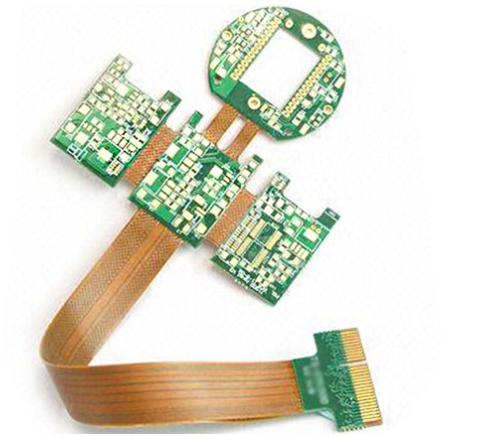
Flexible Printed Circuits (FPCs), commonly known as Flexible PCBs, have revolutionized modern electronics by offering a bendable, lightweight alternative to traditional rigid boards. Made from polyimide (PI) or polyester (PET) base materials, FPCs allow for 3D wiring and high-density packaging, making them indispensable for smartphones, wearables, medical devices, and automotive systems. Step 1: Material Preparation (Laminate...

Multilayer PCB Manufacturing Process: A Complete Step-by-Step Guide

Multilayer PCBs (Printed Circuit Boards) are the heart of complex modern electronics, consisting of three or more conductive copper layers separated by insulating dielectric materials. Unlike simpler boards, they offer higher circuit density and improved signal integrity, making them essential for everything from smartphones to aerospace technology. Step 1: Design and Data Preparation The process...

PCB Substrate and Core Materials: A Comprehensive Guide

The Printed Circuit Board (PCB) is a fundamental component in all modern electronics, providing the platform for the electronic components and circuits. The performance, durability, and overall quality of a PCB are heavily influenced by the materials used for its substrate and core. This comprehensive guide explores the different types of PCB substrate and core materials, their properties, applications, and why they are...

Turnkey PCB Assembly: A Comprehensive Guide to Efficient and Reliable Electronics Manufacturing

Turnkey PCB assembly is rapidly becoming a preferred solution for businesses seeking a comprehensive, one-stop service for printed circuit board (PCB) manufacturing and assembly. In the fast-paced electronics industry, efficiency, speed, and reliability are key to maintaining competitiveness. By streamlining the entire process from design to delivery, turnkey PCB assembly services allow companies to focus on research and development...

PCB Substrate Materials: Understanding the Types of PCB Materials

PCB (Printed Circuit Board) substrate materials are the backbone of a PCB assembly, providing the necessary foundation for copper tracks and electronic components. The choice of PCB material plays a critical role in determining the performance, durability, and overall reliability of the PCB. These materials can be resin-based, fiberglass-based, epoxy-glass, metal-based, or flame-retardant, and they are...

Advantages and Applications of Double-Sided PCB

What is a Double-Sided PCB? A Double-Sided PCB (also known as a Double-Layer PCB) is a type of printed circuit board where both sides of the substrate are used for placing electronic components and conductive copper traces. Unlike single-sided PCBs, which have a copper layer on only one side, double-sided PCBs feature conductive layers on both sides of the board, connected via plated-through holes (PTH),...

Advantages and applications of single-sided PCB

The Single-Sided PCB (Single-Layer PCB) is the most fundamental and widely used type of circuit board in the electronics industry. Featuring a single layer of conductive copper laminated onto a rigid base material (typically FR-4 or CEM-1), these boards are the backbone of high-volume, cost-sensitive electronics. For PCB manufacturing partners like KKPCB, the single-sided board remains a staple for projects...

Multilayer PCB Manufacturing Process, Advantages and Applications

What is a Multilayer PCB? A Multilayer PCB (Printed Circuit Board) is a type of PCB with more than two conductive layers. Unlike a double-sided PCB, which has two copper layers (top and bottom), a multilayer PCB consists of three or more layers of copper, interconnected by copper-plated vias. The number of layers can range from 3 layers to 40 layers or more, depending on...

SMT Troubleshooting: Common Issues and Solutions for Surface Mount Technology

Surface Mount Technology (SMT) has become the industry standard for high-speed, high-density PCB assembly. However, the precision required in SMT—where components are often smaller than a grain of sand—leaves little room for error. Defects during the solder paste printing, component placement, or reflow soldering stages can lead to costly rework or total board failure. This guide identifies...