Blog

Explore the KKPCB Blog for the latest PCB manufacturing and assembly news, industry insights, expert tips, and technology trends, helping you stay informed and optimize your electronics projects.
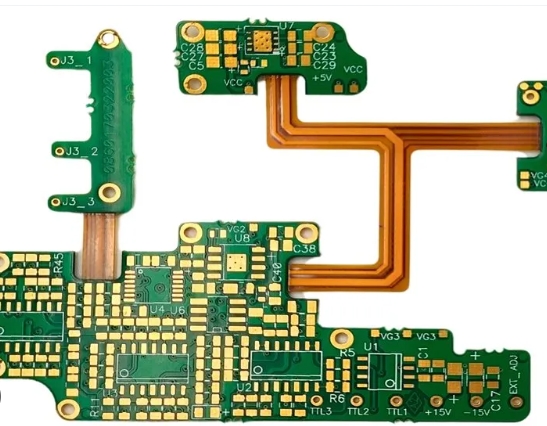
Rigid-Flex PCB Cost Optimization: Design and Manufacturing Considerations

As the demand for flexible and rigid-flex PCBs continues to grow, understanding the factors that influence their cost is crucial for optimizing designs and ensuring cost-effective production. Rigid-flex PCBs offer significant advantages, such as enhanced flexibility, reliability, and space-saving capabilities, but they also come with unique challenges that can drive up costs if not properly managed. This...

Rigid-Flex PCB Design: Revolutionizing Modern Electronics

Rigid-flex PCBs represent a groundbreaking advancement in electronics design, combining the best features of rigid boards and flexible circuits. By integrating high-density interconnect (HDI) technology, rigid-flex PCBs eliminate the need for traditional board-to-board connectors and simplify assembly processes. This article explores the design considerations, advantages, and applications of rigid-flex PCBs, along with strategies for optimizing their performance....

Ceramics Used in Electronic Applications

Ceramics used in electronics are everywhere. For instance, ferroelectrics are used to create high-dielectric capacitors and non-volatile memory devices. Ferrites play a crucial role in storing data and information. Solid electrolytes are instrumental in the storage and conversion of energy. Piezoelectrics are essential for sonar technology, while semiconducting oxides have been pivotal in monitoring environmental...

IC Continuity Test

In PCB manufacturing and electronic assembly, ensuring the electrical connection reliability of integrated circuits (ICs) is essential for product performance and long-term stability. IC continuity testing is a key verification method used to confirm whether electrical connections between IC pins, PCB traces, vias, and surrounding components are correctly established. During PCB assembly, potential issues such...

PCB Reliability Testing For Prototypes

PCBs for commercial products must pass a set of reliability tests in order to prove their capabilities, which goes well beyond the standard functional testing found in many products. Functional tests are the starting point, but reliability tests are where a design is proven for operation in its intended environment. To help designers plan a...

3 Specialized PCB Via Options: Boomerang, ELIC, VeCS

Fabrication capacity for high density PCBs and packaging is currently increasing, especially in North America and Europe. These platforms still use standard via styles, namely through-hole vias, blind and buried vias, and core vias in HDI PCBs. But the electronics assembly and packaging world is no stranger to innovation, and there are alternative via options...

Simple Strategies for Double Sided 2-Layer PCBs

Many times we discuss complex boards with unique features and sensitive routing on this blog. But the reality is that most PCBs that are mass manufactured have lower layer counts and less complexity. 2-layer PCBs will continue to be high-volume products, and they are almost always the starting point for a new designer learning about PCB layout. In...

Best Formats for 4-Layer PCB Stackups

Best Formats for 4-Layer PCB Stackups A well-chosen 4-layer PCB stackup is essential for achieving excellent signal integrity, controlled impedance, effective power distribution, low EMI, and reliable manufacturing — especially in high-speed digital, mixed-signal, RF, automotive, and industrial designs. Compared to 2-layer boards, a properly configured 4-layer stackup provides dedicated reference planes, shorter return paths,...

Materials for High Temperature PCBs

High temperature PCB design is a critical aspect of modern electronics, especially in applications involving high power, harsh environments, or continuous operation. PCBs operating at high power often generate significant heat and may experience repeated thermal cycling, making material selection essential for long-term reliability and performance. While active cooling methods such as fans or heat...