Blog

Explore the KKPCB Blog for the latest PCB manufacturing and assembly news, industry insights, expert tips, and technology trends, helping you stay informed and optimize your electronics projects.
Advantages and Disadvantages of SMT and Through-Hole Technology

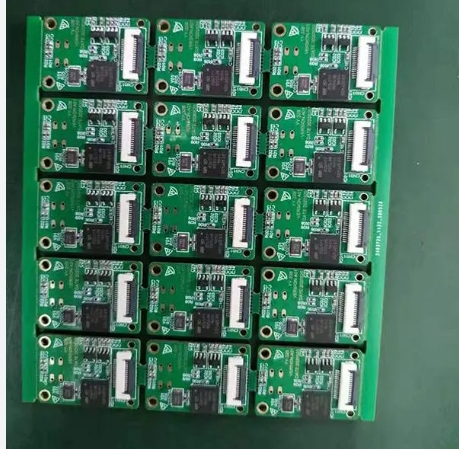
The assembly process is a critical stage in electronic manufacturing, directly affecting product reliability, production efficiency, and overall cost. Among various PCB assembly methods, Surface Mount Technology (SMT) and Through-Hole Technology (THT) are the two most widely used technologies. SMT enables high-density component placement and automated mass production, while THT provides strong mechanical reliability and...

How to Solder Electronic Components

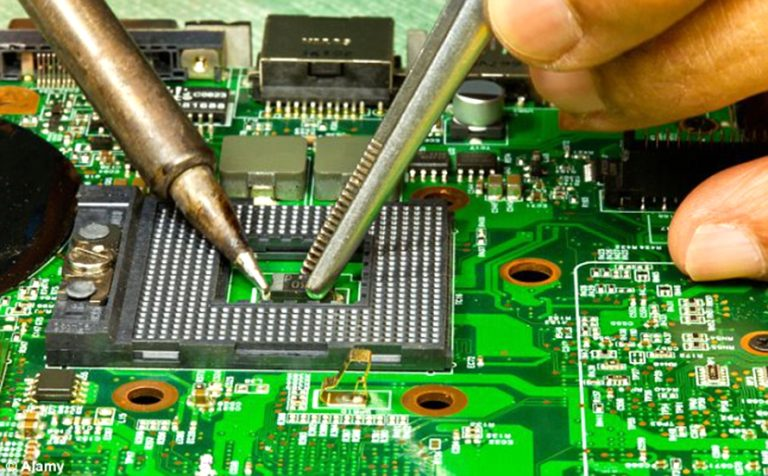
Basic soldering guide on how to solder electronic components to a printed circuit board (PCB). This is a detailed and complete soldering guide for both automated soldering in mass production and manual soldering in PCB rework and repair. How to Solder Electronic Components – Introduction Soldering is basically a technique of joining two metals using a...

The advantages and application of Rogers RO4350B and RO4003C PCB

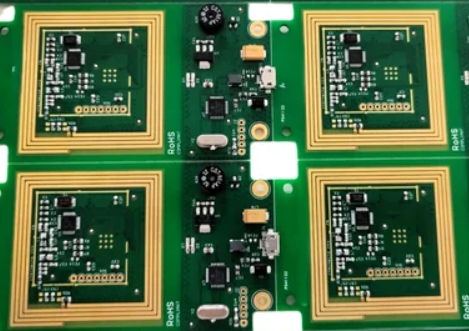
With the rapid development of high-frequency communication, automotive radar, 5G infrastructure, and advanced electronic systems, traditional FR-4 materials are increasingly challenged by applications requiring low signal loss, stable dielectric performance, and precise impedance control. For RF and microwave PCB designs, material selection directly affects: Signal transmission quality Insertion loss Phase stability Thermal reliability Manufacturing consistency...

PCB Design and Fabrication for Millimeter-Wave Circuits (Part 1)

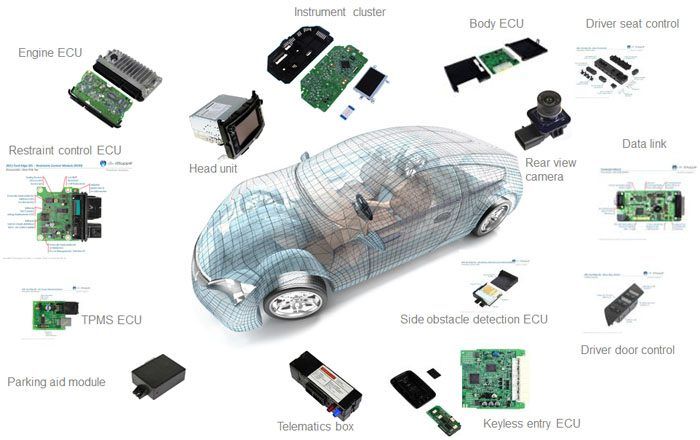
Key Points of Millimeter-Wave Applications—Phase Accuracy Affected by Multiple Variables From anti-collision radar systems used in autonomous vehicles to the fifth-generation (5G) high data rate New Radio (NR) networks, the application of millimeter-wave (mmWave) circuits is growing rapidly. Many applications are pushing the operating frequency bands to higher frequencies (such as >24GHz). However, for circuits with shorter...

PCB Design and Processing for Millimeter-Wave Circuits (Part 2)

Why PCB Manufacturing Precision Matters at Millimeter-Wave Frequencies Millimeter-wave applications such as 77GHz automotive radar, 5G mmWave communication, satellite systems, and advanced RF modules require extremely high levels of electrical accuracy. At these frequencies, PCB performance is no longer determined only by material selection and circuit design. Manufacturing variations that may be insignificant at lower...

Microvia Reliability in High-Density Designs

As high-density interconnect (HDI) designs with larger layer counts become more prevalent, the use of microvias is increasing. In builds with 3+N+3 or larger configurations, sequential lamination now often relies on skipped vias, staggered microvias, and stacked microvias. However, one of the key challenges is that microvias are more susceptible to failure than plated through-holes. The small...

Standard PCB Thickness and Optimization

When designing a printed circuit board (PCB), engineers often focus on ensuring the correct impedance structures and electrical performance of the board. However, the physical characteristics, such as PCB thickness, are equally important and can significantly impact the cost, manufacturability, and performance of the final product. While standard PCB thicknesses are widely used, they are more of a...

Solder Paste and Stencil Considerations for Double-Sided PCBs

The Challenge of Double-Sided PCB Assembly In modern SMT PCB assembly, double-sided PCBs are widely used to increase component density and optimize space utilization. However, assembling components on both sides of a printed circuit board introduces additional complexity in solder paste printing and stencil design. Proper control of solder paste and stencil parameters is critical...

Rigid-Flex PCB Cost Optimization: Key Considerations and Strategies

As the demand for more compact, reliable, and flexible electronic devices grows, rigid-flex PCBs are becoming increasingly popular. These boards combine the best of both rigid and flexible circuits, offering unique advantages such as enhanced durability, reduced package size, and fewer connectors. However, the cost of designing and manufacturing rigid-flex PCBs can be significantly higher than traditional...

HDI PCB Design Guidelines: Optimizing High-Density Interconnect Layouts

High-density interconnect (HDI) PCBs have become a standard in modern electronics, enabling designers to create smaller, more functional devices. However, designing HDI PCBs requires careful attention to detail due to their complexity and the advanced technologies involved. This article outlines key HDI PCB design guidelines, highlights the advantages and disadvantages of HDI layouts, and provides insights into overcoming common...