HomeTag

5G antenna PCB - KKPCB

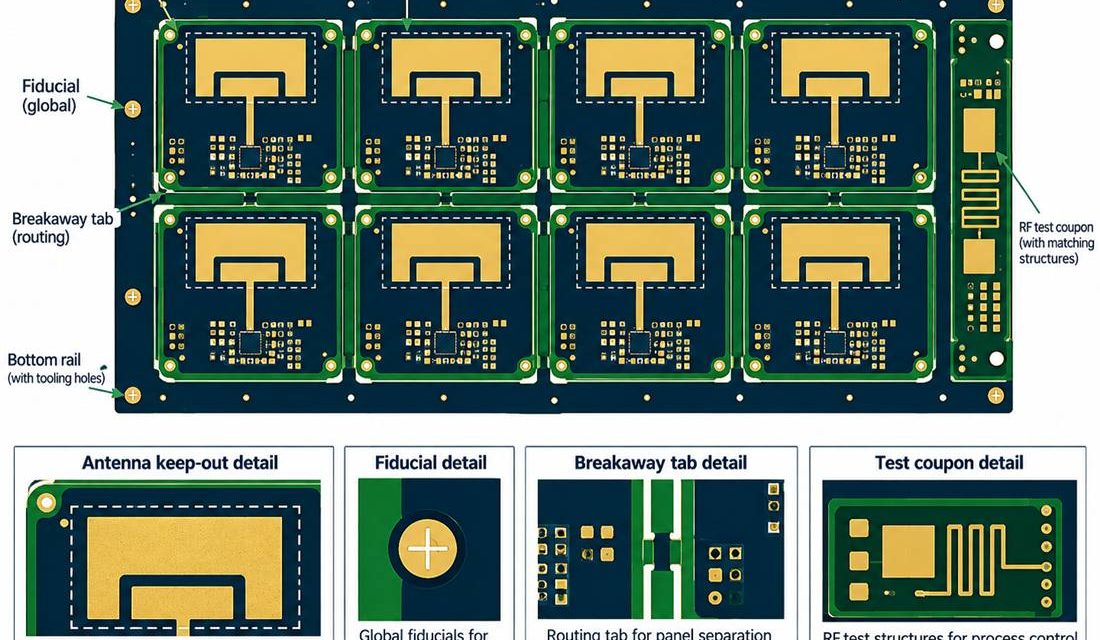
5G antenna PCB DFM Release: 5 Production Checks

When a team selects 5G antenna PCB, it is usually solving a specific product constraint rather than buying a label. This article takes a dfm view of antenna aperture geometry, feed transitions, matching features, enclosure clearance, and reference-plane control. The project pain is a feed that is nominally 50 ohms but is detuned by housing...
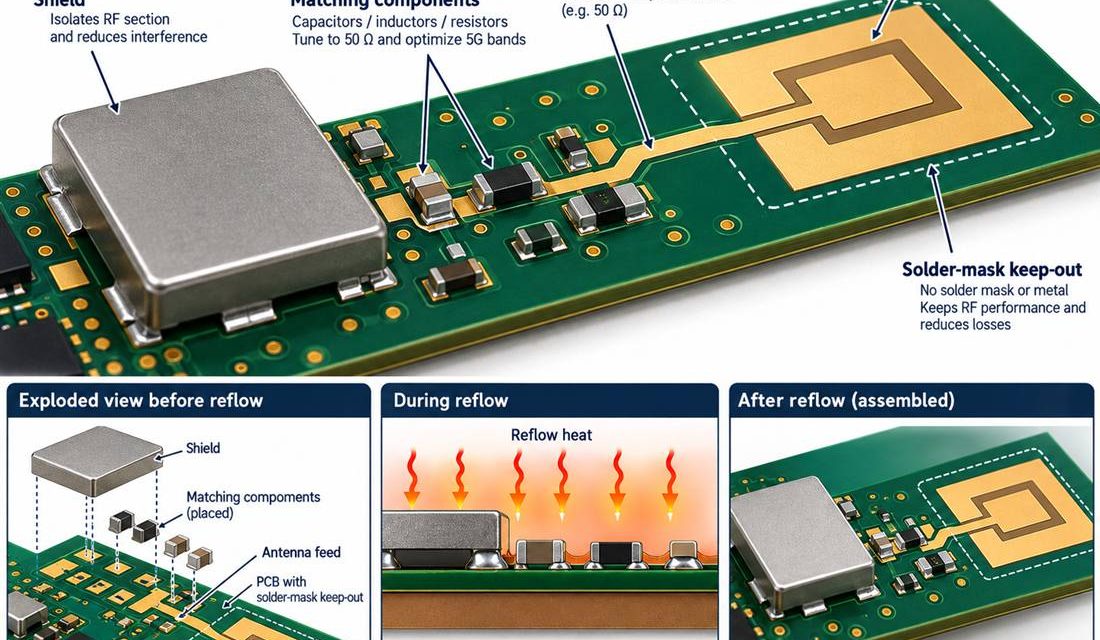
5G antenna PCB Assembly: 5 Reliability Controls

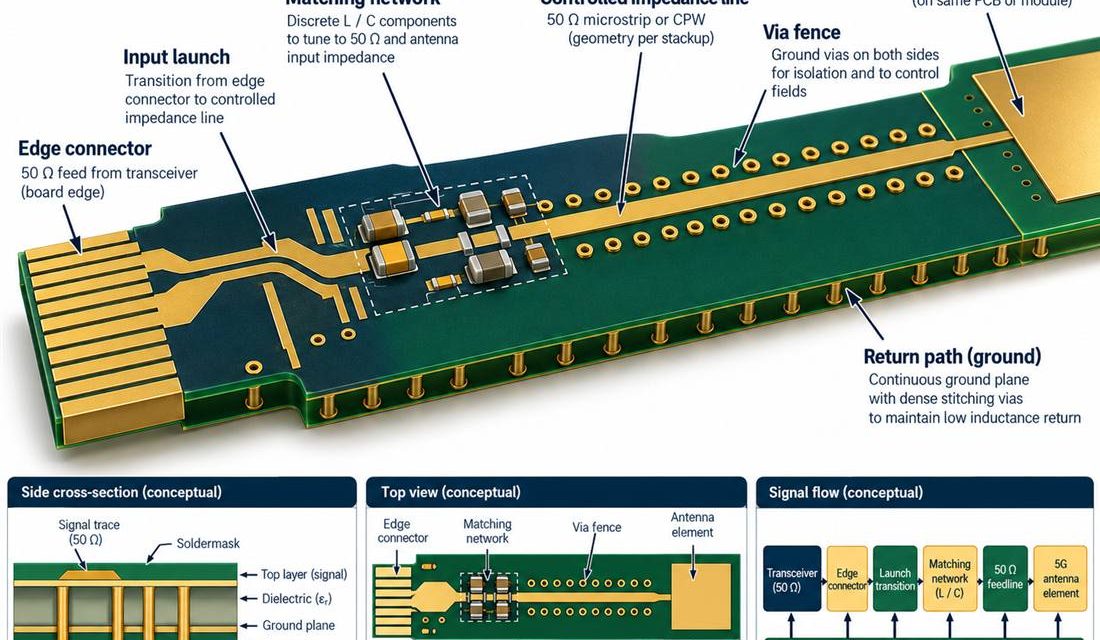
When a team selects 5G antenna PCB, it is usually solving a specific product constraint rather than buying a label. This article takes a assembly view of antenna aperture geometry, feed transitions, matching features, enclosure clearance, and reference-plane control. The project pain is a feed that is nominally 50 ohms but is detuned by housing...
5G antenna PCB Via Launch: 5 Transition Checks

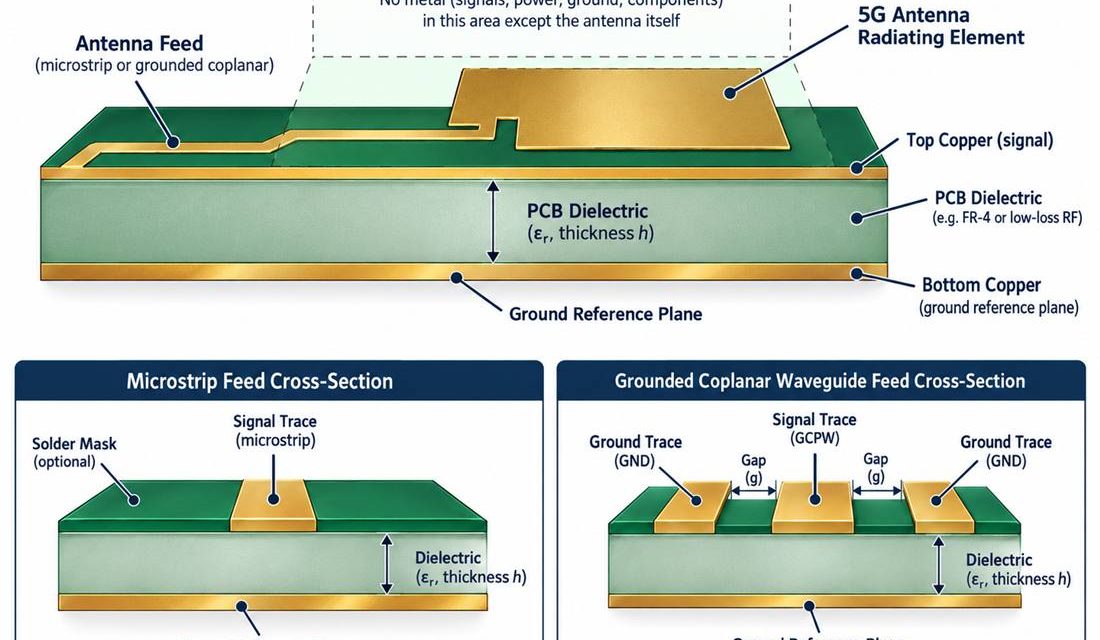
When a team selects 5G antenna PCB, it is usually solving a specific product constraint rather than buying a label. This article takes a transition view of antenna aperture geometry, feed transitions, matching features, enclosure clearance, and reference-plane control. The project pain is a feed that is nominally 50 ohms but is detuned by housing...
5G antenna PCB Stack-Up: 5 Geometry Controls

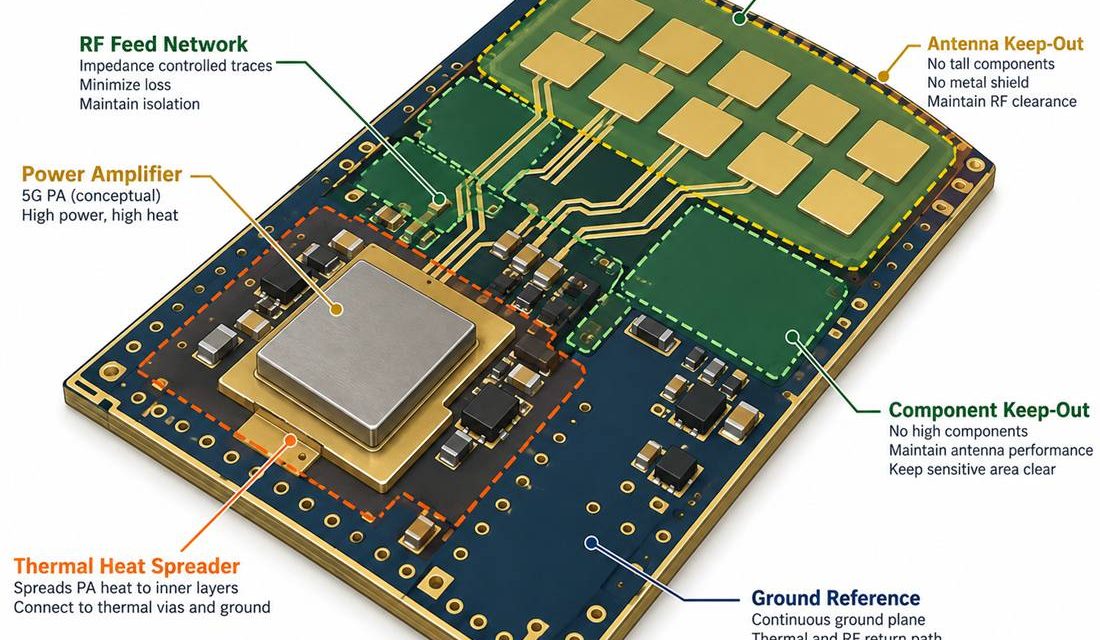
When a team selects 5G antenna PCB, it is usually solving a specific product constraint rather than buying a label. This article takes a stackup view of antenna aperture geometry, feed transitions, matching features, enclosure clearance, and reference-plane control. The project pain is a feed that is nominally 50 ohms but is detuned by housing...

5G antenna PCB Thermal Path: 5 Release Checks

When a team selects 5G antenna PCB, it is usually solving a specific product constraint rather than buying a label. This article takes a thermal view of antenna aperture geometry, feed transitions, matching features, enclosure clearance, and reference-plane control. The project pain is a feed that is nominally 50 ohms but is detuned by housing...

RO4003 PCB for 5G Antenna: Low-Loss RF Solutions for High-Frequency Performance

What is RO4003 PCB for 5G Antenna? An RO4003 PCB for 5G antenna is a high-frequency printed circuit board manufactured using RO4003 laminate, widely used in RF and microwave applications. RO4003 is a hydrocarbon ceramic material designed to provide low dielectric loss, stable electrical performance, and consistent impedance control, making it highly suitable for 5G...

5G mmWave PCB – High-Frequency PCB Solutions for 5G Communication Systems

What Is a 5G mmWave PCB? A 5G mmWave PCB is a specialized printed circuit board designed to handle millimeter-wave (mmWave) signals used in 5G wireless communication systems. Operating at extremely high frequencies, typically 24 GHz to 100 GHz, mmWave PCBs require precise impedance control, low dielectric loss, and high signal integrity to ensure efficient...

5G mmWave PCB – High Frequency Low Loss PCB for Millimeter Wave Applications

What Is a 5G mmWave PCB? A 5G mmWave PCB is a high frequency printed circuit board engineered to operate at millimeter wave frequencies (typically 24 GHz to 100 GHz and above). These PCBs are used in advanced 5G communication systems where ultra-high bandwidth, low latency, and high data throughput are required. At mmWave frequencies,...

5G mmWave PCB: Ultra-Low Loss PCB Solutions for 5G Millimeter Wave Applications

A 5G mmWave PCB is a critical enabling technology for millimeter wave (mmWave) communication systems operating at extremely high frequencies such as 24 GHz, 28 GHz, 39 GHz, and beyond. As global 5G networks expand, mmWave technology is essential for achieving ultra-high data rates, low latency, and increased network capacity. Designing and manufacturing reliable 5G...

RO4003 PCB for 5G Antenna High-Frequency and Low-Loss RF Performance

What Is RO4003 PCB for 5G Antenna? RO4003 PCB for 5G antenna refers to a high-frequency printed circuit board manufactured using Rogers RO4003 laminate material, specifically designed to support high-speed RF signal transmission in 5G antenna systems. RO4003 PCB materials provide stable dielectric constant, low dissipation factor, and excellent thermal performance, making them widely used...