HomeCategory

PCB Manufacturing Services | High-Quality PCB & PCBA - KKPCB

Improving Transportation and Industrial Design with Low-Power 77GHz Radar Sensors

With the rapid development of intelligent transportation systems, industrial automation, and smart sensing technologies, radar-based sensing solutions are becoming increasingly important for accurate detection, measurement, and environmental perception. Among various radar technologies, 77GHz radar sensors have gained significant attention due to their high resolution, compact size, and ability to operate reliably under challenging environmental conditions....

PCB Design for the 6-Layer Board Stackup

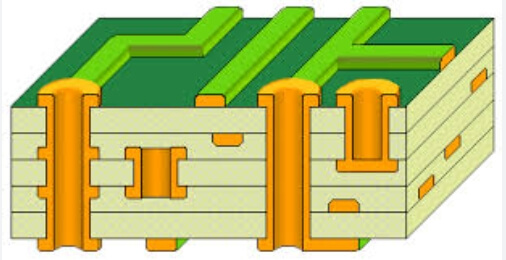
As electronic products continue to move toward higher integration, faster signal transmission, and smaller form factors, multilayer PCB technology has become essential for modern electronic design. Among various multilayer structures, the 6-layer PCB stackup is one of the most commonly used configurations because it provides a good balance between routing capability, signal integrity, power distribution,...

Copper Foils for High Frequency circuit board Materials

Introduction In high-frequency and microwave PCB manufacturing, every material choice can directly influence electrical performance. While laminate selection is often considered the primary factor affecting RF performance, copper foil characteristics also play a critical role in determining: signal loss impedance stability phase consistency insertion loss long-term reliability For applications such as: 5G communication equipment automotive...

RO4003C/RO4350B/RO4835 Laminates Quick Reference Processing Guide

With the increasing demand for higher frequency communication, advanced radar systems, and high-speed electronic applications, PCB materials must provide stable electrical performance while maintaining reliable manufacturability. RO4003C™, RO4350B™, and RO4835™ laminates are high-frequency circuit materials developed for applications requiring low signal loss, stable dielectric properties, and improved thermal performance. These materials combine ceramic-filled hydrocarbon resin...

RO4835™ Laminate Data Sheet High Frequency PCB Materials

As electronic systems continue moving toward higher frequencies, faster signal transmission, and more demanding operating environments, PCB material selection has become a critical factor affecting product performance. For RF, microwave, automotive radar, and high-speed communication applications, conventional FR-4 materials may not always provide sufficient electrical stability due to higher dielectric loss and variations in dielectric...

Comprehensive Electronic Components Sourcing Service at KKPCB

In modern electronic product development, PCB manufacturing and PCBA assembly are no longer limited to board fabrication and component placement. A stable and efficient electronic components sourcing strategy has become a critical factor affecting project schedules, production costs, and product reliability. Component shortages, supply chain uncertainty, counterfeit risks, and inconsistent quality can create significant challenges...

Understanding and Improving PCB Open Circuits: Causes and Solutions

Why PCB Open Circuits Matter In PCB manufacturing and PCB assembly, PCB open circuits are one of the most common and critical defects affecting electrical performance and product reliability. An open circuit occurs when an electrical path is unintentionally broken, preventing current from flowing through the circuit. For industries requiring high reliability—such as automotive electronics,...

PCB Drawing: A Summary of Key Practices from Years of Experience

PCB drawing is a critical stage in electronic product development that transforms circuit concepts and schematic designs into physical circuit boards. Although modern PCB design software has significantly improved design efficiency, creating a reliable PCB drawing still requires extensive engineering experience. A PCB layout must not only achieve electrical connections but also consider signal integrity,...

Key Grounding Techniques in Electronic Design

Grounding is one of the most fundamental elements in electronic system design. A well-designed grounding structure provides a stable reference potential, ensures reliable current return paths, reduces electrical noise, and improves overall system performance. As electronic products continue developing toward higher operating frequencies, faster data transmission, and increased integration, grounding design has become more challenging....

Detailed explanation of three special PCB wiring methods

PCB routing is one of the most important stages in printed circuit board design. A well-designed routing strategy directly affects: Signal integrity Power integrity Electromagnetic compatibility (EMC) Thermal performance Manufacturing reliability With the increasing complexity of electronic products, traditional point-to-point routing methods are often insufficient for advanced applications. High-speed digital systems, RF circuits, power electronics,...