PCB Manufacturing Services | High-Quality PCB & PCBA - KKPCB
 
HomeCategory

PCB Manufacturing Services | High-Quality PCB & PCBA - KKPCB

Multilayer PCB Manufacturing Process, Advantages and Applications

The Growing Importance of Multilayer PCB Technology As modern electronic products continue evolving toward: higher performance smaller size faster data transmission greater functionality intelligent automation traditional single-layer and double-sided PCBs can no longer meet the demands of advanced electronic systems. Today, multilayer PCB technology has become essential in industries such as: telecommunications industrial automation automotive...

SMT Troubleshooting: Common Issues and Solutions for Surface Mount Technology

Surface Mount Technology (SMT) has become the industry standard for high-speed, high-density PCB assembly. However, the precision required in SMT—where components are often smaller than a grain of sand—leaves little room for error. Defects during the solder paste printing, component placement, or reflow soldering stages can lead to costly rework or total board failure. This guide identifies...

Ball Grid Array (BGA) Package

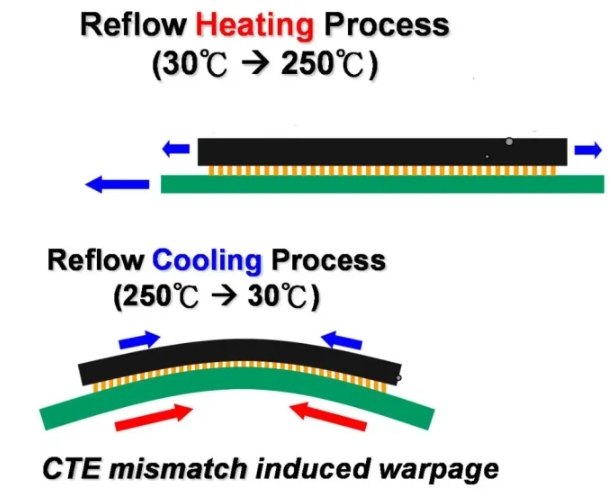
The Ball Grid Array (BGA) package is one of the most widely used advanced semiconductor packaging technologies in modern high-density PCB design and PCBA assembly. It is designed to provide high pin-count interconnections, improved electrical performance, and enhanced thermal management compared to traditional packages such as QFP or QFN. BGAs are extensively used in CPU,...

How to Solder Electronic Components

Basic soldering guide on how to solder electronic components to a printed circuit board (PCB). This is a detailed and complete soldering guide for both automated soldering in mass production and manual soldering in PCB rework and repair. How to Solder Electronic Components – Introduction Soldering is basically a technique of joining two metals using a...

The advantages and application of Rogers RO4350B and RO4003C PCB

RO4000® hydrocarbon ceramic laminates are designed to off er superior high frequency performance and low cost circuit fabrication. The result is a low loss material which can be fabricated using standard epoxy/glass (FR-4) processes off ered at competitive prices. The selection of laminates typically available to designers is signifi cantly reduced once operational frequencies increase...

PCB Design and Fabrication for Millimeter-Wave Circuits (Part 1)

Key Points of Millimeter-Wave Applications—Phase Accuracy Affected by Multiple Variables From anti-collision radar systems used in autonomous vehicles to the fifth-generation (5G) high data rate New Radio (NR) networks, the application of millimeter-wave (mmWave) circuits is growing rapidly. Many applications are pushing the operating frequency bands to higher frequencies (such as >24GHz). However, for circuits with shorter...

PCB Design and Processing for Millimeter-Wave Circuits (Part 2)

PCB Processing The precise dimensions required for millimeter-wave circuits demand well-controlled PCB processing techniques to produce circuits with consistently excellent performance. Variations in copper plating thickness and final surface treatment on the conductor surface can impact the performance of millimeter-wave circuits. To ensure the successful fabrication of high-performance millimeter-wave circuits, both of these processes must be carefully controlled. For...

Microvia Reliability in High-Density Designs

As high-density interconnect (HDI) designs with larger layer counts become more prevalent, the use of microvias is increasing. In builds with 3+N+3 or larger configurations, sequential lamination now often relies on skipped vias, staggered microvias, and stacked microvias. However, one of the key challenges is that microvias are more susceptible to failure than plated through-holes. The small...

Standard PCB Thickness and Optimization

When designing a printed circuit board (PCB), engineers often focus on ensuring the correct impedance structures and electrical performance of the board. However, the physical characteristics, such as PCB thickness, are equally important and can significantly impact the cost, manufacturability, and performance of the final product. While standard PCB thicknesses are widely used, they are more of a...