PCB Design – Page 97 – KKPCB
 
HomeCategory

PCB Design

BGA Assembly: Beginner’s Guide to Ball Grid Array Assembly

Why BGA Assembly Is Critical in Modern PCB Design As electronic devices move toward miniaturization, high-speed performance, and high pin-count integration, the Ball Grid Array (BGA) assembly has become a mainstream packaging technology in: Microprocessors (CPU/GPU) FPGAs High-speed communication ICs Memory devices (DDR, LPDDR) Compared with traditional packages (QFP, SOP), BGA offers: Higher I/O density...

How to Remove Flux from PCB?

During PCB soldering and PCB assembly (PCBA), flux is widely used to ensure strong and reliable electrical connections. However, removing flux from PCB after soldering is equally important. Excess flux residue on PCB can lead to signal interference, corrosion, leakage current, and long-term reliability issues. This guide explains how to remove flux from PCB, covering...

Pros and Cons of Through-Hole PCB Assembly vs. SMT PCB Assembly

Introduction: Choosing the Right PCB Assembly Method In modern electronics manufacturing, selecting the right PCB assembly method is critical for achieving optimal performance, cost efficiency, and product reliability. The two most common methods—Through-Hole PCB Assembly (THT) and SMT PCB Assembly (Surface Mount Technology)—each offer distinct advantages and limitations. Understanding the pros and cons of Through-Hole...

Technology Used in Medical PCB Assembly

The intersection of healthcare and electronics requires a level of precision where failure is not an option. Medical PCB Assembly (PCBA) is governed by rigorous standards like ISO 13485, ensuring that every heartbeat monitor, imaging system, and implantable device operates with 100% reliability. As medical devices shrink in size while increasing in complexity, specialized assembly technologies have become...

PCB Assembly for Industrial Controls and How to Make Industrial PCBs?

Industrial PCB Requirements and Challenges In industrial control systems, PCB assembly (PCBA) plays a critical role in ensuring system stability, long-term reliability, and real-time control performance. Unlike consumer electronics, industrial PCBs must operate under harsh environments, including high temperature, humidity, electrical noise, and mechanical vibration. To achieve reliable operation, industrial PCBs require optimized design, material...

What is a High Frequency PCB?

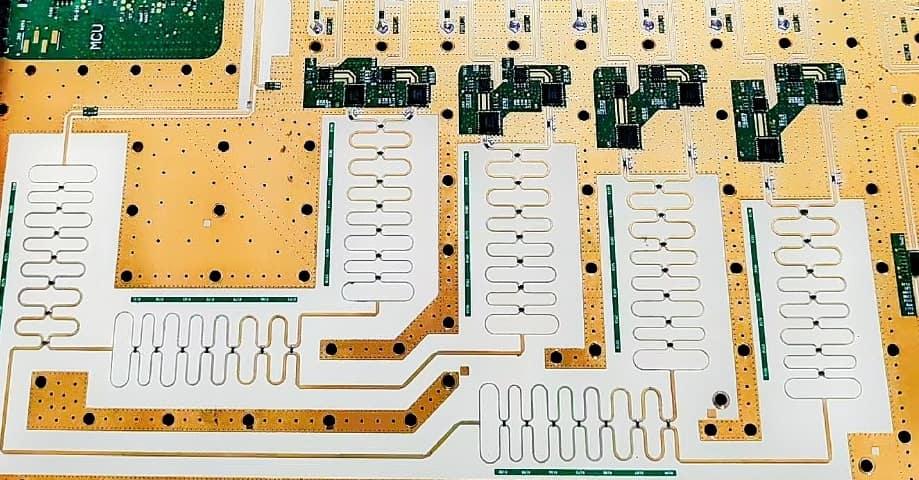
Introduction: Why High Frequency PCB Matters As modern electronics continue to evolve toward high-speed communication and high-frequency signal transmission, the demand for High Frequency PCBs has grown significantly. Applications such as 5G communication, radar systems, and satellite technology require circuit boards that can handle high-frequency signals with minimal signal loss and excellent signal integrity. Understanding...

Advantages and Disadvantages of Surface Mount Technology (SMT)

The Importance of SMT in Modern PCB Assembly In modern electronics manufacturing, Surface Mount Technology (SMT) has become the dominant method for PCB assembly. By enabling compact designs and high-speed production, SMT PCB assembly plays a critical role in industries such as consumer electronics, automotive systems, and communication technology. However, like any PCB assembly technology,...

Overview of SMD Components and Their Characteristics

Introduction: The Importance of SMD Components in Modern Electronics In today’s electronics manufacturing industry, SMD components (Surface Mount Device components) are the foundation of modern SMT PCB assembly. As electronic products move toward miniaturization, high performance, and high-density integration, SMD components have become essential in nearly all PCB assembly processes. Understanding the characteristics of SMD...

In the Texas Instruments technical article, “How low-power 60GHz mmWave radar sensors enable high-precision sensing in more applications,” we discussed how 60GHz millimeter-wave (mmWave) radar sensors enable high-precision sensing in industrial and consumer electronics applications. In this article, we will explore how low-power 77GHz radar sensors can help achieve reliable and accurate sensing in other challenging applications....