low-loss PCB - KKPCB
 
HomeTag

low-loss PCB - KKPCB

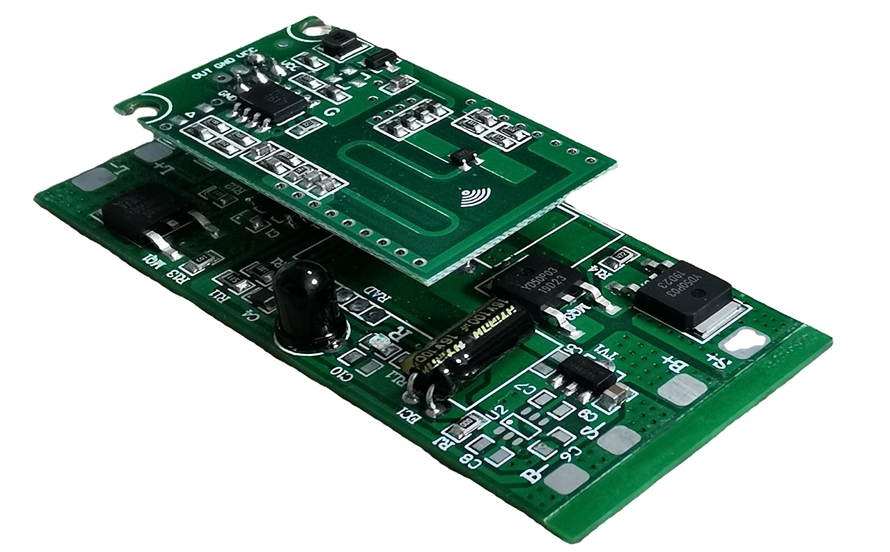
Enhance Signal Integrity and Thermal Reliability with ADAS PCB Platforms for Automotive Radar Systems

Advanced Driver Assistance Systems rely heavily on 77 GHz automotive radar modules, where the ADAS PCB directly determines signal integrity, insertion loss, dielectric stability, and system-level thermal reliability. As radar sensors expand from single-beam to multi-beam architectures, PCB materials and stackup selection have become primary constraints for RF linearity and long-distance object detection. The objective...

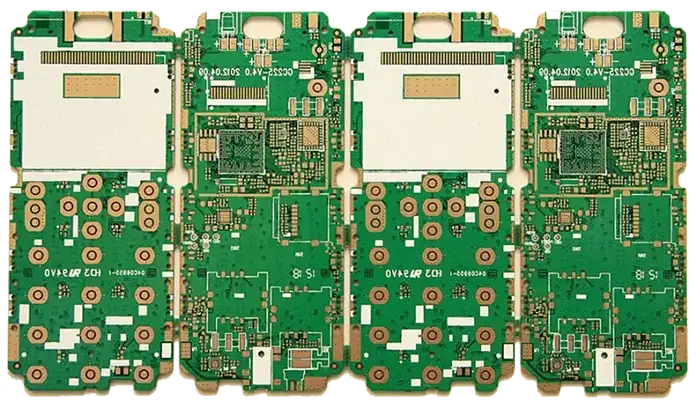
Enhance Thermal Reliability and High-Power RF Efficiency Through Advanced 5G Router PCB Stackups

5G router PCB platforms operate under multi-band RF loads, high-density routing, and continuous thermal cycling in compact CPE enclosures. Achieving stable RF efficiency requires a stackup engineered around low-loss materials, controlled dielectric stability, and carefully optimized thermal paths. This article analyzes how engineered 5G router PCB stackups improve RF efficiency, insertion-loss performance, and long-term thermal...

Enhance High-Speed Signal Integrity and Low-Loss Performance with Megtron 7 PCB Platforms for 112G/224G SerDes Systems

Next-generation 112G/224G SerDes channels push FR-4 far beyond its electrical limits. As data center switching, AI computing, and PCIe-6/7 architectures scale upward, loss tangent, copper roughness, and impedance drift become critical bottlenecks. Megtron 7 PCB laminates—Df 0.0012 class, highly stable Dk, and low copper-permittivity interaction—provide an electrically clean foundation for long-reach PAM4 channels. KKPCB integrates...

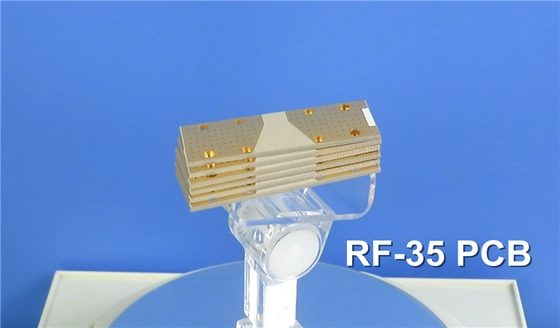
Optimizing High-Frequency Stability and Low-Loss Transmission Using RF-35 PCB Laminates for Modern Wireless Systems

As modern wireless systems continue to evolve toward higher frequencies and faster data rates, achieving high-frequency stability and low-loss signal transmission has become a critical requirement in RF PCB design. One of the most effective ways to optimize high-frequency PCB performance is through advanced material selection—specifically RF-35 PCB laminates. RF-35 laminates are engineered for high-frequency...

SiC PCB for High-Power Modules and Automotive Powertrain Systems

Why SiC Technology Is Transforming Power Electronics As electric vehicles (EVs), renewable energy systems, and industrial automation continue to evolve, traditional silicon-based power devices are increasingly limited in: Switching frequency Thermal efficiency Power density High-voltage performance This has accelerated the adoption of Silicon Carbide (SiC) power electronics, especially in: Automotive powertrain systems EV inverters High-power...

Low Loss PCBs Explained: Materials, Features & High-Frequency Performance

What Is a Low Loss PCB? Premium Materials, Performance Advantages & Applications In high-frequency electronics, signal integrity is everything. As data rates climb and RF systems move into the mmWave range, traditional FR-4 PCBs quickly become inadequate due to excessive dielectric loss, copper loss and thermal instability. At KKPCB, we engineer Low Loss PCBs specifically...

Taconic TLY-5 PCB Material: A Complete Technical Guide for High-Frequency, RF, and Microwave Applications

The Role of TLY-5 in High-Frequency PCBs Taconic TLY-5 PCB material is a PTFE-based high-frequency laminate designed to meet the demanding requirements of RF, microwave, and high-speed PCB applications. Its low dielectric loss, stable dielectric constant, and excellent thermal and mechanical properties make it a top choice for wireless communication systems, industrial wireless sensor networks...

Impedance Control and RF Efficiency Optimization Using Ceramic PCBs in Industrial Wireless Sensor Networks

1. Engineering Overview / Abstract   As Industrial IoT communication modules become more compact and operate at higher frequencies, maintaining precise impedance control and RF efficiency is critical for reliable data transmission. Traditional polymer-based PCBs often suffer from dielectric drift, thermal warpage, and EMI coupling, which degrade signal integrity in dense wireless sensor networks.  Ceramic...
Low-Loss Transmission and Dielectric Stability of Ceramic PCBs in Satellite and Aerospace Communication Payloads

1. Overview   In satellite and aerospace communication payloads operating above 30 GHz, PCB substrates must maintain exceptional dielectric uniformity and low-loss performance under extreme thermal and radiation conditions.  Ceramic PCB materials—such as alumina (Al₂O₃) and aluminum nitride (AlN)—are widely adopted due to their high dielectric constant, stable dissipation factor, and superior heat conduction.  KKPCB’s...

Improving Dielectric Consistency and RF Efficiency of Megtron 6 PCBs for Industrial IoT and Wireless Sensor Networks

In the fast-growing world of Industrial IoT (IIoT) and Wireless Sensor Networks (WSN), reliable wireless communication is essential for real-time monitoring, predictive maintenance, and smart factory operations. Megtron 6, Panasonic’s high-performance low-loss PCB material, is widely chosen for these applications because of its excellent dielectric properties: stable Dk (dielectric constant) around 3.2–3.6 and ultra-low Df...