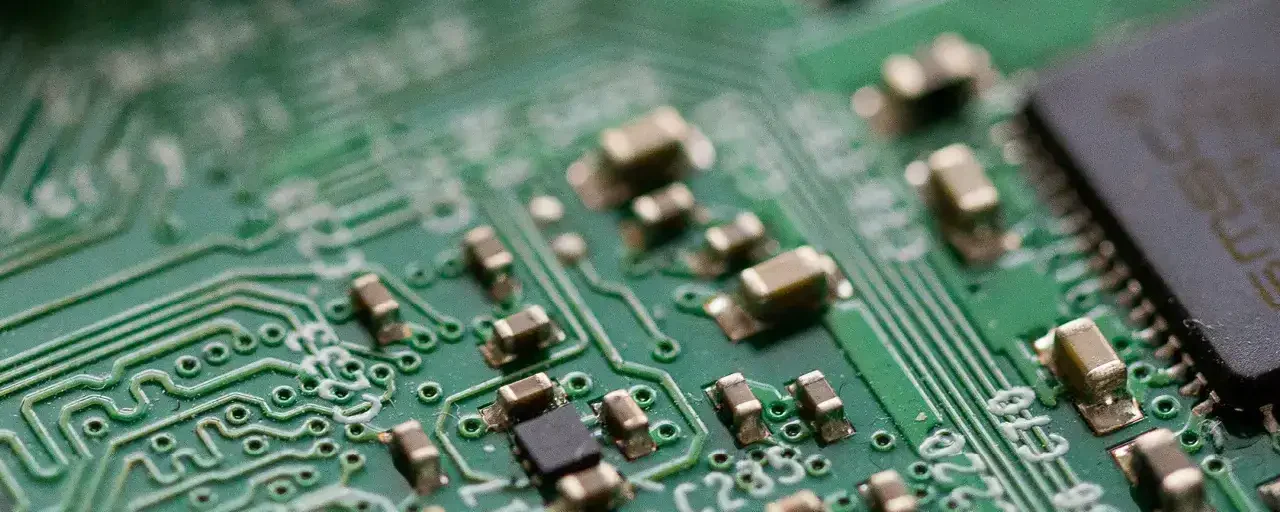
low-loss PCB - KKPCB
 
HomeTag

low-loss PCB - KKPCB

Engineering Duroid 6010 PCB for Extreme High-Frequency, Low-Loss, and Ultra-Stable Microwave Applications

As microwave, satellite, radar, and millimeter-wave systems move deeper into high GHz operating regions, engineers require PCB materials with ultra-stable dielectric behavior, extremely high Dk, and exceptionally low loss. This is where Duroid 6010 PCB—based on Rogers RT/duroid® 6010LM—becomes a foundational choice for critical RF and microwave engineering. With a dielectric constant (Dk) of ~10.2,...

Engineering High Speed PCB for Signal Integrity, Low-Loss Routing, and Next-Generation Data Transmission

As digital systems move toward higher data rates, smaller form factors, and lower power consumption, the demand for High Speed PCB solutions continues to accelerate. From 10–112 Gbps SerDes links to DDR4/DDR5 memory buses and advanced communication modules, a High Speed PCB must deliver loss control, impedance stability, and electromagnetic reliability in increasingly complex environments....

Engineering Double Layer HF PCB for Ultra-Stable RF Performance and Low-Loss Microwave Signal Integrity

As RF communication, IoT edge devices, automotive radar, and compact wireless modules continue to evolve, the Double Layer HF PCB has become a preferred architecture for delivering high-frequency stability, low insertion loss, and predictable electromagnetic performance. Although limited to two copper layers, a Double Layer HF PCB—when engineered correctly—can outperform many multilayer structures in signal...

Unleash Multi-Gigabit Data Fidelity with Precision-Engineered High Speed PCB Architectures for Next-Gen Digital Systems

A High Speed PCB forms the electrical backbone of every modern digital communication system, from multi-gigabit SerDes channels to DDR memory interfaces and high-frequency RF-digital mixed platforms. As data rates continue pushing beyond 10 Gbps, 25 Gbps, and even 56–112 Gbps PAM-4, the engineering demands on a High Speed PCB become far more stringent. Signal...

Achieve Low-Loss Transmission and Stable Impedance Performance with Double Layer HF PCB Engineering for High-Frequency Communication Systems

A Double Layer HF PCB may appear structurally simple, yet in high-frequency engineering it provides a remarkably efficient platform for low-loss propagation, stable impedance, and predictable electromagnetic behavior. When RF designers need high-frequency stability without the cost or stackup escalation of multilayer PCBs, a Double Layer HF PCB offers the ideal balance between manufacturability and...

Engineering Ultra-Low Loss Performance with Low Dissipation Factor PCB Materials for High-Frequency and High-Speed Systems

Low Dissipation Factor PCB Engineering for High-Frequency, High-Power, and Low-Loss Electronic Platforms A Low Dissipation Factor PCB is the backbone of modern high-frequency hardware, designed to minimize dielectric loss, reduce signal attenuation, and maintain stable RF performance across extreme bandwidths. As systems scale into mmWave, sub-THz, and multi-gigabit domains, the dissipation factor (Df) becomes a...

Achieve Ultra-High Dielectric Precision and Compact RF Layouts with Duroid 6010 PCB for Dense Microwave and Millimeter-Wave Systems

The growing demand for compact, high-frequency electronics—ranging from radar front ends to mmWave phased arrays—has shifted attention toward ultra-high-Dk PCB materials. Duroid 6010 PCB, built on Rogers’ RT/duroid® 6010.2LM laminate, is one of the industry’s highest-performance substrates for microwave and millimeter-wave circuits, providing exceptional dielectric predictability, low loss, and miniaturization capability for mission-critical RF systems....

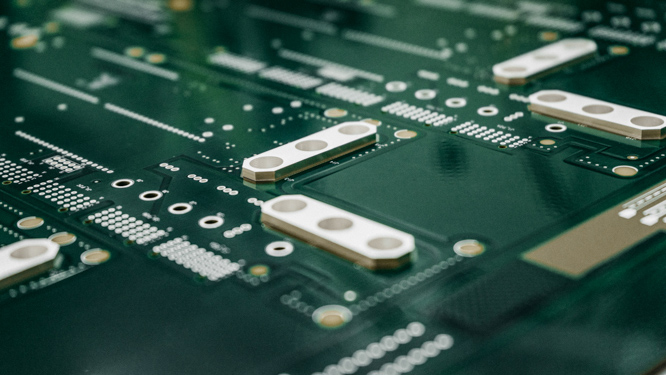
Enhance Electromagnetic Uniformity and Mode-Suppression Using RT/duroid 5880 PCB Stackups in Precision mmWave Routing Networks

Precision mmWave routing networks—operating from 26 GHz to beyond 90 GHz—demand exceptional electromagnetic uniformity, controlled impedance, and stable mode behavior to maintain system linearity. RT/duroid 5880 PCB materials have become a foundational high-frequency laminate for mmWave architectures because their ultra-low dielectric constant (Dk ≈ 2.20), extremely low dissipation factor (Df ≈ 0.0009), and isotropic PTFE...

Reduce Conductor Loss and Maintain High-Frequency Linearity with Duroid 5880 PCB Microstrip/Coplanar Structures for Advanced Microwave Modules

Advanced microwave modules demand transmission structures that deliver extremely low loss, high linearity and wideband frequency stability. Modern radar front-ends, satellite communication units and mmWave transceivers rely heavily on Duroid 5880 PCB technology because it offers exceptionally low dielectric loss, high-frequency predictability and precise impedance behavior. When engineered into microstrip and coplanar waveguide (CPW) structures,...

Enhance Multi-Layer Impedance Control and Low-Loss Performance Using TLY-5 PCB for mmWave Communication Systems

1. Engineering Context Next-generation mmWave communication systems—including 5G base stations, satellite payloads, and radar modules—require PCBs that provide ultra-stable impedance, low insertion loss, and phase-consistent routing. Traditional FR-4 or high-speed laminates often suffer from dielectric drift, higher Df, and thermal expansion issues, which degrade signal fidelity, EMI immunity, and system reliability in dense multi-layer RF...