HomeCategory

PCB Manufacturing Services | High-Quality PCB & PCBA - KKPCB

Keeping RF Performance Intact Through 5G Module PCB Assembly

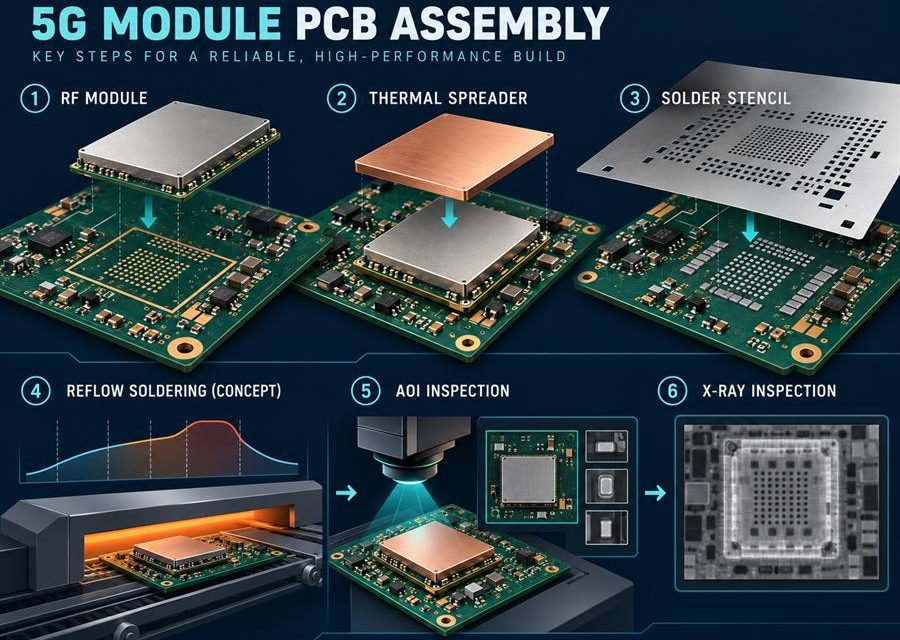
5G module PCB assembly release begins by treating heat, solder, cleaning, and mechanical force as RF variables. An RF board can leave fabrication within drawing limits and still change during paste printing, reflow, shielding, cleaning, or mechanical assembly. That risk is amplified in compact radio modules used in private 5G radios, fixed-wireless units, and edge...
Designing Connector and Via Transitions for a 5G Module PCB Launch

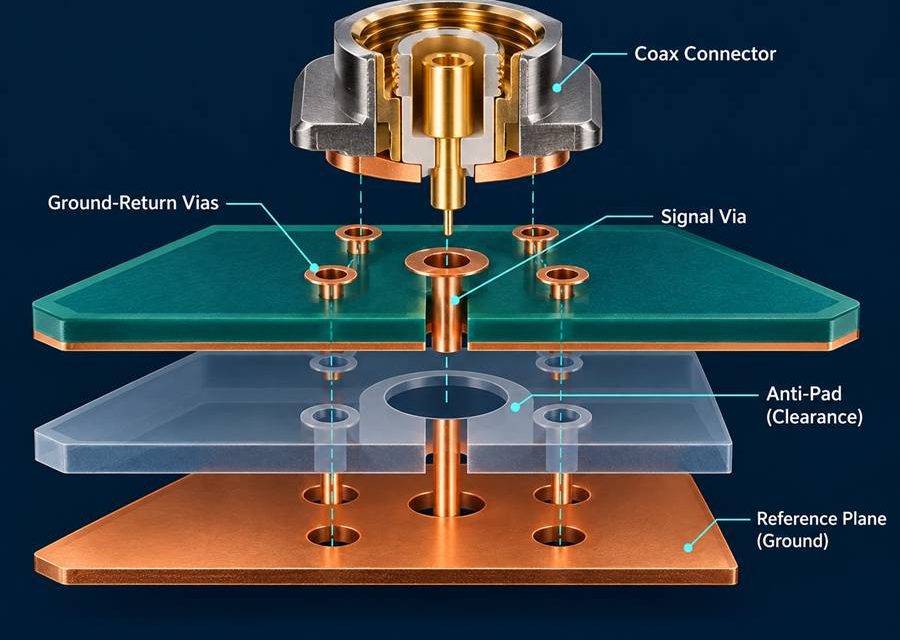
5G module PCB launch design begins with a complete three-dimensional signal and return path. The boundary between a board and a connector, coax, antenna, or shield is where a clean schematic becomes a three-dimensional electromagnetic problem. In compact radio modules used in private 5G radios, fixed-wireless units, and edge gateways, that boundary can set the...

Selecting a 5G Module PCB Stackup Without Hiding the Loss Budget

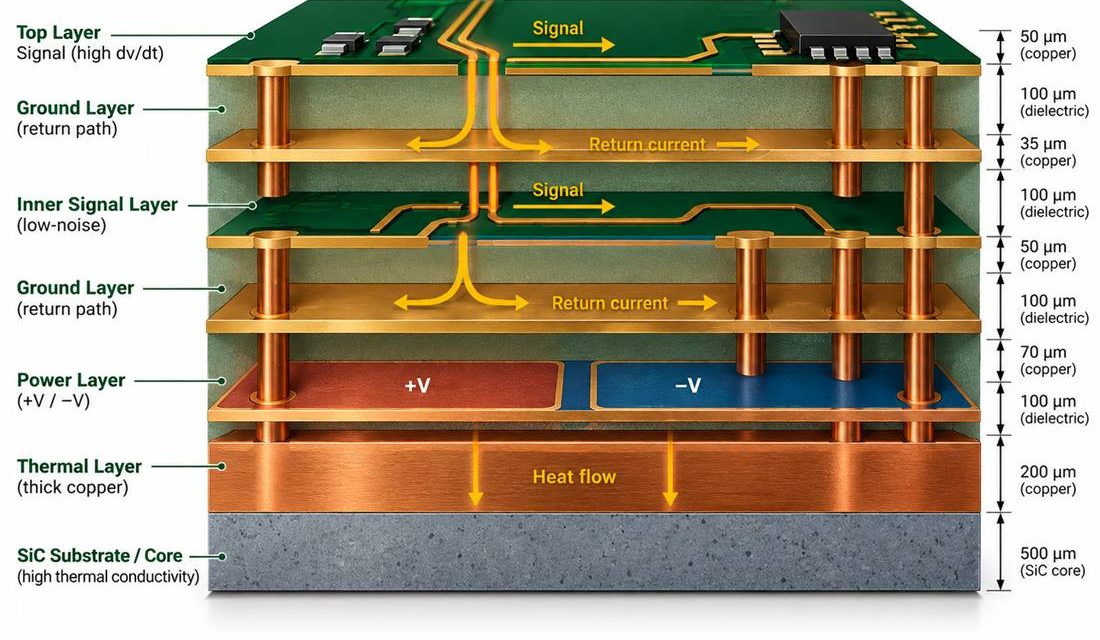
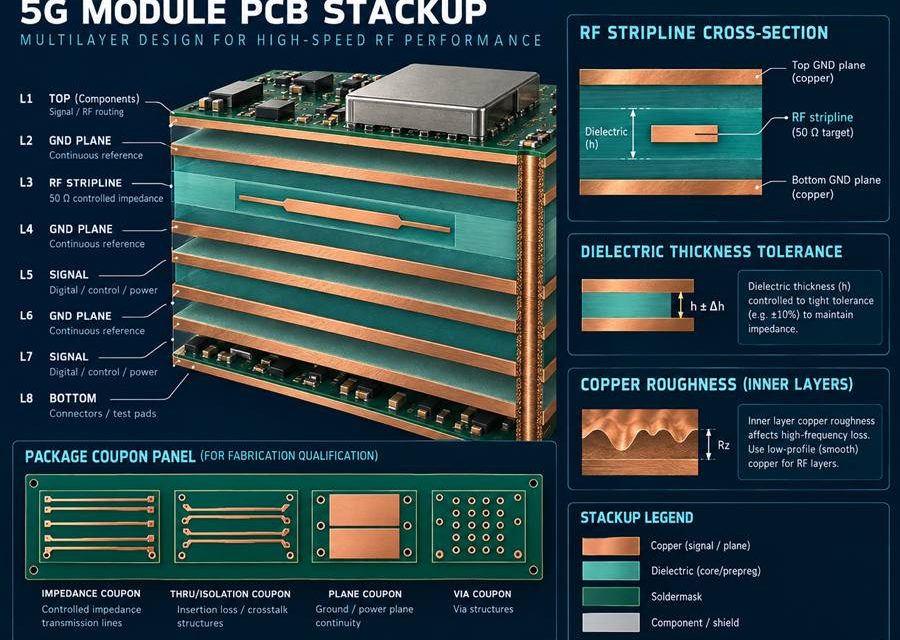
5G module PCB stackup release begins by making every electromagnetic and manufacturing assumption visible. Stackup discussions fail when the drawing lists layer names but not the electromagnetic and manufacturing assumptions behind them. In compact radio modules used in private 5G radios, fixed-wireless units, and edge gateways, the board must carry RF energy, power current, high-speed...

Aluminum Nitride PCB Inverter Modules: DFM, Panel Handling, and Production Release Controls

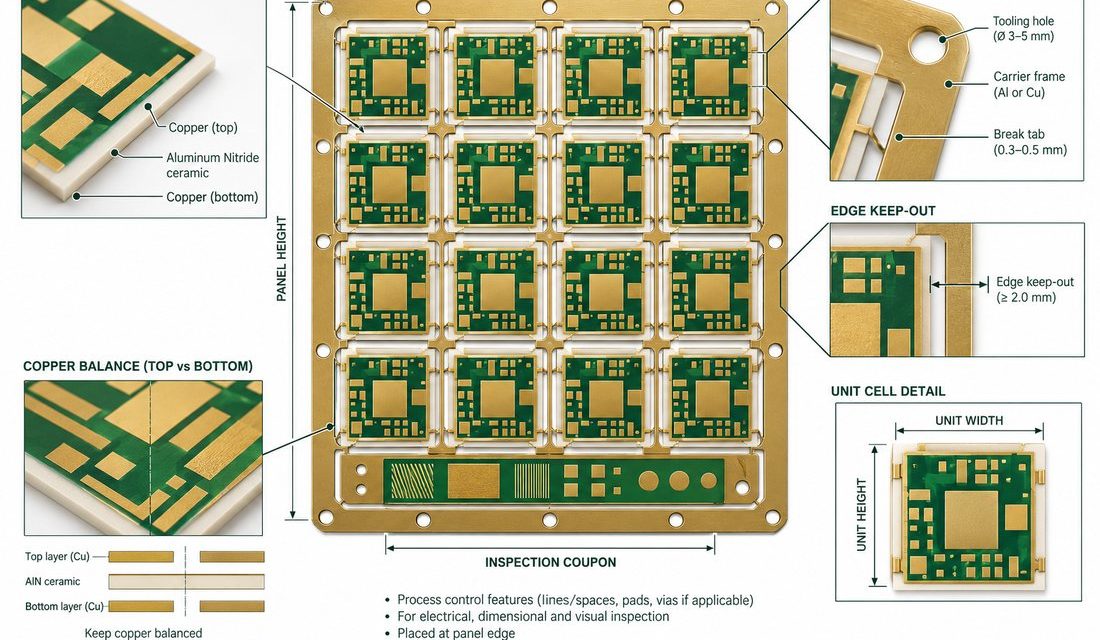
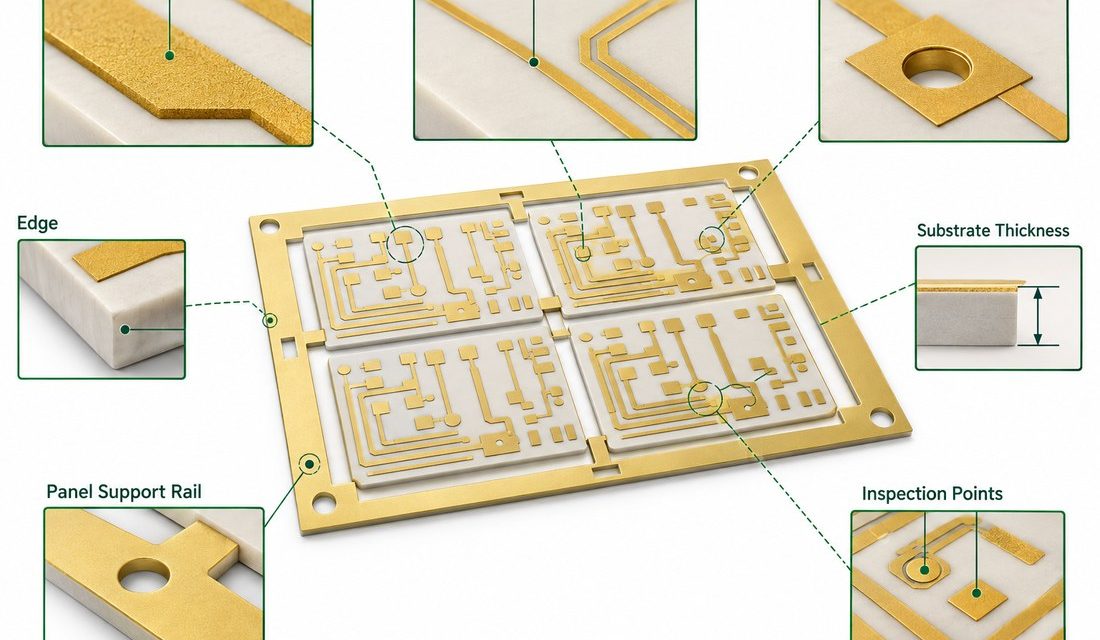
An Aluminum Nitride PCB inverter module release should connect panel handling, copper interfaces, and inspection evidence before production volume is authorized. Inverter modules expose the difference between a ceramic concept and a repeatable production process. Heavy copper, AlN substrate, switching devices, isolation clearances, carrier support, and inspection access all compete for the same panel area....

Aluminum Nitride PCB Direct-Bond Copper: Metallization and Via Reliability Before Qualification

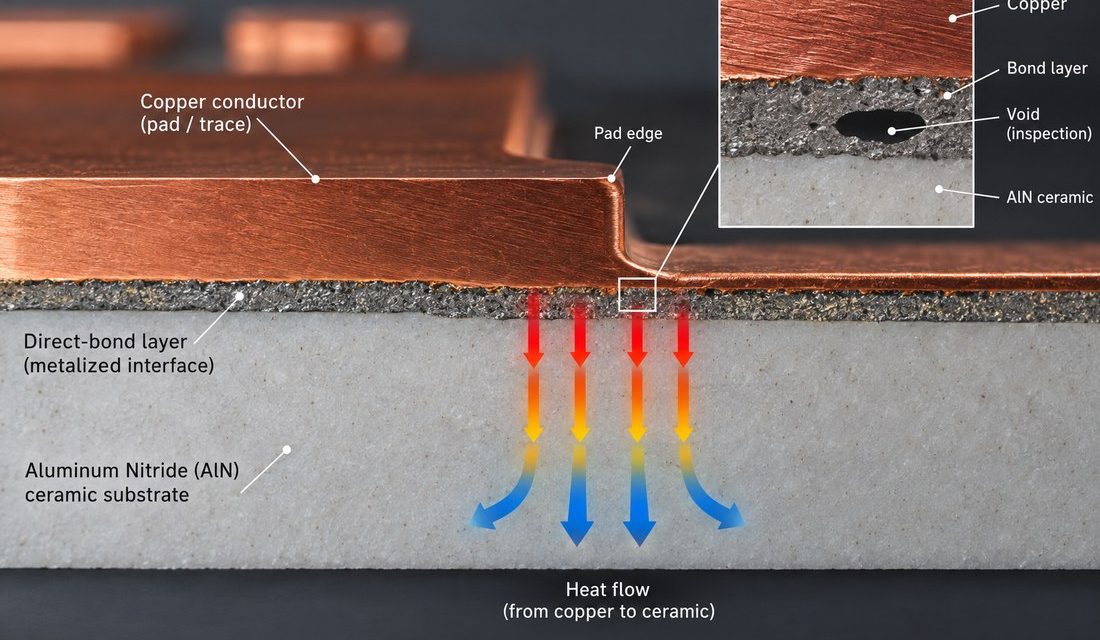
An Aluminum Nitride PCB direct-bond copper release needs a controlled metallization edge, via transition, and inspection record before qualification. Direct-bond copper can deliver a low-resistance thermal and electrical interface on aluminum nitride, but its edge, adhesion, and transition features must survive the same thermal history as the product. A qualification coupon that omits the heavy...

Aluminum Nitride PCB Thermal Paths for RF Power: Releasing Copper and Carrier Interfaces

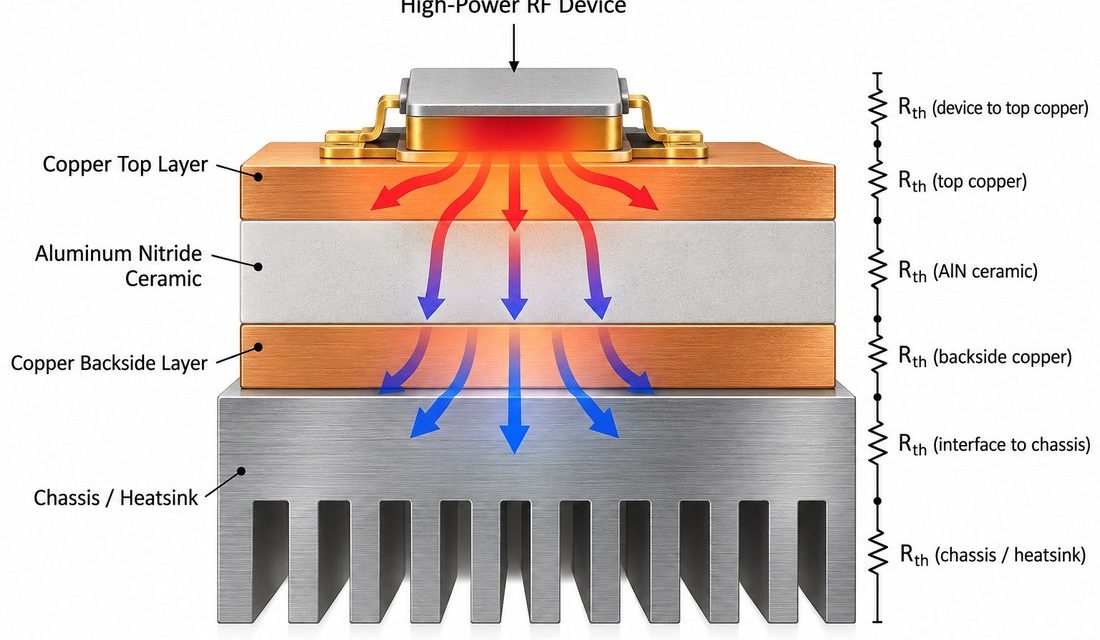
A power amplifier module can have a favorable ceramic thermal value and still miss its temperature margin because the heat path is not released as a complete assembly. An Aluminum Nitride PCB shares heat and RF functions with copper, solder or braze, a carrier, and the enclosure. The project pain is usually an interface assumption:...

Alumina PCB DFM: Metallization, Panel Handling, and Inspection Before Volume Release

Volume release exposes the difference between a ceramic layout and a ceramic process. Screen, thick-film, thin-film, plated, brazed, and bonded features each have a different capability window. An Alumina PCB drawing that specifies only line widths and hole sizes can still leave the supplier guessing about paste, firing, edge handling, carrier support, and inspection. The...

Alumina PCB for Automotive Sensors: Moisture, Vibration, and Connector Edge Decisions

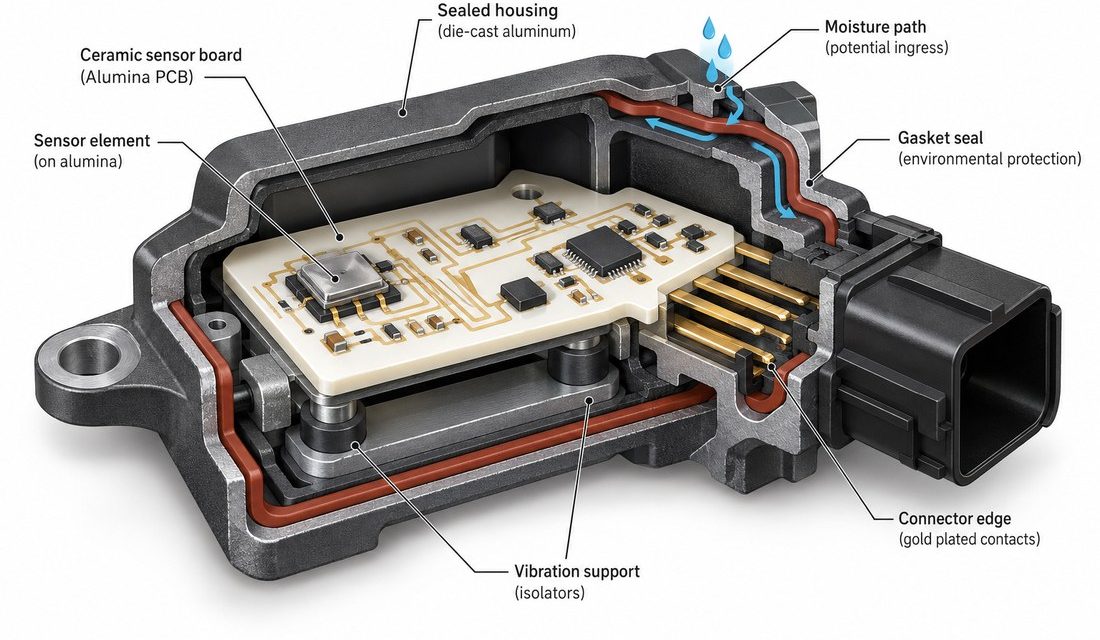
Automotive sensor modules combine a ceramic substrate with a connector, housing, adhesive, shield, and sometimes a high-frequency antenna. The Alumina PCB is stable, but the assembled module still sees vibration, thermal cycling, condensation, and connector loads. The project pain is often a fracture or intermittent contact at an edge feature that was reviewed only as...

Alumina PCB High-Power Reliability: Thermal Cycling, Copper Stress, and Interface Design

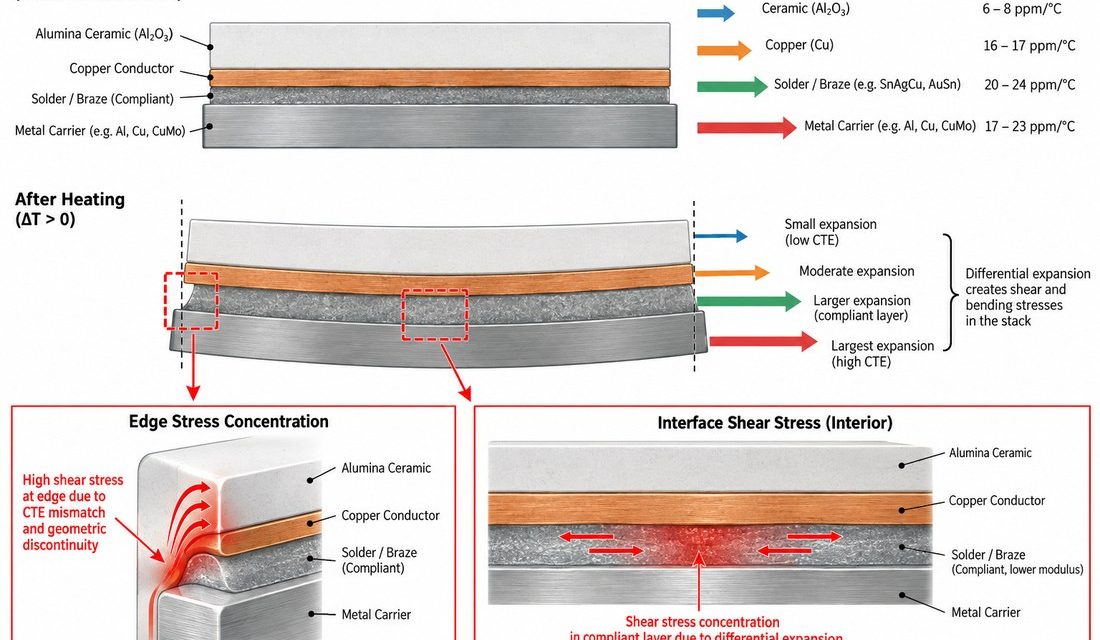
A high-power Alumina PCB can carry heat efficiently only when the copper, substrate, solder or braze, and metal carrier move together. Repeated temperature change makes the interface a mechanical system. The most common project mistake is to qualify the ceramic coupon while the product uses a different copper area, fastener pattern, or thermal interface. A...