HomeCategory

Customer Cases | PCB & PCBA Success Stories - KKPCB

KKPCB Multilayer Circuit takes you to understand the soft

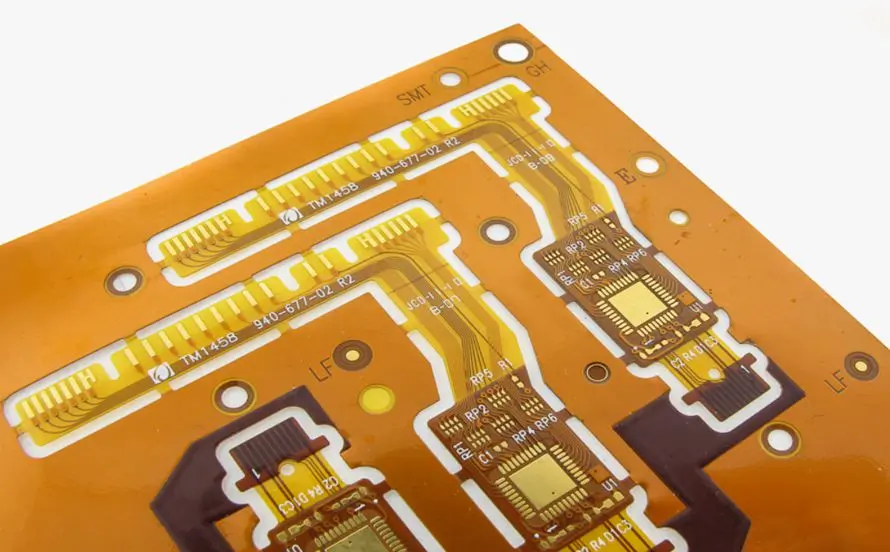
With the continuous development of electronic products toward miniaturization, lightweight design, and high integration, traditional rigid PCB solutions are facing increasing challenges in applications requiring compact structures, three-dimensional assembly, and dynamic bending performance. Flexible circuits, also known as Flexible Printed Circuits (FPCs), have become an important PCB technology for advanced electronic applications due to their...

PCB & PCB Assembly Manufacturer-Flex PCB Benefits

Flex PCB Benefits: Enabling Lightweight, Compact, and Reliable Electronics With the rapid development of modern electronics, product designs are becoming increasingly compact, lightweight, and multifunctional. Traditional rigid PCBs may face limitations when applications require complex mechanical structures, limited installation space, or dynamic bending capability. Flexible PCB (Flex PCB) technology provides an effective solution by using...

Overview of Copper Foil for PCB Laminates

Copper foil is one of the most fundamental materials in PCB manufacturing. Although it may appear to be a simple conductive layer, its properties directly influence signal integrity, insertion loss, thermal performance, reliability, and manufacturing quality. As PCB technologies continue evolving toward: High-frequency RF applications High-speed digital systems Advanced automotive electronics 5G communication equipment Miniaturized...

Some Factors Affecting the Performance of Microstrip Patch Antennas

With the rapid development of wireless communication technologies, microstrip patch antennas have become widely used in applications such as 5G communication systems, satellite communication, radar equipment, IoT devices, automotive electronics, and wearable devices. Compared with traditional antenna structures, microstrip patch antennas offer advantages including low profile, lightweight construction, easy integration with PCB circuits, and suitability...

About PCB Layer Stackup

A PCB Layer Stackup refers to the arrangement of conductive copper layers and insulating dielectric materials that make up a multilayer PCB. In the era of high-speed digital electronics and 5G, the stackup is no longer just a mechanical carrier; it is a critical tool for managing signal integrity, power distribution, and electromagnetic compatibility (EMC). A well-engineered stackup from KKPCB ensures...

What is the difference between flexible PCB and just scratching the printing circuit board?

1. What Is a Flexible PCB? A flexible PCB (Flex PCB) is a specially engineered printed circuit board made from flexible materials such as polyimide. It is designed to bend, twist, or fold without damaging the circuit. Key Characteristics: Built on flexible substrates (e.g., polyimide) Designed for dynamic or static bending High reliability under mechanical...

PCB Production Process: Subtractive and Additive Methods

Printed Circuit Boards (PCBs) are the foundation of modern electronic products, providing electrical connections and mechanical support for components. From consumer electronics and automotive systems to communication equipment and semiconductor applications, PCB manufacturing technology directly influences product performance, reliability, and production efficiency. During PCB fabrication, conductive patterns are created through different manufacturing approaches. The two...

How to Design RF Circuits and PCB Layouts

With the rapid development of wireless communication, radar systems, IoT devices, automotive electronics, and high-speed electronic products, RF (Radio Frequency) circuit design has become increasingly important. Compared with conventional PCB designs, RF PCB design involves more complex challenges related to signal integrity, impedance control, electromagnetic interference (EMI), and material selection. At high frequencies, even small...

Characteristics of RF Interfaces and RF Circuits in PCB Design

Understanding RF PCB Design in Modern High-Frequency Electronics As wireless communication technology rapidly advances toward: 5G and 6G communication millimeter-wave systems satellite communication automotive radar IoT wireless networks aerospace RF systems the importance of advanced RF PCB design has become increasingly critical. Unlike conventional digital PCB systems, RF circuits in PCB design operate at: high...

High-Speed PCB Copy Board and Design Strategy

With the rapid development of high-speed communication, computing, and advanced electronic systems, PCB designs are required to support increasingly higher data rates while maintaining signal integrity, power stability, and electromagnetic compatibility. At high frequencies, traditional PCB design methods are no longer sufficient. Factors such as impedance variation, signal reflection, crosstalk, dielectric loss, and electromagnetic interference...