HomeAuthor

kkpcba-辛迪 - KKPCB - Page 2 of 61

High Thermal Conductivity PCB Materials: The Effective Solution to Heat Dissipation Challenges

1. Why Heat Dissipation Has Become a Critical PCB Design Challenge With the rapid development of integrated circuits (ICs) and microelectronic packaging technologies, electronic systems are becoming: Smaller in physical size Higher in power density More integrated and compact As a result, heat flux density around electronic devices continues to rise sharply. Excessive heat accumulation...
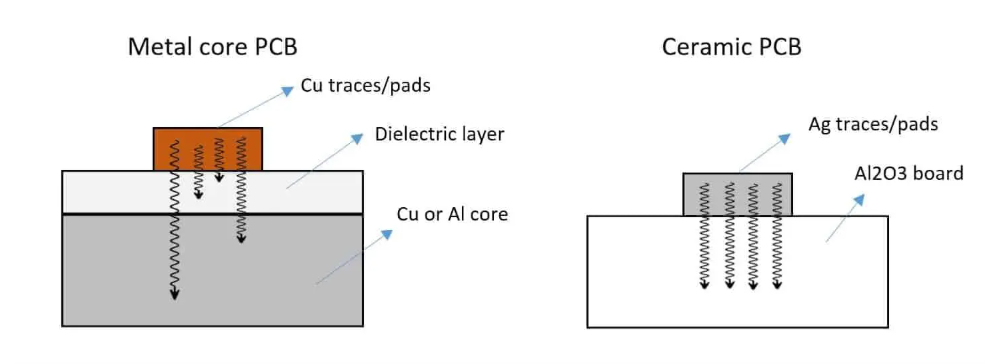
PCB Thermal Conductivity Comparison: FR4 vs Ceramic vs Metal Core vs Rogers Materials

Why PCB Thermal Conductivity Matters As power density and operating frequencies continue to increase, thermal management has become a critical factor in PCB design. Excessive heat can lead to signal degradation, reduced component lifespan, and even system failure. This article from KKPCB provides a technical comparison of PCB thermal conductivity across four commonly used substrate...

Rogers CuClad 6700 Adhesive Film – Low-Loss Thermoplastic Bonding Film for Multilayer RF PCBs

Rogers CuClad 6700 is a CTFE thermoplastic adhesive film with a low melting point, low dielectric constant, and excellent CTE compatibility, specifically designed for bonding PTFE-based laminates and stripline structures in multilayer RF and microwave PCBs. At KKPCB, Rogers CuClad 6700 is widely used in high-frequency multilayer PCB stack-ups, especially where PTFE substrates require reliable,...

Rogers RT/duroid 5880 High-Frequency PCB Material

Rogers RT/duroid 5880 is one of the most widely used microwave and millimeter-wave PCB substrates, known for its ultra-low dielectric loss and stable electrical performance. It is extensively applied in radar systems, satellite communications, 5G infrastructure, automotive radar, aerospace, and high-speed digital circuits. In this article, KKPCB provides a comprehensive technical overview of RT/duroid 5880,...

A Technical Guide to Photoresist Selection for High-Frequency & Rogers PCBs

Why Photoresist Selection Matters in PCB Manufacturing Printed Circuit Boards (PCBs) are the foundation of all electronic products. Whether used in consumer electronics, automotive systems, or high-frequency RF applications, accurate circuit pattern transfer is critical to PCB performance and reliability. In PCB fabrication, photoresist films—commonly divided into dry film and wet film—play a key role...

Rogers RO3003 vs RO4003 PCB Materials

1. Introduction to Rogers High-Frequency PCB Materials In RF, microwave, and high-speed communication applications, PCB material selection plays a decisive role in signal integrity, loss control, thermal stability, and long-term reliability. Rogers Corporation is a globally recognized supplier of high-frequency PCB laminates, widely used in: RF and microwave circuits Automotive radar 5G and millimeter-wave systems...

PCB Thermal Conductivity and Thermal Via Array Optimization

The thermal conductivity of a printed circuit board (PCB) is largely determined by the properties of its dielectric layers, such as FR-4, high-TG materials, or thermally enhanced laminates.In low-power and high-reliability electronic devices, efficient thermal management is still critical to ensure long-term performance and stability. To improve heat dissipation, PCB designers commonly use thermal via...

EPIG vs ENIG Solderability Performance After Steam Aging

With the rapid development of high-frequency and high-reliability electronic products, the limitations of traditional ENIG (Electroless Nickel Immersion Gold) surface finishes have become increasingly evident. EPIG (Electroless Palladium Immersion Gold) has emerged as an advanced alternative, especially for RF, microwave, and fine-pitch PCB applications. This article, optimized and technically interpreted by KKPCB, presents a comparative...