HomeTag

Signal Integrity - KKPCB

3 Specialized PCB Via Options: Boomerang, ELIC, VeCS

Engineering Context / Abstract As BGA pitch decreases and data rates rise, the vertical interconnect becomes part of the transmission channel rather than a simple electrical hole. A plated through-hole may consume routing area, create an unused via stub, interrupt the return path, and add parasitic capacitance and inductance. Advanced systems therefore require specialized PCB...

Best Formats for 4-Layer PCB Stackups

Best Formats for 4-Layer PCB Stackups A well-chosen 4-layer PCB stackup is essential for achieving excellent signal integrity, controlled impedance, effective power distribution, low EMI, and reliable manufacturing — especially in high-speed digital, mixed-signal, RF, automotive, and industrial designs. Compared to 2-layer boards, a properly configured 4-layer stackup provides dedicated reference planes, shorter return paths,...

Understand the performance and applications of Rogers 6010 and aluminum based high-frequency PCB

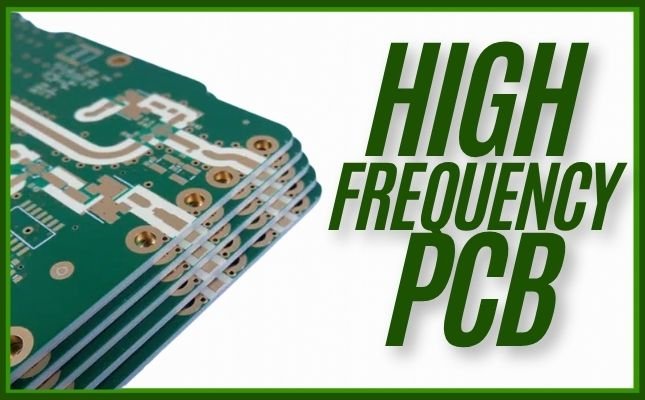
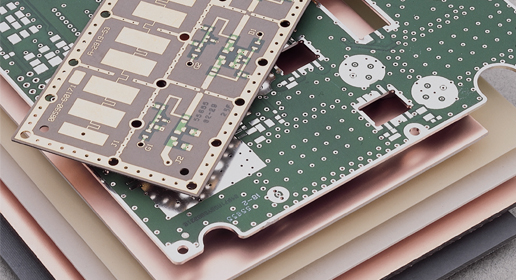
Introduction: Choosing the Right High-Frequency PCB Material In modern high-frequency PCB design, material selection plays a decisive role in determining signal integrity, thermal performance, and overall system reliability. Among the most widely used materials, Rogers 6010 and aluminum-based high-frequency PCB solutions stand out for their unique advantages in RF applications, microwave circuits, and high-power electronic...

Common Problems and Solutions for Substrates in PCB Design

In modern PCB design, the choice and handling of substrate materials play a critical role in determining the overall performance, reliability, and manufacturability of the circuit board. Substrate-related issues can lead to serious defects such as poor solderability, delamination, signal loss, and even complete product failure. This article outlines the most common substrate problems encountered...

High-Speed PCB Design Guide 5: Noise Reduction Technology for DSP Systems

Digital Signal Processors (DSPs) are widely used in applications that require high-speed data processing and real-time computation, including industrial automation, wireless communications, medical imaging, radar systems, machine vision, audio processing, and AI edge computing. As DSP clock frequencies and data rates continue to increase, maintaining signal integrity while minimizing system noise has become one of...

High-Speed PCB Design Guide 2: Avoiding Pitfalls in Mixed-Signal Systems

With the increasing integration of digital processing, wireless communication, sensing, and power management functions, modern electronic products often combine high-speed digital circuits with sensitive analog circuits on the same PCB. These mixed-signal systems are widely used in: Industrial control equipment Medical devices Automotive electronics Communication systems Data acquisition equipment IoT devices However, combining high-speed digital...

Basic Rules for PCB Layout and Wiring

Printed Circuit Board (PCB) layout and wiring are essential processes that transform a circuit schematic into a manufacturable electronic product. A well-designed PCB not only ensures electrical performance but also improves reliability, thermal management, production efficiency, and long-term stability. As electronic products become smaller and more powerful, PCB designs face increasing challenges such as higher...

The Importance of EMC and EMI Risk in PCB Design and Manufacturing

Engineering Context / Abstract Electromagnetic compatibility is not a final certification task that begins after a product has been assembled. EMC and EMI risk is created by the schematic, component placement, PCB stackup, trace routing, return-current geometry, power distribution network, cable interface, enclosure, and manufacturing variation. When these elements are treated separately, a PCB may...

The Importance of Reliable PCB Testing Standards for Electronic Circuit Performance

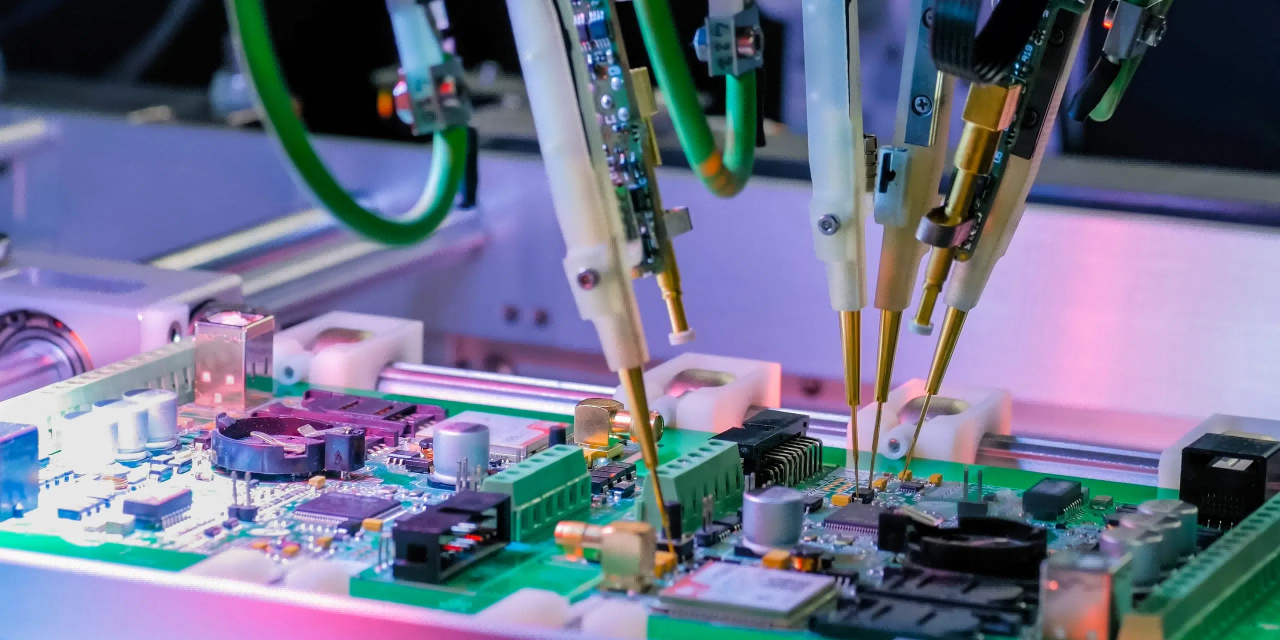
In the modern electronics landscape, where devices are becoming smaller, faster, and more complex, the margin for error in PCB manufacturing has shrunk to nearly zero. A single microscopic defect in a multilayer PCB can lead to system-wide failure, costly recalls, or even safety hazards. Ensuring peak electronic circuit performance is not just about high-quality design; it is about the rigorous...

High-Density Temperature Monitoring Solutions

Introduction: The Need for High-Density Temperature Monitoring In today’s advanced electronics systems, high-density temperature monitoring solutions are essential for ensuring system reliability, thermal stability, and operational safety. As devices become more compact and power densities increase, effective temperature monitoring across multiple نقاط (points) within a system is critical. Industries such as data centers, automotive electronics,...