high-speed digital PCB - KKPCB
 
HomeTag

high-speed digital PCB - KKPCB

How to Choose Low Loss Materials for High Frequency and High-Speed PCBs

As modern electronics move toward higher data rates, higher frequencies, and more compact designs, signal integrity becomes a critical factor in PCB performance. In many applications, traditional FR4 materials may not meet the electrical requirements due to higher signal attenuation and unstable dielectric behavior. That’s why low loss materials are increasingly used in advanced PCB...
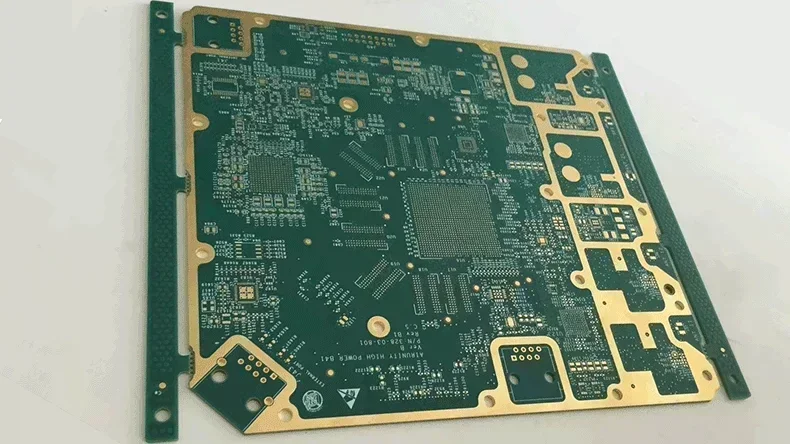
Megtron PCB: Low-Loss High-Speed Material for Signal Integrity and High-Frequency Applications

As electronic systems continue to deliver higher bandwidth, faster data rates, and more compact designs, PCB material selection becomes a key factor in achieving stable and reliable performance. In high-speed digital systems and high-frequency applications, traditional FR-4 materials may cause excessive signal loss, impedance instability, and increased crosstalk, especially when signals operate at multi-GHz frequencies....

Megtron 6 PCBs: Ultra-Low Loss High-Speed PCB Material for 56G/112G SerDes and Advanced Signal Integrity

As data rates continue to increase across modern electronics, PCB materials are no longer just a mechanical platform—they directly determine high-speed performance, signal quality, and product reliability. Today’s systems such as AI servers, data center switches, routers, advanced backplanes, and high-speed compute modules require extremely stable electrical characteristics to support multi-gigabit and ultra-high bandwidth transmission....

Signal Integrity PCB Design for High-Speed and High-Frequency Electronics

What Is a Signal Integrity PCB? A Signal Integrity PCB is a printed circuit board specifically designed to preserve the quality, timing, and accuracy of electrical signals as they propagate through high-speed and high-frequency circuits. As signal speeds increase and edge rates become faster, maintaining signal integrity (SI) becomes a critical factor in overall system...

Power Integrity PCB: Ensuring Stable Voltage and Reliable Performance in High-Speed Electronics

What Is a Power Integrity PCB? A Power Integrity (PI) PCB is engineered to ensure stable and reliable voltage delivery across the entire printed circuit board. In modern electronics, high-speed digital, RF, 5G, IoT, and high-performance computing systems demand consistent voltage and low noise on power planes. A Power Integrity PCB minimizes voltage ripple, power...

Signal Integrity PCB: Ensuring High-Speed, Low-Noise Performance in Advanced Electronics

What Is a Signal Integrity PCB? A Signal Integrity PCB is engineered to maintain clean, reliable, and distortion-free signal transmission in high-speed and high-frequency electronic systems. Signal degradation, crosstalk, and reflections can compromise system performance, especially in high-speed digital, RF, 5G, IoT, and high-performance computing applications. Signal integrity PCB design ensures consistent impedance, controlled trace...

Differential Pair PCB: High-Speed PCB Design for Signal Integrity and Noise Reduction

What Is a Differential Pair PCB? A Differential Pair PCB is a specialized printed circuit board designed with paired traces carrying equal and opposite signals. This design minimizes electromagnetic interference (EMI), reduces signal crosstalk, and maintains high-speed signal integrity. Differential pair PCBs are critical in applications where accurate high-speed data transmission is required, such as...

High Speed IC Test PCB: Precision Test Boards for High-Frequency and High-Data-Rate IC Validation

A High Speed IC Test PCB is a specialized printed circuit board designed to support high-frequency, high-data-rate, and fast edge-rate integrated circuit testing. As modern ICs operate at GHz-level frequencies and multi-gigabit data rates, traditional PCB designs are no longer sufficient to guarantee accurate test results. High speed IC test PCBs are widely used in...

Building Reliable High-Speed Electronics with Controlled Impedance PCB Architectures

Introduction: Why Controlled Impedance Defines High-Speed Reliability As high-speed electronics push into multi-gigabit data rates and high-frequency RF domains, signal behavior is no longer dominated by logic thresholds—it is governed by transmission line physics. In these systems, every PCB trace behaves as a controlled impedance structure, and any deviation can introduce reflections, timing skew, and...

High Speed PCB Engineering for Signal Integrity, Power Integrity, and Ultra-Low-Latency Electronic Systems

As modern electronics become faster, more compact, and more data-intensive, the High Speed PCB has evolved into a critical engineering platform for communication systems, servers, AI accelerators, radar units, embedded computing modules, and advanced industrial electronics. A well-engineered High Speed PCB ensures clean signal transmission, stable power behavior, and low-jitter operation across multi-gigabit channels. High-speed...