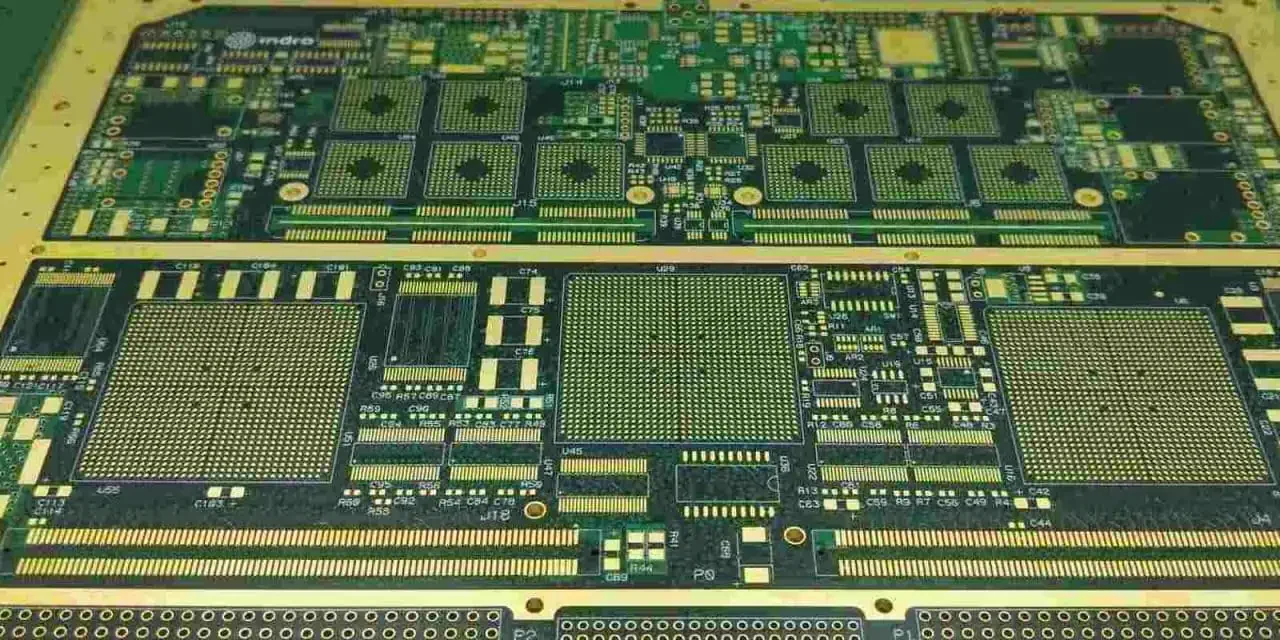
high density pcb - KKPCB
 
HomeTag

high density pcb - KKPCB

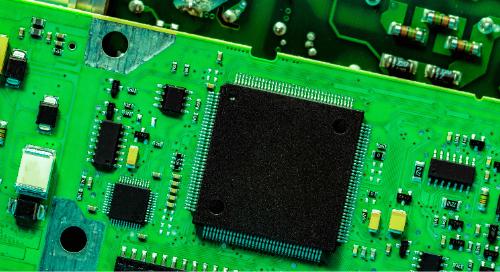
Fine Pitch PCB – Precision PCB for High Density and Fine Line Applications

What Is Fine Pitch PCB? A Fine Pitch PCB refers to a printed circuit board designed with extremely small trace width and spacing to support high pin count and fine pitch components. It is commonly used in advanced electronic systems where compact design, high integration, and precise routing are essential. Fine pitch designs are typically...

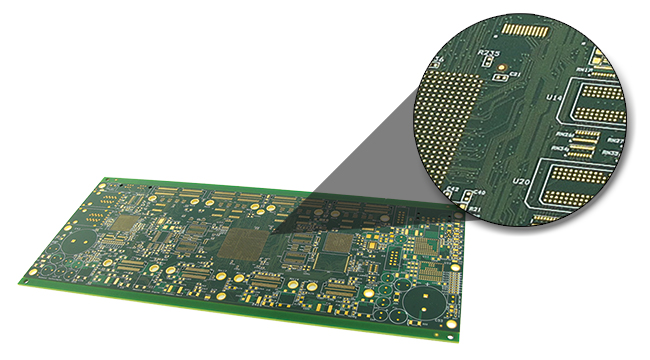
HDI PCB – High Density Interconnect PCB for Advanced Electronics

What Is HDI PCB? HDI PCB (High Density Interconnect PCB) is a printed circuit board designed with higher wiring density per unit area compared to traditional multilayer PCBs. It uses advanced manufacturing technologies such as microvias, blind vias, buried vias, and fine line traces to achieve compact size and improved electrical performance. HDI PCB is...

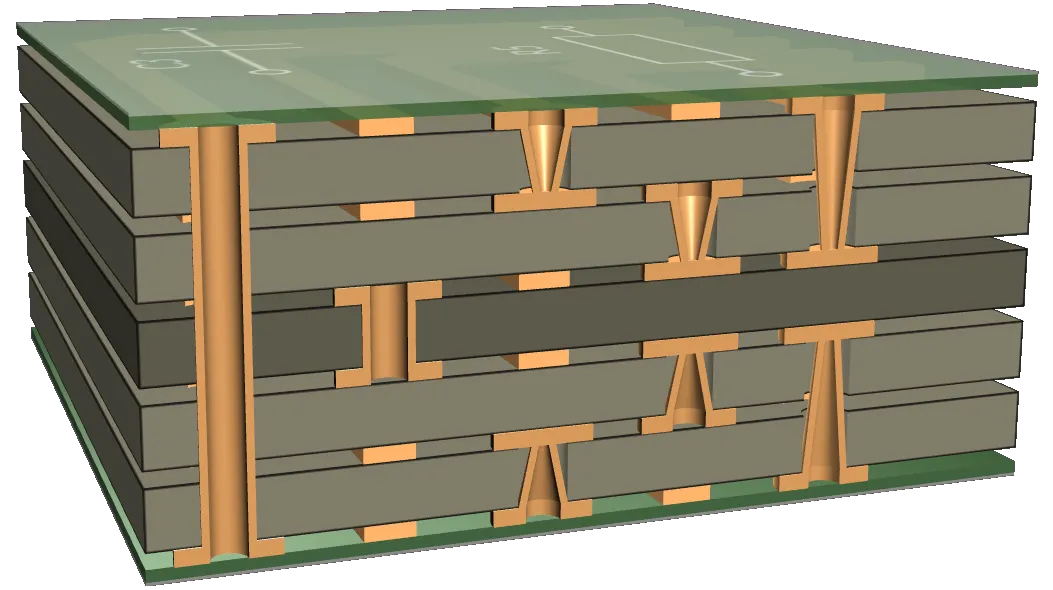
Buried Via PCB – Advanced Multilayer PCB with Internal Interconnection Technology

What Is a Buried Via PCB? A Buried Via PCB is a multilayer printed circuit board that contains vias connecting internal layers only, without reaching the outer surface layers. Unlike through-hole vias, buried vias are completely enclosed within the board stack-up. This allows designers to: Increase routing density Optimize outer layer space Improve signal integrity...

High Layer Count PCB – Advanced Multilayer PCB for High Density and High Speed Applications

What Is a High Layer Count PCB? A High Layer Count PCB refers to a multilayer printed circuit board typically built with 16 layers or more, and in advanced applications, up to 40, 60, or even higher layer counts. High Layer Count PCB is designed to support: High density routing Complex signal distribution Controlled impedance...

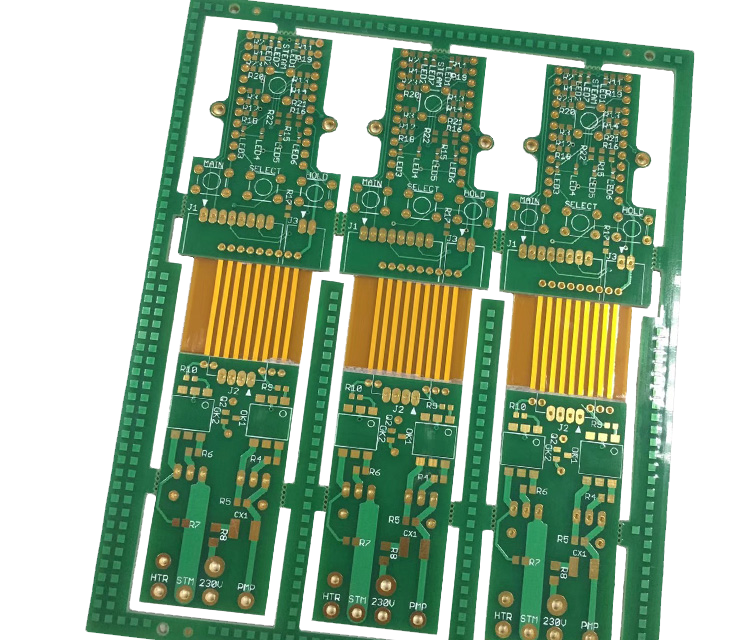
Rigid-Flex PCB – High Reliability Hybrid PCB for Compact and Complex Electronic Designs

What Is a Rigid-Flex PCB? A Rigid-Flex PCB is a hybrid printed circuit board that integrates rigid PCB sections and flexible circuit layers into a single unified structure. Unlike traditional PCB assemblies that use connectors or cables between separate boards, a Rigid-Flex PCB eliminates mechanical interconnections by embedding flexible layers within the rigid stack-up. Rigid-Flex...

High TG PCB – High Glass Transition Temperature PCB for High Reliability Applications

What Is a High TG PCB? A High TG PCB is a printed circuit board fabricated using high glass transition temperature (TG) laminate materials, typically with TG values above 170°C, 180°C, or even 200°C depending on application requirements. The glass transition temperature (TG) refers to the temperature at which the PCB substrate transitions from a...

BT Epoxy PCB Manufacturing for IC Substrate and High Density Applications

What Is a BT Epoxy PCB? A BT Epoxy PCB is a high-performance printed circuit board manufactured using Bismaleimide Triazine (BT) resin-based epoxy material. BT Epoxy PCB is widely used in IC substrate applications, semiconductor packaging, memory modules, and high-density electronic devices, where thermal stability, dimensional accuracy, and electrical performance are critical. Compared with standard...

High Frequency Signal PCB Manufacturing for High-Speed and RF Applications

What Is a High Frequency Signal PCB? A High Frequency Signal PCB is a printed circuit board designed to carry high-speed and high-frequency signals with minimal loss, reflection, or distortion. These PCBs are crucial in RF, microwave, 5G, high-speed computing, and semiconductor test applications, where signal integrity and low insertion loss are essential for system...

RF Trace PCB Manufacturing for High-Frequency and Wireless Applications

What Is an RF Trace PCB? An RF Trace PCB is a printed circuit board designed to route high-frequency RF signals with minimal signal loss, reflection, and distortion. These PCBs are optimized for controlled impedance, low insertion loss, and high signal integrity, making them essential for applications such as 5G modules, mmWave systems, wireless communication,...

Differential Pair PCB Design and Manufacturing for High-Speed Data Transmission

What Is a Differential Pair PCB? A Differential Pair PCB is a printed circuit board designed to route differential signal pairs, which are two complementary signals transmitted simultaneously to improve noise immunity, reduce crosstalk, and maintain signal integrity. Differential pair technology is critical in high-speed digital interfaces, such as USB, HDMI, PCIe, Ethernet, DDR memory,...