HomeTag

impedance control - KKPCB

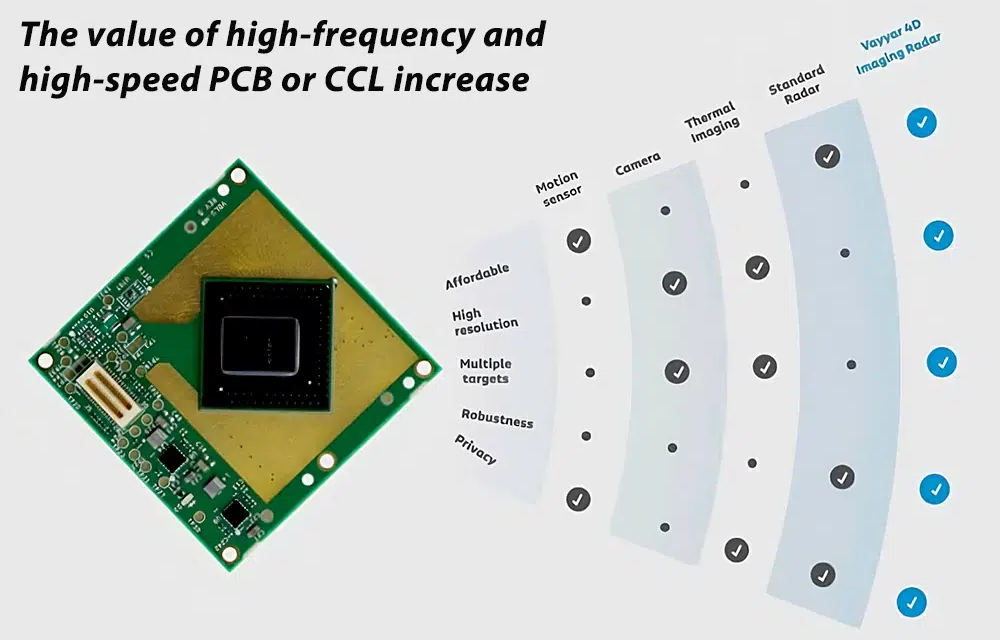
Radar PCB Design: Materials, High-Frequency Layout Techniques & Applications

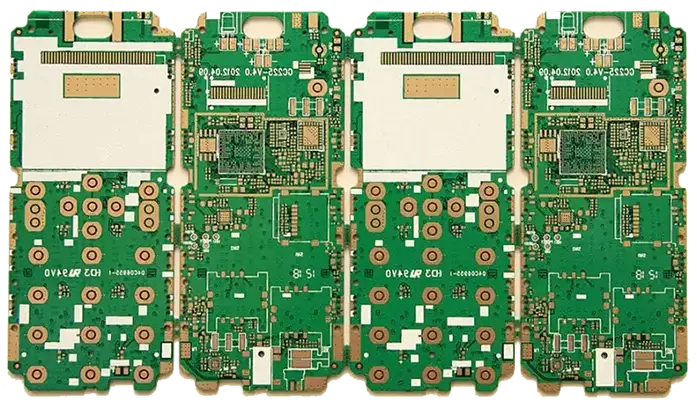
Radar PCB: Design Principles, Materials, Manufacturing Challenges & Key Applications High-speed PCBs stand at the top of modern circuit-board technology, spanning digital high-speed, mixed-signal, and RF/microwave categories. Among these, RF and microwave PCBs operate at the highest frequencies, making them essential for advanced applications—especially RADAR (Radio Detection and Ranging). Because Radar PCBs frequently host a...
WiFi PCB Design Guide for High-Speed Connectivity: Architecture, Materials, RF Layout, and Best Practices

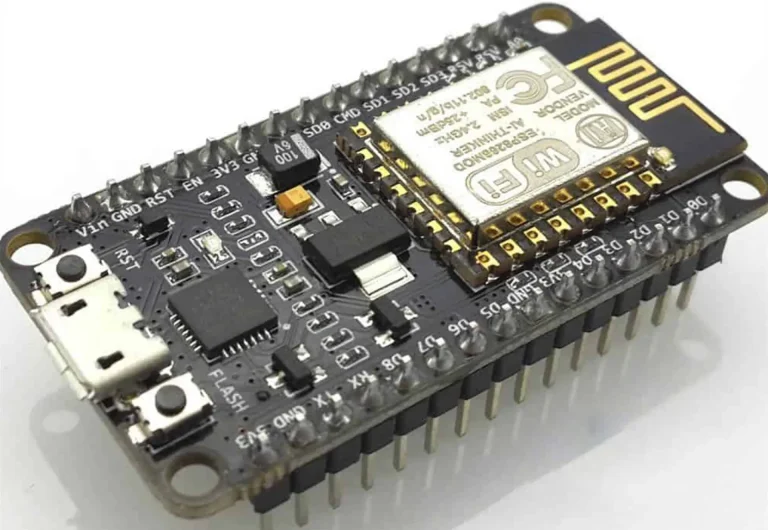
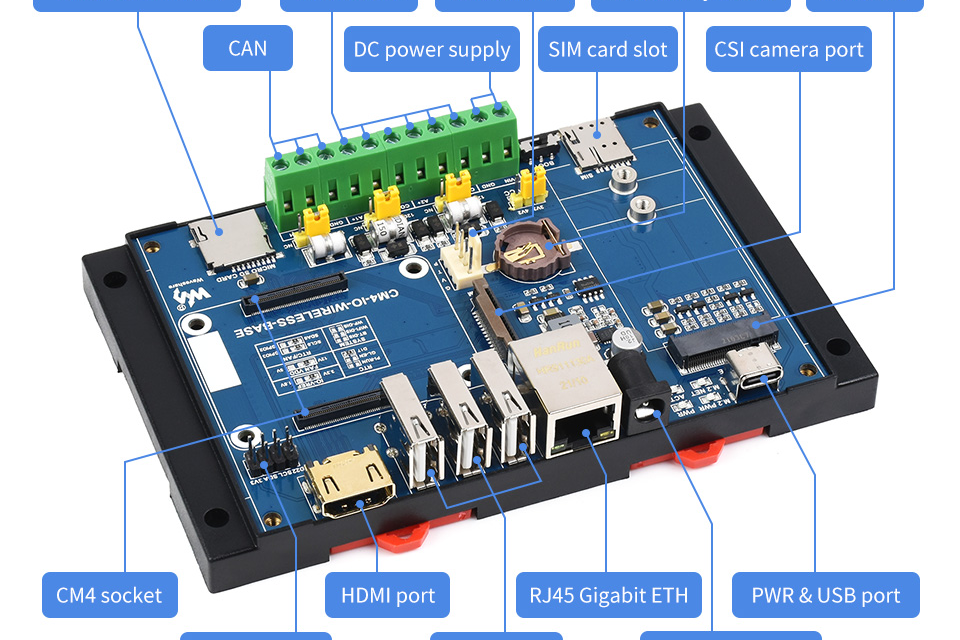
WiFi PCB Design Guide for High-Speed Connectivity Introduction WiFi connectivity is everywhere—from mobile devices to smart home systems and industrial machinery. At the heart of all these wireless systems lies the WiFi PCB, a specialized circuit board engineered to process, transmit, and receive high-frequency wireless signals. This guide explores the structure, design principles, materials, RF...

Hybrid Stackup and Miniaturized RF Design with PTFE PCBs in Next-Generation 5G Base Stations

1. Engineering Overview   Next-generation 5G base stations require high-density, miniaturized RF front-end modules with low insertion loss, precise impedance, and stable phase performance across mmWave bands (28–39 GHz).   PTFE PCB laminates, with Dk = 2.15 ± 0.02 and Df = 0.0009 @10GHz, provide superior dielectric consistency and thermal stability for tightly packed MIMO...

Dielectric Uniformity and Manufacturing Precision of PTFE PCBs for Aerospace Communication Equipment

1. Engineering Overview   Modern aerospace RF communication equipment, including satellite transceivers and spaceborne antenna modules, demands ultra-low-loss PTFE PCBs with tight dielectric uniformity and precise manufacturing tolerances. Small variations in Dk or CTE can lead to phase drift, impedance mismatch, and degraded link margin in Ku/Ka-band RF payloads.   PTFE PCB laminates, with Dk...

Low-Loss Transmission and Impedance Control of PTFE PCBs in Satellite Communication Payloads

1.Engineering Overview / Abstract   Modern satellite communication payloads operating in Ka- and Ku-band frequencies require PCB substrates with ultra-low loss, precise impedance control, and stable phase performance. PTFE PCB laminates provide an ideal platform for high-frequency RF interconnects due to their low dielectric constant (Dk = 2.10 ± 0.03) and minimal loss tangent (Df...

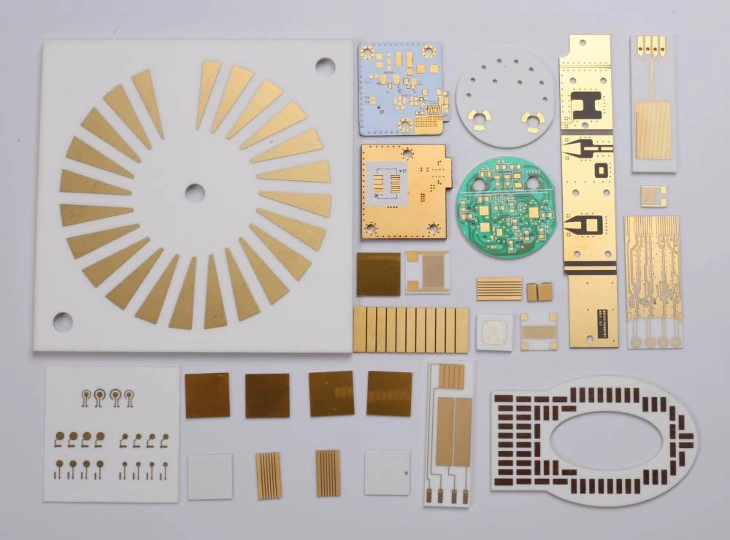
Impedance Control and RF Efficiency Optimization Using Ceramic PCBs in Industrial Wireless Sensor Networks

1. Engineering Overview / Abstract   As Industrial IoT communication modules become more compact and operate at higher frequencies, maintaining precise impedance control and RF efficiency is critical for reliable data transmission. Traditional polymer-based PCBs often suffer from dielectric drift, thermal warpage, and EMI coupling, which degrade signal integrity in dense wireless sensor networks.  Ceramic...

Low-Loss Transmission and Impedance Control of Megtron 7 PCBs in Automotive mmWave Radar Systems

1. Engineering Overview   Automotive mmWave radar modules for advanced driver-assistance systems (ADAS) require precise RF signal propagation with minimal loss and stable impedance across multilayer PCBs. Trace density and high-frequency operation introduce challenges in maintaining signal integrity and   crosstalk suppression. Megtron 7 PCBs, with Dk = 3.40 ±0.02 and Df = 0.0018 @ 10...

Mproving Impedance Control and Reliability of Taconic TLY-5 PCB Platforms for Medical Imaging and Diagnostic RF Modules

1. Engineering Overview / Abstract   Modern medical imaging systems — including MRI coils, ultrasound transceivers, and RF diagnostic sensors — rely on tight impedance control and ultra-low signal drift to ensure accurate imaging and patient diagnostics.  The Taconic TLY-5 PCB platform, with its Dk of 2.20 ± 0.02 and Df of 0.0009 @10GHz, provides...

Optimizing Impedance Control and Thermal Uniformity of Taconic RF-35 PCB Substrates for 5G Smartphone Antenna Modules

1. Engineering Overview / Abstract   As 5G smartphone antenna modules integrate multiple MIMO paths and beam-forming arrays, precise impedance control and thermal uniformity become critical for stable signal transmission.  Taconic RF-35 PCB substrates enable consistent dielectric performance and low-loss propagation under compact, multilayer conditions.  KKPCB engineers apply fine-tuned lamination and impedance verification processes to...

Enhancing Signal Integrity and RF Stability of TLY-5 PCBs in 5G Smartphone Antenna and Transceiver Modules

1. Engineering Overview — Material-Driven Signal Reliability for 5G Smartphones   As 5G smartphones evolve toward multi-antenna, wide-band, and ultra-compact RF front-end architectures, PCB materials play a decisive role in ensuring signal alignment and thermal stability.  The TLY-5 PCB, a PTFE-glass composite laminate from Taconic, provides excellent dielectric uniformity (Dk = 2.2 ± 0.02, Df...