PCB Manufacturing Services | High-Quality PCB & PCBA - KKPCB
 
HomeCategory

PCB Manufacturing Services | High-Quality PCB & PCBA - KKPCB

Optimize Differential Pair Accuracy and Reduce Crosstalk Using Impedance Controlled PCB Laminates in Automotive ADAS Radar Units

Automotive ADAS radar systems are now operating at higher frequencies, tighter channel spacing, and more aggressive signal-processing thresholds than ever. Under these conditions, the performance of an Impedance Controlled PCB becomes a dominant factor shaping radar detection accuracy, phase stability, and immunity to signal degradation. Engineering teams focusing on 77–79 GHz radar modules increasingly recognize...
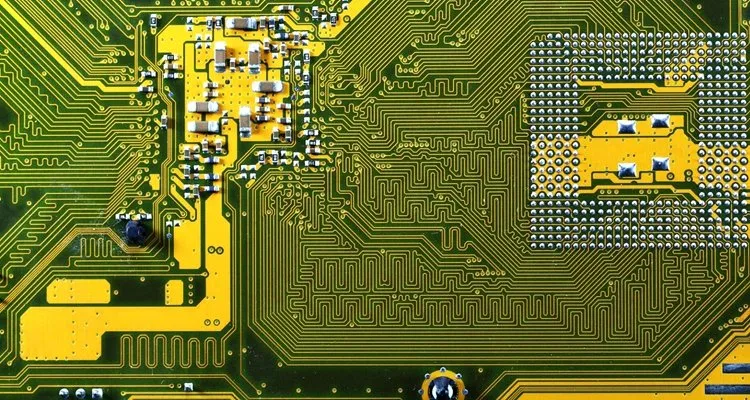
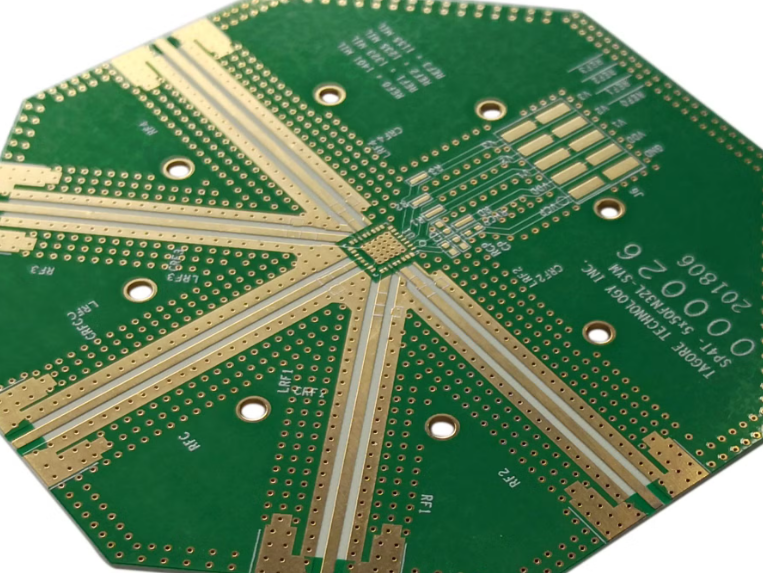
Enhance Signal Integrity and High-Speed Stability with Impedance Controlled PCB Platforms for 5G Communication Systems

5G communication systems rely on stringent impedance accuracy, low insertion loss, and predictable phase stability to maintain signal integrity across multi-gigabit transmission channels. At mmWave and sub-6 GHz bands, even slight deviations in controlled impedance routing can introduce reflection, jitter accumulation, and eye-diagram degradation.Impedance Controlled PCBs engineered for 5G must balance dielectric uniformity, copper surface...

Optimize RF Transmission and Phase Consistency Using High-Frequency Sensor PCB Laminates in Automotive ADAS Sensing Modules

Next-generation automotive ADAS sensing modules, including 77–81 GHz radar, LiDAR, and mmWave sensor arrays, require PCBs with ultra-stable dielectric properties, low insertion loss, and phase-coherent RF routing. Performance depends on maintaining consistent Dk/Df, low-loss mmWave signal propagation, and minimal EMI, even under harsh thermal cycling, vibration, and humidity conditions in vehicles.   High-frequency sensor PCB...

Boost Mechanical Strength and Heat Dissipation Efficiency Through Al₂O₃ PCB Engineering for Automotive Control Units

Al₂O₃ PCB platforms have become a critical foundation for next-generation automotive control units, particularly in systems where high thermal load, vibration resistance, and electrical stability determine long-term reliability. As automotive architectures evolve toward high-power ADAS sensors, electric powertrain modules, and high-density ECU clusters, alumina PCB substrates provide the mechanical strength and heat dissipation efficiency required...

Enhance Signal Integrity and Thermal Reliability with ADAS PCB Platforms for Automotive Radar Systems

Advanced Driver Assistance Systems rely heavily on 77 GHz automotive radar modules, where the ADAS PCB directly determines signal integrity, insertion loss, dielectric stability, and system-level thermal reliability. As radar sensors expand from single-beam to multi-beam architectures, PCB materials and stackup selection have become primary constraints for RF linearity and long-distance object detection. The objective...

Extend Thermal Robustness and RF Power Efficiency with RO4835 PCB Substrates in High-Density Microwave Power Amplifier Platforms

High-density microwave power amplifier platforms demand PCB materials capable of maintaining stable dielectric performance, high RF power efficiency, and long-term thermal robustness under continuous high-power loads. RO4835 PCB substrates are engineered precisely for these conditions. By combining a tightly controlled dielectric constant, low dissipation factor, and excellent oxidative stability, RO4835 PCBs offer a reliable foundation...

Achieve Ultra-Consistent Dk/Df Performance Through RO4835 PCB Engineering for 5G Massive-MIMO Radio Units

The Importance of Dk/Df Stability in 5G Systems As 5G communication systems continue to evolve, especially in Massive MIMO radio units, maintaining ultra-consistent dielectric constant (Dk) and dissipation factor (Df) is critical for ensuring stable RF performance and reliable high-speed signal transmission. In high-frequency RF PCB design, even small variations in Dk/Df performance can lead...

Impedance Matching in HDI PCB Design

In modern HDI PCB design (High-Density Interconnect PCB design), achieving precise impedance matching is essential for maintaining signal integrity, minimizing reflection, and ensuring high-speed signal transmission. As data rates increase and circuit density grows, impedance control in HDI PCB layout becomes more complex due to fine trace geometries, microvias, and multilayer stack-ups. Effective impedance matching...

Enhance Thermal Reliability and High-Power RF Efficiency Through Advanced 5G Router PCB Stackups

5G router PCB platforms operate under multi-band RF loads, high-density routing, and continuous thermal cycling in compact CPE enclosures. Achieving stable RF efficiency requires a stackup engineered around low-loss materials, controlled dielectric stability, and carefully optimized thermal paths. This article analyzes how engineered 5G router PCB stackups improve RF efficiency, insertion-loss performance, and long-term thermal...

Achieve Multi-Gig Channel Reliability and Tight Impedance Control with Megtron 7 PCB Stackups for Advanced Server Motherboards

Modern server motherboards require predictable impedance, extremely low jitter, and stable multi-gigabit routing to support DDR5, PCIe 6.0, and high-density network interfaces. FR-4-class materials fail to provide consistent loss and dielectric stability. Megtron 7 PCB laminates supply ultra-low Df, tight dielectric tolerances, and high-temperature reliability suited for 8–64 GT/s environments. KKPCB adapts Megtron 7 PCB...