PCB Assembly (PCBA) Services | Turnkey Solutions - KKPCB
 
HomeCategory

PCB Assembly (PCBA) Services | Turnkey Solutions - KKPCB

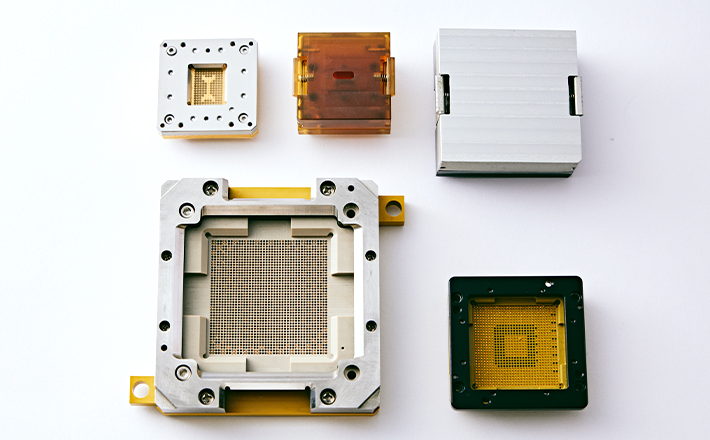
ATE PCB Assembly: High-Precision Integration for Reliable Semiconductor Testing

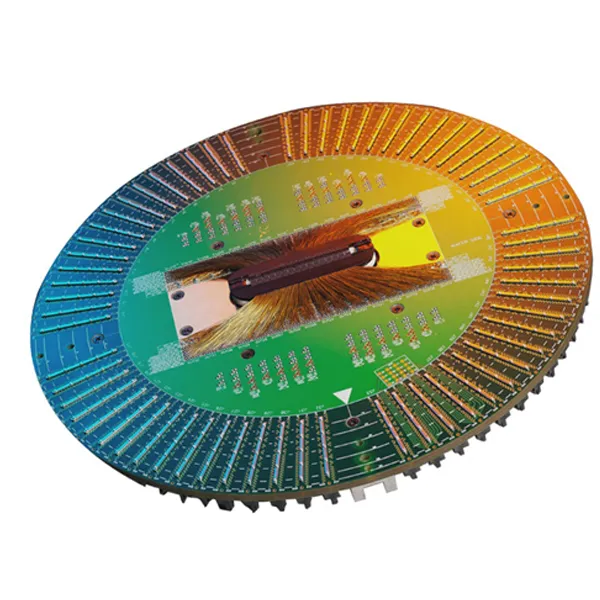
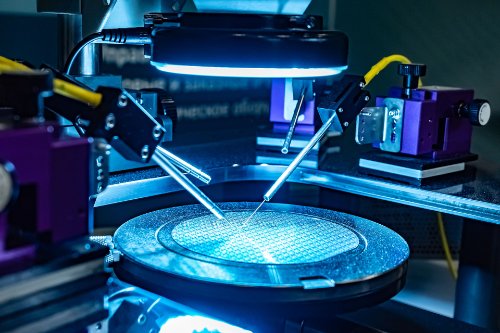
Automated Test Equipment (ATE) relies on meticulously assembled PCBs to deliver precise electrical performance during semiconductor testing. ATE PCB Assembly involves integrating test-specific components, connectors, and sockets onto a purpose-built test board to ensure reliable and repeatable operation. Properly executed ATE PCB assembly is critical for maintaining signal fidelity, power stability, and long-term test accuracy....

PCB Supplier Direct: Factory-Level Control for Cost, Quality, and Lead Time Optimization

In today’s electronics supply chain, uncertainty in cost, quality, and delivery can delay product launches and increase risk. Choosing a PCB supplier direct—working directly with the PCB factory rather than intermediaries—gives customers greater control over every critical manufacturing variable. A direct PCB supplier relationship transforms procurement from a transactional process into a strategic manufacturing partnership....

Smart Factory PCB Engineering for IIoT Intelligence, Autonomous Production, and Next-Generation Industrial Control

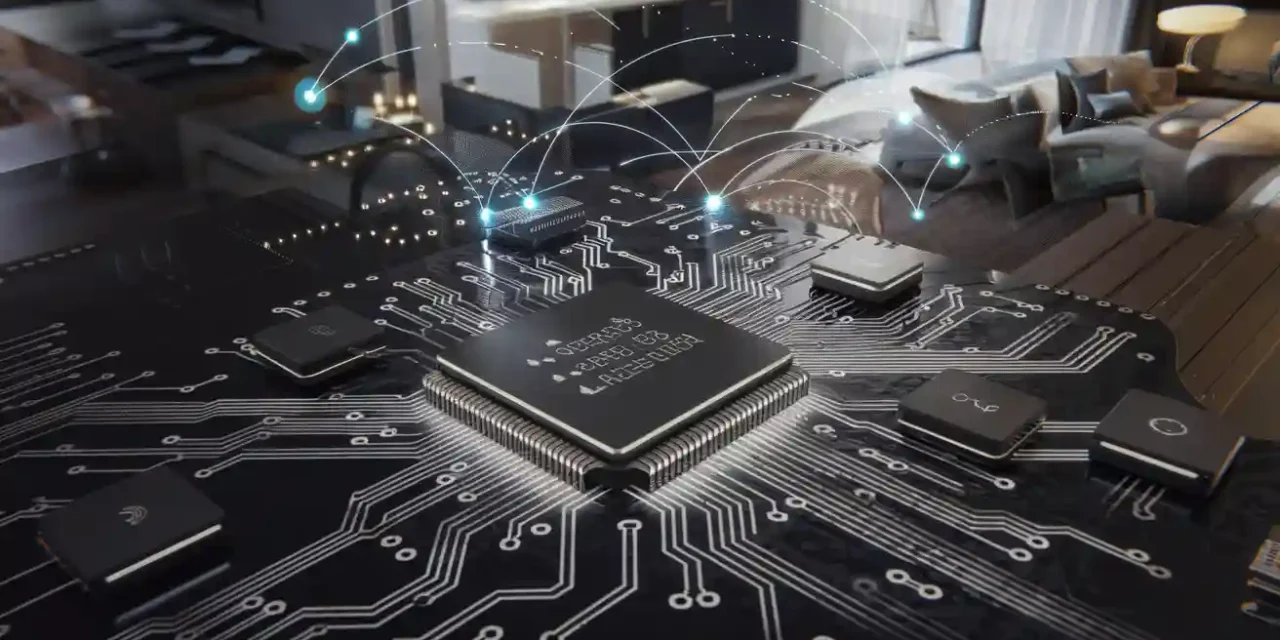
As global manufacturing transitions into fully connected, autonomous, data-driven ecosystems, the Smart Factory PCB has become the central hardware platform enabling real-time monitoring, predictive analytics, robotic coordination, and closed-loop industrial automation. Every intelligent machine, from PLC control modules to AMR robots and sensor gateways, relies on a high-reliability Smart Factory PCB to operate with precision...

Smart Factory PCB Architecture for Intelligent Automation and Next-Generation Industrial Control

The transition to Industry 4.0 has redefined the requirements for industrial electronics. Modern Smart Factory PCB architecture is no longer just about basic logic; it is the neural network of intelligent automation. To support the demands of Industrial IoT (IIoT), real-time edge computing, and high-speed motion control, industrial control PCBs must integrate advanced data processing with rugged reliability. For manufacturers like KKPCB, building...

Reduce Conductor Loss and Maintain High-Frequency Linearity with Duroid 5880 PCB Microstrip/Coplanar Structures for Advanced Microwave Modules

Advanced microwave modules demand transmission structures that deliver extremely low loss, high linearity and wideband frequency stability. Modern radar front-ends, satellite communication units and mmWave transceivers rely heavily on Duroid 5880 PCB technology because it offers exceptionally low dielectric loss, high-frequency predictability and precise impedance behavior. When engineered into microstrip and coplanar waveguide (CPW) structures,...

Boost High-Q Resonance and Ultra-Stable Impedance Control with High-Frequency Sensor PCB Structures for Aerospace Navigation Sensors

Aerospace navigation sensors operate in a realm where the margin for error is essentially zero. Whether guiding autonomous aircraft, stabilizing flight control modules, or supporting satellite-assisted positioning, these sensors rely on high-frequency PCB platforms engineered for absolute electrical stability. Achieving high-Q resonance and ultra-consistent impedance is not just a design preference—it is the foundation of...

Reinforce Shock Reliability and High-Frequency Integrity Through Ruggedized mmWave Module PCB Designs for Harsh-Environment Communication Terminals

Harsh-environment communication terminals—used in battlefield radios, mining telemetry units, emergency response networks, and remote industrial gateways—depend on mmWave Module PCB architectures that can preserve signal integrity, impedance accuracy, and structural reliability under extreme stress. High-frequency circuits operating from 24 GHz to 71 GHz experience sensitivity far greater than conventional RF PCB designs, making material stability,...

RF PCB Design for 5G Devices: Antenna Integration, Impedance Control & High-Frequency Layout Guide

RF PCB Design for 5G Devices: High-Frequency Architecture, Antenna Integration & Engineering Best Practices Designing RF PCBs for 5G hardware is far more than simple high-speed layout—it requires a deep command of electromagnetic behavior, antenna engineering, high-frequency signal routing, impedance control, and noise isolation.In next-generation wireless systems, the antenna is no longer a passive component—it...

PTFE PCB Explained: Properties, Advantages, Applications & Comparison with FR4

Understanding PTFE PCB: A Comprehensive Technical Overview Printed circuit boards (PCBs) form the backbone of modern electronic systems. While FR4 remains the industry standard for general-purpose PCB manufacturing, PTFE PCBs occupy a special place in high-performance, high-frequency, and harsh-environment applications. This guide provides an in-depth exploration of PTFE PCB technology—its material properties, technical specifications, differences...

Improving Dielectric Consistency and RF Efficiency of Megtron 6 PCBs for Industrial IoT and Wireless Sensor Networks

In the fast-growing world of Industrial IoT (IIoT) and Wireless Sensor Networks (WSN), reliable wireless communication is essential for real-time monitoring, predictive maintenance, and smart factory operations. Megtron 6, Panasonic’s high-performance low-loss PCB material, is widely chosen for these applications because of its excellent dielectric properties: stable Dk (dielectric constant) around 3.2–3.6 and ultra-low Df...