
The transition to Industry 4.0 has redefined the requirements for industrial electronics. Modern Smart Factory PCB architecture is no longer just about basic logic; it is the neural network of intelligent automation. To support the demands of Industrial IoT (IIoT), real-time edge computing, and high-speed motion control, industrial control PCBs must integrate advanced data processing with rugged reliability. For manufacturers like KKPCB, building the hardware for next-generation factories means balancing ultra-high-speed signal integrity with extreme environmental resilience.

1. Edge Computing and High-Speed Data Processing
In an intelligent automation environment, data cannot always wait for cloud processing. Smart factory controllers now incorporate edge computing directly on the PCB.
- High-Speed Signal Integrity: Intelligent controllers utilize high-performance FPGAs and ARM processors, requiring high-speed digital (HSD) PCB design techniques. This includes strict controlled impedance and low-loss materials to manage data rates exceeding 10Gbps.
- Multilayer Complexity: To accommodate the dense routing of high-speed memory and processors, multilayer PCB architectures (often 12–24 layers) are used to provide dedicated ground and power planes, reducing electromagnetic interference (EMI).
2. Ruggedization for Harsh Industrial Environments
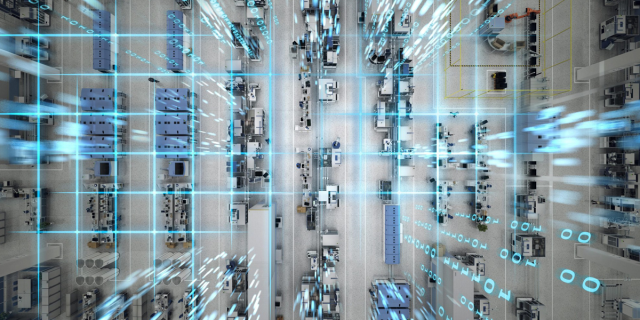
Unlike consumer electronics, industrial control PCBs must survive 24/7 operation in environments with extreme temperatures, vibration, and electrical noise.
- Thermal Management: Smart factories involve high-power motor drives and actuators. We utilize heavy copper PCBs (up to 4oz or more) and thermal vias to dissipate heat efficiently, preventing component degradation.
- Vibration Resistance: To withstand the mechanical stress of robotic arms and assembly lines, rigid-flex PCB technology is often employed. This eliminates traditional connectors that are prone to loosening under constant movement.
3. Real-Time Communication and Low-Latency Networking
Intelligent automation relies on split-second synchronization between sensors and actuators.
- TSN (Time-Sensitive Networking): PCB architectures are now designed to support TSN over Industrial Ethernet. This requires precision clock synchronization and optimized trace lengths to minimize signal skew.
- Integrated RF Modules: Many smart factory devices utilize WiFi 6 or 5G mmWave for wireless connectivity. At KKPCB, we integrate specialized RF PCB sections with low-dielectric loss (low-Df) materials to ensure stable wireless communication in metal-heavy factory environments.
4. Advanced Power Distribution and Safety Isolation
High-voltage industrial equipment requires sophisticated power management on the PCB to protect sensitive logic circuits.
- Galvanic Isolation: To prevent high-voltage surges from damaging the control logic, we implement high-voltage isolation zones using optocouplers and isolated power DC-DC converters.
- Creepage and Clearance: Strict adherence to IPC-2221B standards ensures that high-voltage traces maintain proper spacing, preventing arcing and electrical failure in humid or dusty factory conditions.
5. Predictive Maintenance and Smart Diagnostics
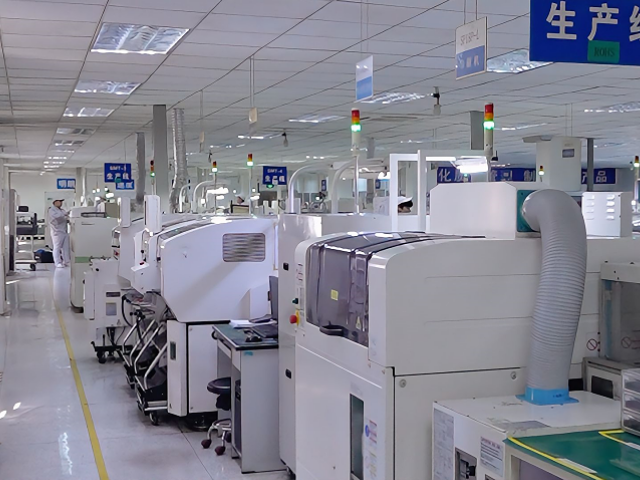
Next-generation smart factory PCBs are “self-aware.” They include embedded sensors to monitor their own health, including temperature, current, and humidity. This data allows for predictive maintenance, alerting operators to potential hardware failure before the production line stops.
Conclusion
The Smart Factory PCB architecture of tomorrow is a fusion of high-speed computing, rugged mechanical design, and advanced power management. As intelligent automation continues to evolve, the demand for advanced PCB solutions that can handle the rigors of the factory floor while processing massive amounts of data will only grow. At KKPCB, we are committed to providing the high-reliability hardware that powers the world’s most advanced industrial control systems.
