radar PCB - KKPCB
 
HomeTag

radar PCB - KKPCB

Enhance Multi-Layer Impedance Control and Low-Loss Performance Using TLY-5 PCB for mmWave Communication Systems

1. Engineering Context Next-generation mmWave communication systems—including 5G base stations, satellite payloads, and radar modules—require PCBs that provide ultra-stable impedance, low insertion loss, and phase-consistent routing. Traditional FR-4 or high-speed laminates often suffer from dielectric drift, higher Df, and thermal expansion issues, which degrade signal fidelity, EMI immunity, and system reliability in dense multi-layer RF...

Enhance Electromagnetic Uniformity and Mode-Suppression Using RT/duroid 5880 PCB Stackups in Precision mmWave Routing Networks

Precision mmWave systems increasingly depend on PCB materials that can maintain electromagnetic uniformity, suppress parasitic modes, and control insertion loss across wideband operating ranges. RT/duroid 5880 PCB stackups have become a leading choice for these environments because their low dielectric constant, low-loss tangent, and exceptional stability under thermal and mechanical stress allow engineers to design...

Maximize RF Power Handling and Phase Stability Using RO4350B PCB Laminates in High-Frequency Antenna Modulegs

Modern wireless systems—from 5G radio units and phased-array antenna modules to automotive radar and satellite communication terminals—demand PCBs that deliver high RF power handling, exceptional phase stability, and ultra-low loss. As antenna modules continue to shrink while operating at higher frequencies, selecting the correct laminate becomes a mission-critical design decision. Among all mid-frequency RF substrates,...

Optimize High-Speed Routing and EMI Control Using Advanced ADAS PCB Architectures in Next-Gen Autonomous Vehicles

Autonomous driving platforms rely on a dense constellation of cameras, radars, lidars, domain controllers, and AI accelerators. These subsystems generate enormous volumes of high-speed data, while simultaneously consuming sensitive analog information from perception sensors. The PCB that connects everything becomes a multi-domain electromagnetic battlefield, where PCIe Gen4/Gen5 lanes, multi-gig SerDes routes, sensor-fusion processors, and power...

Drive Ultra-Clean Electromagnetic Performance Through Precision-Aligned Multilayer HF PCB Dielectrics in Wideband Radar Processing Units

Wideband radar processing units operating in 8–40 GHz and beyond require multilayer HF PCBs with precisely aligned dielectric layers to maintain ultra-clean electromagnetic performance. Signal integrity, insertion loss, and phase stability are critically sensitive to stackup alignment, trace spacing, and dielectric uniformity. KKPCB leverages precision-laminated multilayer HF PCB substrates, low-roughness copper, and impedance-calibrated routing to...

Optimize RF Transmission and Phase Consistency Using High-Frequency Sensor PCB Laminates in Automotive ADAS Sensing Modules

Next-generation automotive ADAS sensing modules, including 77–81 GHz radar, LiDAR, and mmWave sensor arrays, require PCBs with ultra-stable dielectric properties, low insertion loss, and phase-coherent RF routing. Performance depends on maintaining consistent Dk/Df, low-loss mmWave signal propagation, and minimal EMI, even under harsh thermal cycling, vibration, and humidity conditions in vehicles.   High-frequency sensor PCB...

Low Loss PCBs Explained: Materials, Features & High-Frequency Performance

What Is a Low Loss PCB? Premium Materials, Performance Advantages & Applications In high-frequency electronics, signal integrity is everything. As data rates climb and RF systems move into the mmWave range, traditional FR-4 PCBs quickly become inadequate due to excessive dielectric loss, copper loss and thermal instability. At KKPCB, we engineer Low Loss PCBs specifically...

Radar PCB Design: Materials, High-Frequency Layout Techniques & Applications

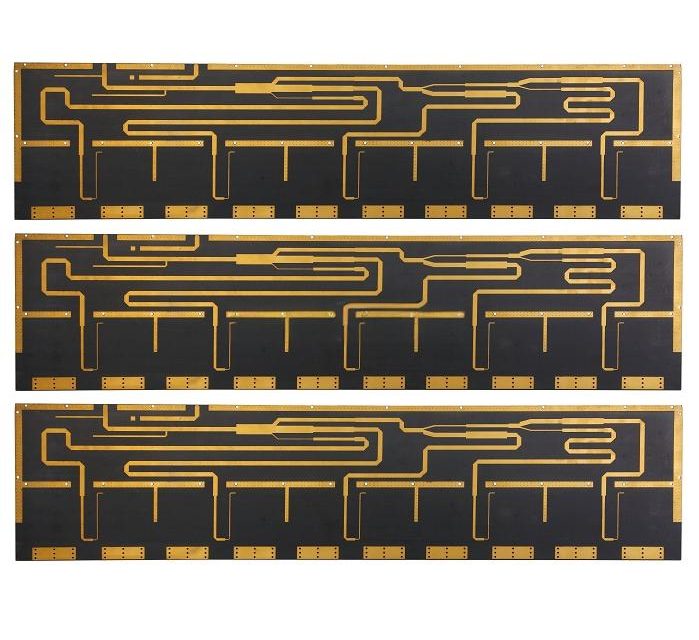
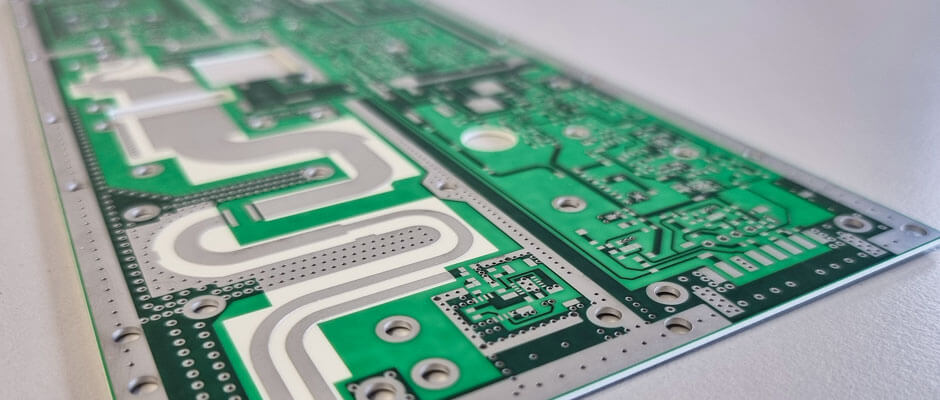
Radar PCB: Design Principles, Materials, Manufacturing Challenges & Key Applications High-speed PCBs stand at the top of modern circuit-board technology, spanning digital high-speed, mixed-signal, and RF/microwave categories. Among these, RF and microwave PCBs operate at the highest frequencies, making them essential for advanced applications—especially RADAR (Radio Detection and Ranging). Because Radar PCBs frequently host a...

Taconic TLY-5 PCB Material: A Complete Technical Guide for High-Frequency, RF, and Microwave Applications

Taconic TLY-5 PCB Laminates: Ultra-Low-Loss Materials for High-Frequency Excellence In high-frequency PCB engineering, materials are the foundation of performance. From RF front-ends to satellite communication systems, every decibel of loss, every fluctuation in dielectric stability, and every thermal deviation directly impacts system integrity. Taconic TLY-5 stands out as one of the industry’s most trusted PTFE-based...

Defense PCBs: The Silent Guardians Powering and Protecting Critical Military Systems

How Defense PCBs Secure Critical Military Systems In modern defense technology, where milliseconds determine mission success and electronic failure can compromise national security, Defense PCBs stand as the silent guardians that ensure military systems operate flawlessly. More than simple circuit carriers, these boards are engineered to perform under extreme heat, rapid pressure shifts, electromagnetic attacks,...