HDI PCB - KKPCB
 
HomeTag

HDI PCB - KKPCB

Test Socket PCB: Ensuring Reliable Electrical Contact in High-Volume Semiconductor Testing

In semiconductor production testing, accurate results depend not only on test equipment and software but also on the physical interface between the device under test (DUT) and the test system. The Test Socket PCB plays a critical role by providing a stable electrical and mechanical foundation for test sockets used in engineering validation and mass...

Load Board PCB: Delivering Stable, High-Accuracy Interfaces for Semiconductor Production Testing

In high-volume semiconductor manufacturing, production testing must be fast, repeatable, and extremely reliable. At the center of this process is the Load Board PCB, a critical interface that connects automated test equipment (ATE) to the device under test (DUT). A well-designed Load Board PCB ensures that every device is evaluated under identical electrical conditions, enabling...

Probe Card PCB: Enabling Precision and Stability in Wafer-Level Semiconductor Testing

As semiconductor devices continue to scale down in size while increasing in performance, wafer-level testing demands extreme precision. At the heart of this process lies the Probe Card PCB, a critical platform that connects automated test equipment to microscopic probe needles touching individual die pads. A professionally manufactured Probe Card PCB directly determines probing accuracy,...

HDI PCB: High-Density Interconnect Technology for Compact and High-Performance Electronics

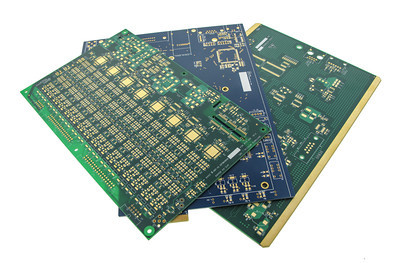
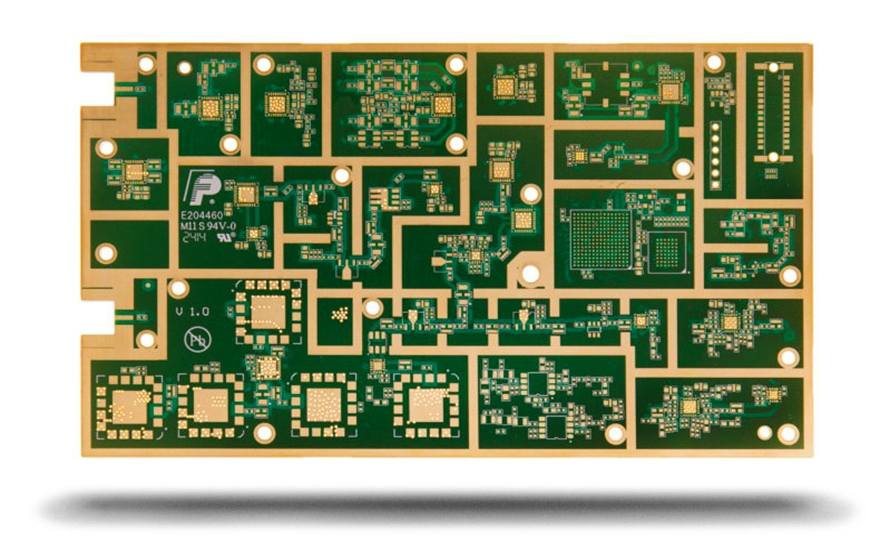
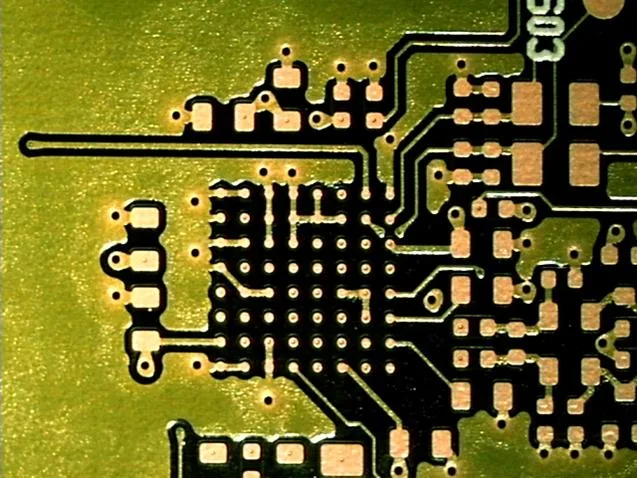
As electronic products continue to become smaller, faster, and more complex, traditional PCB technology often reaches its physical limits. HDI PCB (High-Density Interconnect PCB) technology was developed to overcome these constraints by enabling much higher routing density, improved signal integrity, and greater design flexibility. Today, HDI PCBs are widely used in high-speed digital systems, semiconductor...

High Pin Count PCB: Enabling Dense Interconnect and Reliable Performance in Advanced Electronics

 As electronic devices continue to integrate more functionality into smaller form factors, the number of signal, power, and ground connections has increased dramatically. The high pin count PCB is specifically engineered to support dense interconnect requirements while maintaining stable electrical and mechanical performance. From semiconductor testing to high-speed communication systems, a professionally manufactured high pin...

Designing Buried Via PCBs for High-Density Routing and Signal Integrity Optimization

As electronic systems continue to evolve toward higher speed, smaller form factors, and increased functionality, traditional through-hole via structures are becoming a limiting factor. Buried Via PCB technology has emerged as a critical enabler for high-density routing and signal integrity optimization, particularly in HDI, high-speed digital, and RF applications. By embedding vias between inner layers...

Balancing Electrical Performance and Manufacturability in Buried Via PCB Structures

As electronic systems continue to evolve toward higher speeds, greater functionality, and reduced form factors, Buried Via PCB structures have become a critical enabler for advanced multilayer designs. By allowing interlayer connections without penetrating the outer layers, buried vias unlock higher routing density, improved signal integrity, and enhanced EMI control. However, these electrical advantages must...

Enhance Routing Density and Signal Integrity with Buried Via PCB Architectures for High-Density Electronic Systems

Buried Via PCB: Enabling High-Density Interconnection Beyond Conventional Multilayer Boards A Buried Via PCB is a multilayer printed circuit board in which vias connect only internal layers and do not extend to the outer layers. Unlike through-hole vias, buried vias are completely embedded within the PCB stackup, enabling higher routing density, improved signal integrity, and...

Control of Conductor Etching in PCB Manufacturing: Precision Copper Etching for Fine-Line Circuit Patterns

Control of Conductor Etching Process in Printed Circuit Boards Copper etching is one of the most critical steps in printed circuit board (PCB) manufacturing, as it directly determines the accuracy and reliability of conductive circuit patterns. The term “printed circuit board” originates from this process, since etching is the final stage of photolithography used to...

PCB Prototype Engineering: Achieving High Reliability, High Speed, and High Precision in Modern Electronics

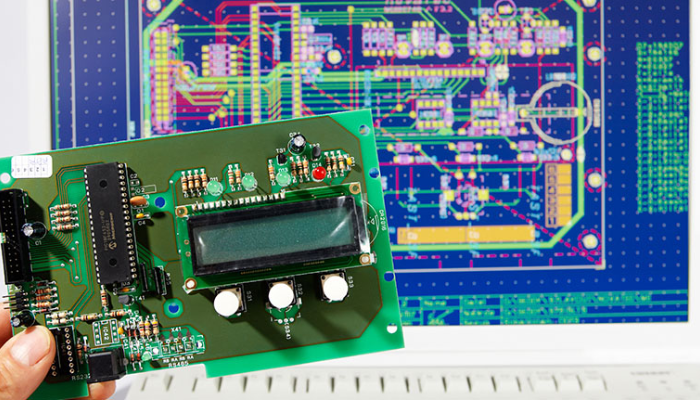
Introduction: Why PCB Prototype Engineering Defines Modern Electronics A PCB Prototype is no longer just a pre-production sample—it is the central engineering stage that determines product performance, manufacturability, reliability, and cost.In advanced electronics such as 5G, IoT, robotics, automotive, aerospace, AI edge computing, and industrial automation, a well-engineered PCB Prototype ensures signal integrity, thermal stability,...