HomeTag

impedance control PCB - KKPCB

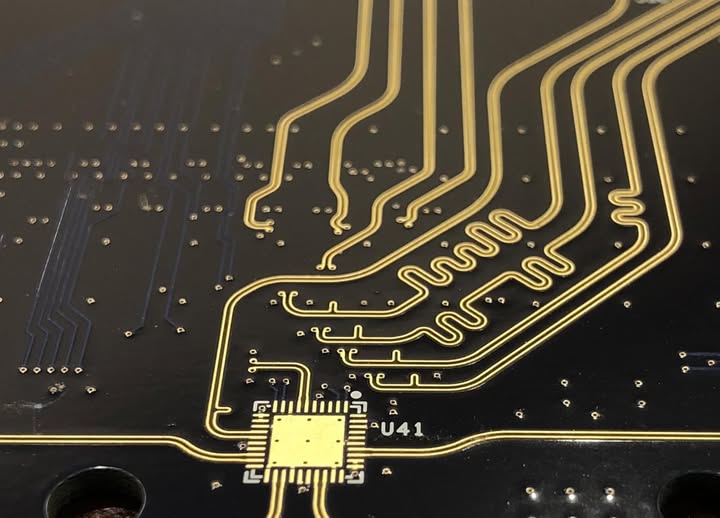
Differential Pair PCB: Controlled Impedance Routing for High-Speed and Low-Noise Signal Transmission

What Is a Differential Pair PCB? A Differential Pair PCB is a printed circuit board designed with differential signal pairs to transmit high-speed data with improved noise immunity and stable signal quality. A differential pair consists of two matched traces carrying equal and opposite signals, allowing the receiver to detect the voltage difference between them....
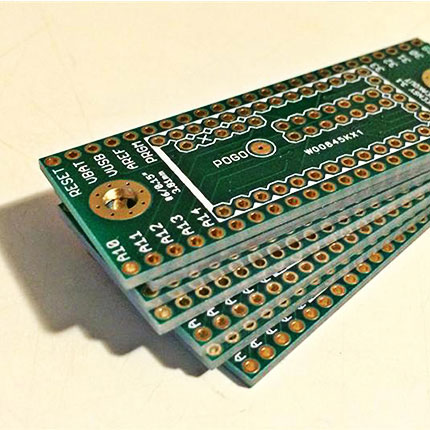
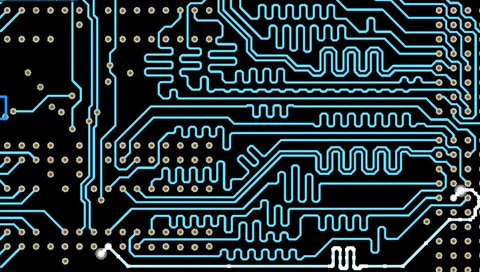
Controlled Impedance PCB Prototype: Reducing Risk in High-Speed and RF Design Validation

For high-speed digital and RF electronic systems, signal integrity is one of the most critical design challenges. A controlled impedance PCB prototype plays a key role in validating design assumptions, manufacturing tolerances, and electrical performance before moving into mass production. Building controlled impedance into the prototype stage significantly reduces technical and production risk. What Is...

High Speed PCB Engineering for Signal Integrity, Power Integrity, and Ultra-Low-Latency Electronic Systems

As modern electronics become faster, more compact, and more data-intensive, the High Speed PCB has evolved into a critical engineering platform for communication systems, servers, AI accelerators, radar units, embedded computing modules, and advanced industrial electronics. A well-engineered High Speed PCB ensures clean signal transmission, stable power behavior, and low-jitter operation across multi-gigabit channels. High-speed...

Advancing Electronic Engineering Through High-Precision PCB Prototype Fabrication Technologies

Modern electronics development depends on fast, accurate, and predictable PCB prototype fabrication. As device complexity rises—spanning RF modules, 5G transceivers, AI accelerators, and densely integrated consumer electronics—engineering teams rely on high-precision prototyping to validate architectures before mass production. PCB prototype technology has evolved from simple single-layer boards into a highly automated, material-specific, impedance-controlled manufacturing discipline....

Boost High-Q Resonance and Ultra-Stable Impedance Control with High-Frequency Sensor PCB Structures for Aerospace Navigation Sensors

Aerospace navigation sensors operate in a realm where the margin for error is essentially zero. Whether guiding autonomous aircraft, stabilizing flight control modules, or supporting satellite-assisted positioning, these sensors rely on high-frequency PCB platforms engineered for absolute electrical stability. Achieving high-Q resonance and ultra-consistent impedance is not just a design preference—it is the foundation of...

Achieve Multi-Gig Channel Reliability and Tight Impedance Control with Megtron 7 PCB Stackups for Advanced Server Motherboards

Modern server motherboards require predictable impedance, extremely low jitter, and stable multi-gigabit routing to support DDR5, PCIe 6.0, and high-density network interfaces. FR-4-class materials fail to provide consistent loss and dielectric stability. Megtron 7 PCB laminates supply ultra-low Df, tight dielectric tolerances, and high-temperature reliability suited for 8–64 GT/s environments. KKPCB adapts Megtron 7 PCB...

How to avoid radio frequency and microwave PCB design issues

With the rapid development of wireless communication, radar systems, satellite communication, automotive electronics, and high-frequency industrial applications, RF (Radio Frequency) and microwave PCB technology has become increasingly important. Unlike conventional low-frequency PCB designs, RF and microwave circuits operate at higher frequencies where even small variations in PCB structure can significantly affect electrical performance. Common design...