RF PCB - KKPCB
 
HomeTag

RF PCB - KKPCB

Engineering Ultra-Low Loss Performance with Low Dissipation Factor PCB Materials for High-Frequency and High-Speed Systems

Low Dissipation Factor PCB Engineering for High-Frequency, High-Power, and Low-Loss Electronic Platforms A Low Dissipation Factor PCB is the backbone of modern high-frequency hardware, designed to minimize dielectric loss, reduce signal attenuation, and maintain stable RF performance across extreme bandwidths. As systems scale into mmWave, sub-THz, and multi-gigabit domains, the dissipation factor (Df) becomes a...
PCB Prototype Engineering: Achieving High Reliability, High Speed, and High Precision in Modern Electronics

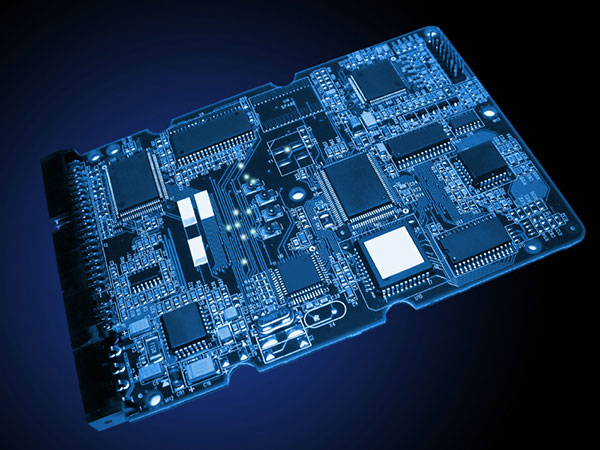
Introduction: Why PCB Prototype Engineering Defines Modern Electronics A PCB Prototype is no longer just a pre-production sample—it is the central engineering stage that determines product performance, manufacturability, reliability, and cost.In advanced electronics such as 5G, IoT, robotics, automotive, aerospace, AI edge computing, and industrial automation, a well-engineered PCB Prototype ensures signal integrity, thermal stability,...

Advanced TLY-5 PCB Technologies for Low-Loss, High-Stability RF and mmWave Communication Systems

TLY-5 PCB materials have become a core enabler in modern high-frequency electronics, especially as RF, microwave, and mmWave systems continue pushing toward higher bandwidth, lower loss, and stricter phase-stability requirements. Built on a PTFE-based low-loss dielectric platform, TLY-5 PCBs deliver exceptionally high electrical performance while supporting the reliability demands of satellite payloads, radar front-ends, high-power...

Drive Ultra-Stable Dk/Df Performance and High-Power Efficiency Using RO5880 PCB Architectures in Mission-Critical Aerospace and Communication Systems

Mission-critical aerospace and high-frequency communication systems depend on PCB materials that deliver absolute electrical stability, consistent power efficiency and repeatable RF performance under extreme thermal, mechanical and radiation environments. RO5880 PCB architectures have become a foundation for these systems because they offer exceptionally stable Dk/Df, low insertion loss and predictable phase behavior across microwave and...

Reduce Conductor Loss and Maintain High-Frequency Linearity with Duroid 5880 PCB Microstrip/Coplanar Structures for Advanced Microwave Modules

Advanced microwave modules demand transmission structures that deliver extremely low loss, high linearity and wideband frequency stability. Modern radar front-ends, satellite communication units and mmWave transceivers rely heavily on Duroid 5880 PCB technology because it offers exceptionally low dielectric loss, high-frequency predictability and precise impedance behavior. When engineered into microstrip and coplanar waveguide (CPW) structures,...

Maximize mmWave Performance and Thermal Stability with RO5880 PCB Laminates in Next-Generation RF and Satellite Systems

High-frequency RF and satellite systems increasingly demand mmWave operation with extreme signal fidelity, low insertion loss, and precise phase alignment. RO5880 PCB laminates (Dk = 2.2 ± 0.02, Df = 0.0009 @10 GHz) provide ultra-low dielectric loss and superior thermal stability, ensuring consistent high-frequency propagation across multilayer stackups. KKPCB employs advanced multilayer RO5880 PCB stackups,...

mmWave Module PCB Engineering: Material Precision, RF Loss Control, and Manufacturing Realities

Next-generation RF transceivers—whether for 5G mmWave, SATCOM terminals, phased-array antennas, or short-range high-bandwidth links—place brutal demands on PCB materials. To maintain ultra-low insertion loss, wideband consistency, stable phase response, and clean radiation efficiency, mmWave module PCB materials must deliver precision alignment, ultra-low dielectric loss, tight Dk control, and minimal copper roughness across every layer. In...

Maximize High-Frequency Signal Integrity with Low Loss PCB Laminates in 5G mmWave Antenna Systems

High-frequency signal integrity is the defining performance factor in modern 5G mmWave antenna systems, where routing density, insertion loss, and phase stability determine overall RF efficiency. As 5G architectures transition to 26–29 GHz, 37–40 GHz, and 60 GHz mmWave bands, the electrical behavior of the Low Loss PCB stackup becomes just as important as the...

Boost Multi-Sensor Processing Efficiency Using High-Density UAV PCB Designs in Intelligent Aerial Surveillance Platforms

In next-generation intelligent aerial surveillance platforms, UAV manufacturers face increasing demands for real-time data fusion, long-range imaging, high-throughput RF links, and multi-sensor synchronization. These requirements place enormous pressure on the UAV PCB architecture, especially in compact airframes where thermal, mechanical, and electromagnetic constraints are all tightly coupled. This is why high-density PCB design (HDI PCB),...

Maximize RF Power Handling and Phase Stability Using RO4350B PCB Laminates in High-Frequency Antenna Modulegs

Modern wireless systems—from 5G radio units and phased-array antenna modules to automotive radar and satellite communication terminals—demand PCBs that deliver high RF power handling, exceptional phase stability, and ultra-low loss. As antenna modules continue to shrink while operating at higher frequencies, selecting the correct laminate becomes a mission-critical design decision. Among all mid-frequency RF substrates,...