high frequency PCB materials - KKPCB
 
HomeTag

high frequency PCB materials - KKPCB

Hybrid PCB Materials: Combining Performance and Reliability for Advanced PCB Designs

What Are Hybrid PCB Materials? Hybrid PCB materials refer to printed circuit boards made from a combination of two or more substrate types, such as FR-4, metal-core, PTFE, or ceramic, to achieve specific electrical, thermal, or mechanical properties. Hybrid PCB materials are widely used in advanced PCB designs, where a single material cannot meet all...
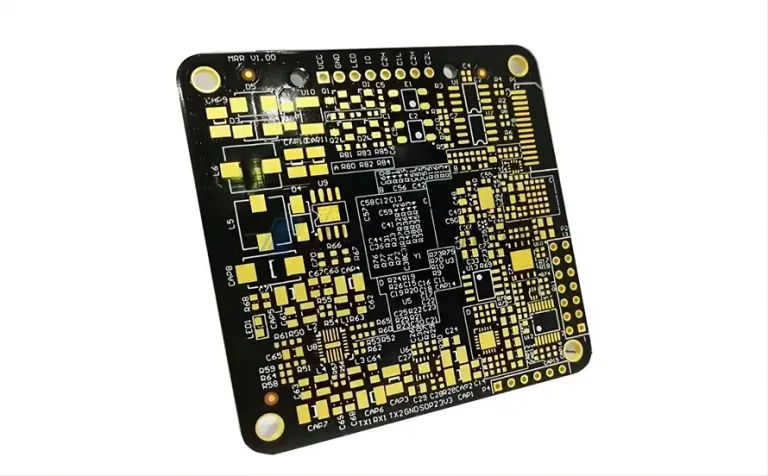
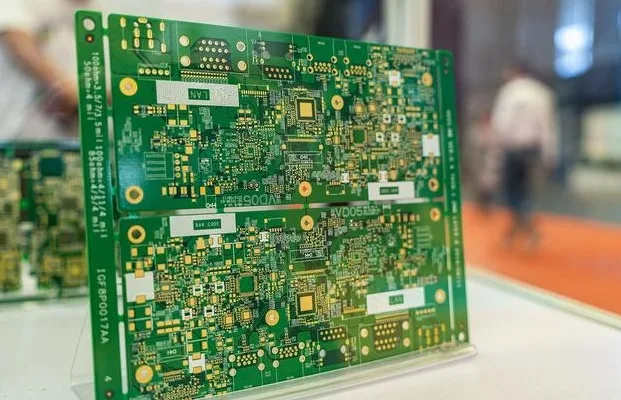
Taconic PCB Materials for Low-Loss, Stable Dielectric Performance in RF and High-Speed Systems

Taconic PCB materials are a class of engineered laminates specifically designed to address the challenges posed by high-frequency RF circuits, microwave systems, and high-speed digital signals. As system frequencies extend into multi-gigahertz and mmWave bands, dielectric loss, impedance variation, and phase instability become dominant constraints. Taconic PCB materials help engineers manage these constraints by delivering...

Low Loss Materials Engineering for Signal Integrity in High-Speed and High-Frequency PCB Design

Low Loss Materials are a foundational requirement in modern PCB design where signal integrity, insertion loss, and timing accuracy directly determine system performance. As data rates increase and operating frequencies extend into multi-GHz and mmWave ranges, dielectric loss transitions from a secondary concern to a primary limiting factor in electronic system design. Why Low Loss...

Low Loss Materials: The Key to High-Speed, High-Frequency PCB Signal Integrity

Low Loss Materials: Why They Matter for Modern High-Speed and High-Frequency PCB Design As electronic devices become faster and more compact, engineers are facing new challenges in maintaining clean and stable signals across the PCB. In applications such as 5G communication, data centers, high-speed networking, automotive radar, and advanced computing, signal loss can directly impact...

How to Choose Low Loss Materials for High Frequency and High-Speed PCBs

As modern electronics move toward higher data rates, higher frequencies, and more compact designs, signal integrity becomes a critical factor in PCB performance. In many applications, traditional FR4 materials may not meet the electrical requirements due to higher signal attenuation and unstable dielectric behavior. That’s why low loss materials are increasingly used in advanced PCB...

Optimize High-Frequency Signal Integrity and Thermal Stability with TLY-5 PCB Laminates for 5G RF Front-End Modules

As 5G RF front-end modules push into sub-6 GHz and mmWave bands, PCB materials must deliver extreme electrical precision, low-loss propagation, and predictable thermal behavior. TLY-5 PCB laminates, based on PTFE composites engineered with ultra-low dielectric constant (Dk ≈ 2.17) and low dissipation factor (Df ≈ 0.0009), have emerged as one of the most reliable...

Enhance Electromagnetic Uniformity and Mode-Suppression Using RT/duroid 5880 PCB Stackups in Precision mmWave Routing Networks

Precision mmWave routing networks—operating from 26 GHz to beyond 90 GHz—demand exceptional electromagnetic uniformity, controlled impedance, and stable mode behavior to maintain system linearity. RT/duroid 5880 PCB materials have become a foundational high-frequency laminate for mmWave architectures because their ultra-low dielectric constant (Dk ≈ 2.20), extremely low dissipation factor (Df ≈ 0.0009), and isotropic PTFE...

mmWave Module PCB Engineering for High-Frequency, Low-Loss and Thermally Stable RF Front-End Systems

The shift toward 5G FR2, advanced radar, high-resolution sensing and satellite communication has placed intense performance pressure on mmWave Module PCB design. At frequencies from 24 GHz to 86 GHz, the PCB is no longer a passive carrier—it becomes an active RF component whose materials, stackup, via transitions and routing geometries directly dictate performance. A...