PCB Materials | FR-4, High-Frequency, Low-Loss & Heavy Copper - KKPCB
 
HomeCategory

PCB Materials | FR-4, High-Frequency, Low-Loss & Heavy Copper - KKPCB

Engineering Precision: The Critical Role of Probe Card PCBs in Semiconductor Testing

Engineering Precision: The Critical Role of Probe Card PCBs in Semiconductor Testing Introduction In semiconductor production, precision defines success. Every chip must be verified for performance and reliability before it’s packaged—and the key to this process lies in the probe card PCB.At KKPCB, we specialize in engineering high-performance probe card PCBs that ensure accurate, repeatable,...

RF Test PCB: Engineering Precision for High-Frequency Testing Systems

RF Test PCB: Engineering Precision for High-Frequency Testing Applications Introduction As wireless communication, semiconductor devices, and high-frequency electronics continue to advance, the demand for precise and reliable test platforms has increased dramatically. Among these platforms, the RF Test PCB plays a central role. It enables engineers to validate RF performance, measure high-frequency characteristics, and ensure...

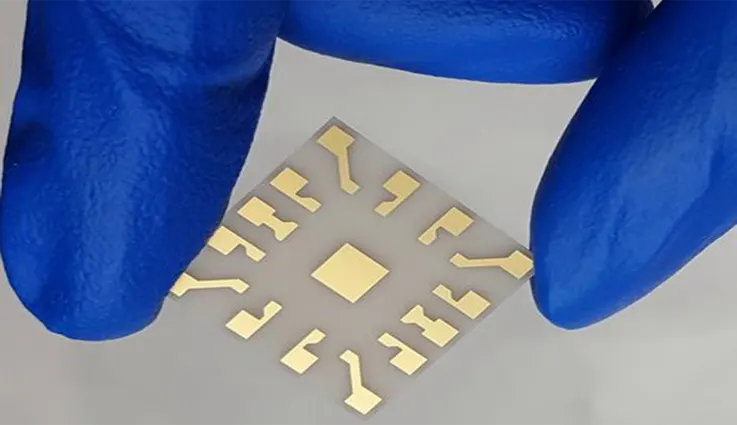
Aluminum Oxide (Al₂O₃) Ceramic PCB: Properties, Types, Manufacturing Process, and Industry Applications

Introduction to Aluminum Oxide (Al₂O₃) Ceramic PCBs In the field of printed circuit board (PCB) manufacturing, the choice of substrate material plays an essential role in determining the product’s performance, reliability, and heat dissipation capability. Ceramic PCBs—particularly those using Aluminum Oxide (Al₂O₃)—have become increasingly popular due to their outstanding thermal and electrical properties. This article...

Probe Card PCB: Engineering Precision for High-Accuracy Wafer-Level Semiconductor Testing

Probe Card PCB: Engineering Precision for Wafer-Level Testing Introduction At the wafer-level test stage, the probe card PCB serves as the indispensable interface between automated test equipment (ATE) and the semiconductor wafer. As device geometries continue shrinking and electrical performance requirements become more demanding, precision test interfaces have become essential. The probe card PCB establishes...

ADAS PCB Layout Guidelines for Automotive Radar Systems: Best Practices for High-Frequency Design

ADAS PCB Layout Guidelines for Automotive Radar Systems In the rapidly advancing world of automotive technology, Advanced Driver Assistance Systems (ADAS) are revolutionizing how we drive, enhancing safety and intelligence in vehicles. At the heart of many ADAS features lies the automotive radar system, which relies on precise and effective printed circuit board (PCB) design...

Understanding the PCV Valve: Its Essential Role in Engine Health and Emission Control

What Is a PCV Valve? The acronym PCV stands for Positive Crankcase Ventilation. The PCV valve is a one-way valve that forms part of your vehicle’s PCV system — an integral component in the management of gases produced during engine operation. In simple terms, the PCV valve is responsible for ventilating the crankcase, a part...

Understanding Taconic RF-35 Laminates: The Ultimate Material for High-Frequency and RF PCB Applications

Introduction As electronic systems continue to evolve toward higher frequencies and faster data rates, the need for advanced laminate materials becomes increasingly critical. Among the top performers in RF and microwave PCB substrates, Taconic RF-35 has gained industry-wide recognition for its outstanding signal integrity, thermal stability, and material uniformity.With a dielectric constant (Dk) of 3.5,...

Exploring Teflon PCBs: The Ultimate Guide to High-Frequency and RF Applications

Introduction With the rapid advancement of modern technology, high-frequency electronic systems such as RF, microwave, and radar equipment are increasingly prevalent. At the core of these systems lies the Printed Circuit Board (PCB) — the foundation upon which signal integrity and overall device performance depend. Among the materials used for PCB fabrication, Teflon (PTFE) stands...