Advanced Engineering Technologies for PCB & PCBA Solutions - KKPCB
 
HomeCategory

Advanced Engineering Technologies for PCB & PCBA Solutions - KKPCB

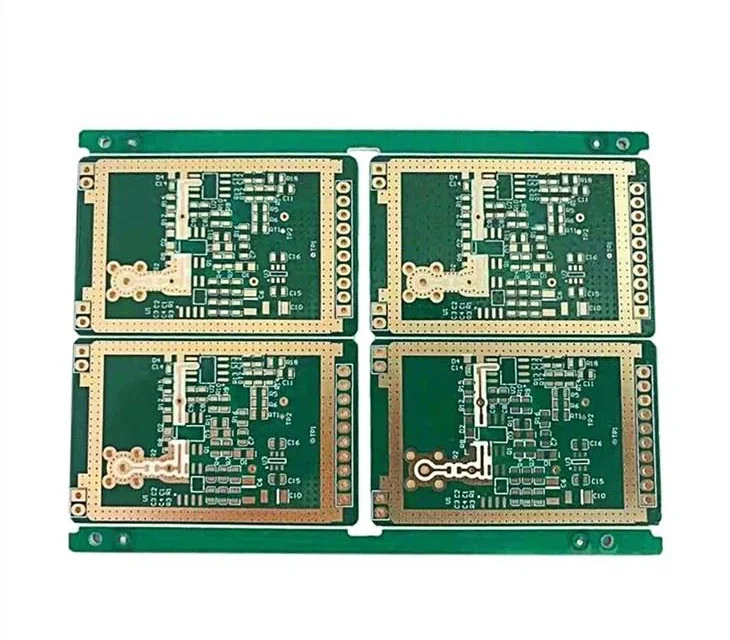
RF-35 PCBs: Cost-Effective Low-Loss Solutions for RF Applications

An RF-35 PCB is a printed circuit board built using Taconic RF-35 laminate, a ceramic-filled PTFE-based material designed for high-frequency applications. With a dielectric constant of approximately 3.5 and a low dissipation factor, RF-35 provides a balance between signal performance, thermal stability, and manufacturability. Compared to standard FR-4, RF-35 significantly reduces signal loss at high...
RO4350B PCBs: Reliable High-Frequency Performance with Low-Loss Materials

An RO4350B PCB is a printed circuit board built using Rogers RO4350B laminate, a widely adopted high-frequency material known for its low dielectric loss, stable dielectric constant (Dk ≈ 3.48), and excellent thermal reliability. Unlike traditional PTFE-based materials, RO4350B is a hydrocarbon ceramic laminate, which combines high-frequency performance with easier manufacturability similar to standard FR-4...

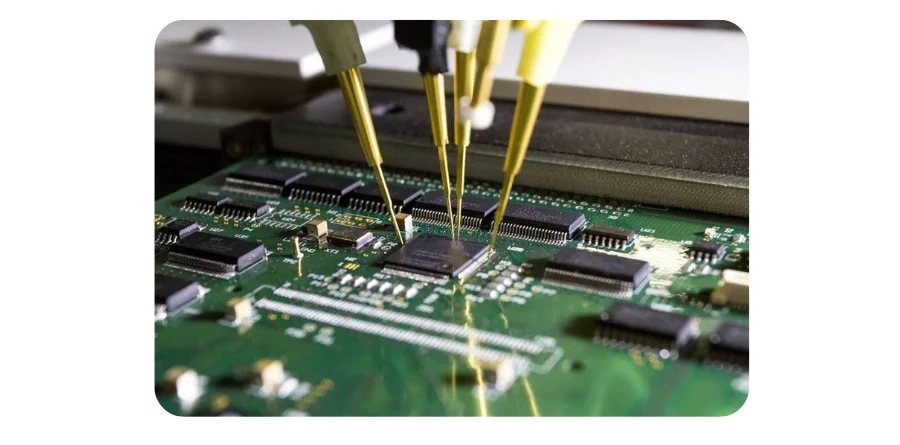
RF Test PCBs: Precision Solutions for High-Frequency Component Validation

An RF Test PCB is a printed circuit board engineered to support high-frequency testing, characterization, and validation of RF and microwave components. Unlike standard PCBs, RF test boards are optimized for signal integrity, controlled impedance, and minimal insertion loss, ensuring that measurements accurately reflect the performance of devices under test (DUT). RF test PCBs are...

Burn-in PCBs: Ensuring Reliability Through High-Stress Testing

A Burn-in PCB is a printed circuit board specifically designed to support reliability testing of electronic components under elevated temperatures, voltage stress, or operational load. Burn-in testing identifies early-life failures and verifies long-term performance, making these PCBs critical for semiconductor validation, power electronics, and high-reliability systems. Burn-in PCBs are widely used in: Semiconductor testing laboratories...

BT Epoxy PCBs: High-Performance Solutions for Multi-Layer and High-Density Electronics

A BT Epoxy PCB is a printed circuit board that uses Bismaleimide-Triazine (BT) resin as the substrate material. BT Epoxy offers low coefficient of thermal expansion (CTE), high glass transition temperature (Tg), and excellent dimensional stability, making it ideal for multilayer, high-density, and fine-pitch applications. BT Epoxy PCBs are particularly suitable for: High-performance computing and...

Aluminum Nitride PCBs: High-Thermal-Performance Solutions for Advanced Electronics

An Aluminum Nitride (AlN) PCB is a printed circuit board built using aluminum nitride substrates, which provide high thermal conductivity (up to 170–200 W/m·K) and excellent electrical insulation. These properties make AlN PCBs ideal for high-power devices, RF circuits, and applications requiring efficient heat dissipation in compact layouts. AlN PCBs are commonly used in: Power...

Rogers PCBs: High-Performance Solutions for RF and Microwave Applications

A Rogers PCB is a printed circuit board made from Rogers high-frequency laminates, engineered to provide stable dielectric constants (Dk), low dissipation factors (Df), and superior thermal performance. These features make Rogers PCBs ideal for RF, microwave, and high-speed digital circuits where signal integrity is critical. Rogers PCBs are widely used in: Wireless communication systems...

RF Trace PCBs: Designing for High-Frequency Signal Performance

An RF Trace PCB is a printed circuit board optimized for radio frequency (RF) and microwave signals, typically operating from hundreds of MHz to several GHz. Unlike standard PCBs, RF trace boards must maintain signal integrity, controlled impedance, and minimal insertion loss across the board. RF trace PCBs are widely used in: Wireless communication systems...

Fine Line PCBs: Precision Design for High-Density and High-Speed Electronics

A Fine Line PCB is a printed circuit board that features extremely narrow traces and spacing, typically in the range of 2–4 mils (50–100 μm), allowing engineers to fit more functionality into a smaller board area. Fine line technology is critical for high-density, high-speed digital, RF, and precision analog circuits, where both space optimization and...

High-Speed Logic PCBs: Designing for Fast, Reliable Digital Circuits

A High-Speed Logic PCB is a printed circuit board designed to carry digital signals at high frequencies, often in the range of hundreds of MHz to several GHz. Unlike standard PCBs, high-speed logic boards require special attention to signal integrity, timing accuracy, and electromagnetic compatibility. These PCBs are commonly used in: Multi-gigabit computing systems FPGA...