Advanced Engineering Technologies for PCB & PCBA Solutions - KKPCB
 
HomeCategory

Advanced Engineering Technologies for PCB & PCBA Solutions - KKPCB

Ceramic PCB: High Thermal Performance Solutions for Advanced Electronics

What Is a Ceramic PCB? A Ceramic PCB is a high-performance thermal PCB built on a ceramic substrate, designed for applications requiring efficient heat dissipation, electrical insulation, and high reliability. Unlike standard FR-4 or metal-core PCBs, a ceramic PCB uses materials such as: Aluminum Oxide (Al₂O₃) Aluminum Nitride (AlN) Beryllium Oxide (BeO) These ceramic substrates...
PTFE PCB: Ultra-Low Loss Materials for High-Frequency RF Applications

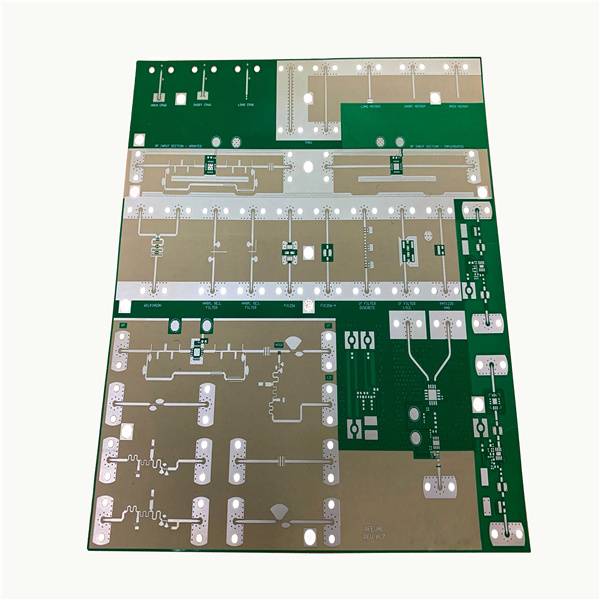
What Is a PTFE PCB? A PTFE PCB is a high-performance RF PCB built using PTFE material (Polytetrafluoroethylene), engineered for ultra-low signal loss and stable high-frequency performance. PTFE PCB materials are widely used in microwave, RF, and mmWave PCB designs, where traditional materials cannot maintain signal integrity. Key characteristics of PTFE PCB materials include: Very...

Rogers PCB: High-Frequency Performance, Materials, and Design Considerations

What Is a Rogers PCB? A Rogers PCB is a high-performance RF PCB manufactured using Rogers materials, which are engineered for low loss, stable dielectric properties, and high-frequency performance. Unlike standard FR-4 boards, Rogers PCB materials are designed to maintain consistent electrical behavior at GHz and mmWave frequencies, making them ideal for RF and microwave...

RF Trace PCB Design: Optimizing High-Frequency Signal Paths for Maximum Performance

What Is an RF Trace PCB? An RF Trace PCB is a specialized RF PCB where signal routing is designed as controlled transmission lines to carry high-frequency signals with minimal loss and distortion. In RF Trace PCB design, traces are no longer simple connections—they function as engineered RF signal paths, where geometry, materials, and layout...

Fine Line PCBs: Pushing the Limits of Precision and Density in Modern Electronics

What Is a Fine Line PCB? A Fine Line PCB refers to a board manufactured with extremely narrow trace width and spacing, typically: ≤100 µm (4 mil) → standard fine line ≤75 µm (3 mil) → advanced ≤50 µm (2 mil) or below → ultra-fine line These geometries go beyond conventional PCB fabrication limits and...

Microvia PCBs: Design, Reliability, and Engineering Trade-Offs Explained

Why Microvias Are Critical in Modern PCB Design As electronic devices continue to shrink while performance demands increase, traditional through-hole vias become a limiting factor. Microvias solve this by enabling high-density interconnects with shorter electrical paths. They are essential when: BGA pitch ≤ 0.8 mm (especially ≤ 0.5 mm) Routing congestion limits layout feasibility High-speed...

High Reliability PCBs: Designing for Long-Term Performance and Failure Prevention

What Does “High Reliability” Really Mean? A High Reliability PCB is not simply a well-manufactured board—it is a PCB designed to perform consistently over time under defined environmental and electrical stress conditions. Reliability is measured not just by initial functionality, but by the ability to: Maintain performance over long lifecycles Withstand thermal, mechanical, and electrical...

IoT IC Test PCBs: Enabling Reliable Testing for Connected Devices

IoT Testing Challenges Testing IoT integrated circuits introduces a unique combination of challenges. Unlike purely digital or RF chips, IoT devices integrate: Wireless communication (Wi-Fi, BLE, LoRa, NB-IoT) Low-power operation modes Mixed-signal functionality (analog + digital + RF) An IoT IC Test PCB must support all these domains simultaneously while maintaining accuracy, repeatability, and efficiency....

RF IC Test PCBs: Precision Platforms for High-Frequency Device Validation

Why RF IC Testing Is Fundamentally Different Testing RF integrated circuits is significantly more demanding than standard digital testing. An RF IC Test PCB must handle GHz-level signals, where even small discontinuities can distort measurement results. Unlike digital systems, RF testing is highly sensitive to: Signal loss and phase shift Impedance discontinuities Parasitic effects from...

Custom ATE PCBs: From Specification to Production-Ready Test Platforms

What Makes an ATE PCB Truly “Custom”? A Custom ATE PCB is not just a modified test board—it is a fully tailored interface designed around a specific combination of: Device Under Test (DUT) Test socket and mechanical interface ATE system architecture Signal, power, and timing requirements Unlike standard PCBs, every aspect—from pin mapping to stack-up—is...