KKPCB Blog – PCB & PCBA Insights, News, and Tips - KKPCB
 

Blog

Explore the KKPCB Blog for the latest PCB manufacturing and assembly news, industry insights, expert tips, and technology trends, helping you stay informed and optimize your electronics projects.
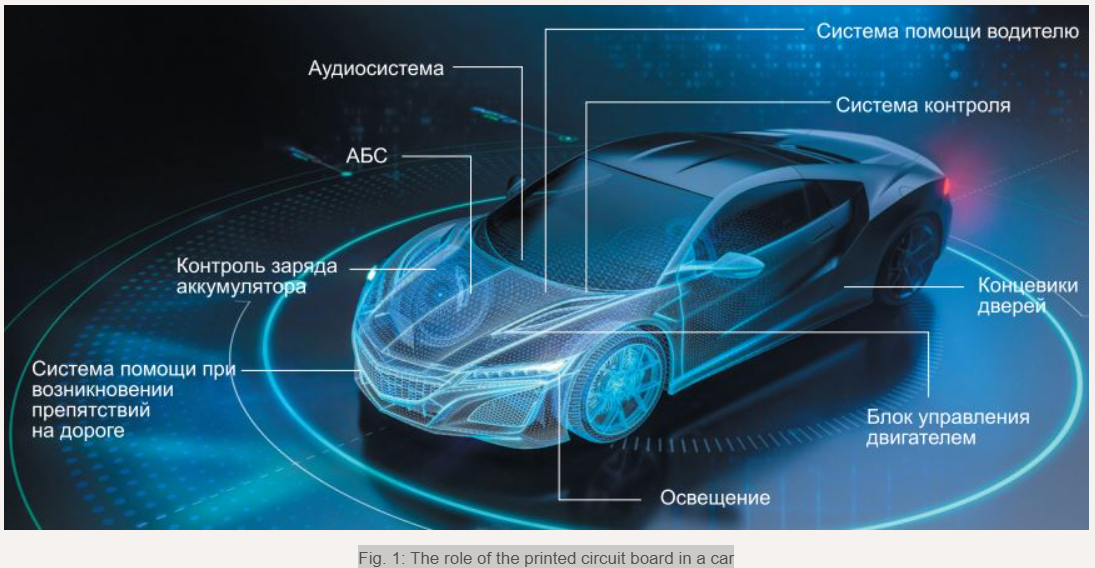
Ten Tips for Designing Automotive PCBs

The high level of competition in the modern automotive electronics market encourages manufacturers to constantly introduce new technologies and improve existing features, such as autopilot, automatic parking, emergency braking, keyless start, lane keeping control, and the like. Printed circuit boards (PCBs) are an essential and integral part of any electronic device in a vehicle. Their quality and...
Enhance Thermal Reliability and High-Power RF Efficiency Through Advanced 5G Router PCB Stackups

5G router PCB platforms operate under multi-band RF loads, high-density routing, and continuous thermal cycling in compact CPE enclosures. Achieving stable RF efficiency requires a stackup engineered around low-loss materials, controlled dielectric stability, and carefully optimized thermal paths. This article analyzes how engineered 5G router PCB stackups improve RF efficiency, insertion-loss performance, and long-term thermal...

Improve Long-Term Reliability and Temperature Cycling Endurance Using Alumina PCB Platforms in High-Power LED Arrays

High-power LED systems require extreme reliability, efficient heat spreading, and stable electrical performance across thousands of thermal cycles. Alumina PCB, Alumina Ceramic PCB, and Al₂O₃ PCB substrates have become the preferred materials for LED lighting modules due to their high thermal conductivity, mechanical stability, and superior dielectric strength. 1. Heat Dissipation for High-Power LED Packages...

Achieve Multi-Gig Channel Reliability and Tight Impedance Control with Megtron 7 PCB Stackups for Advanced Server Motherboards

Modern server motherboards require predictable impedance, extremely low jitter, and stable multi-gigabit routing to support DDR5, PCIe 6.0, and high-density network interfaces. FR-4-class materials fail to provide consistent loss and dielectric stability. Megtron 7 PCB laminates supply ultra-low Df, tight dielectric tolerances, and high-temperature reliability suited for 8–64 GT/s environments. KKPCB adapts Megtron 7 PCB...

Enhance High-Speed Signal Integrity and Low-Loss Performance with Megtron 7 PCB Platforms for 112G/224G SerDes Systems

Next-generation 112G/224G SerDes channels push FR-4 far beyond its electrical limits. As data center switching, AI computing, and PCIe-6/7 architectures scale upward, loss tangent, copper roughness, and impedance drift become critical bottlenecks. Megtron 7 PCB laminates—Df 0.0012 class, highly stable Dk, and low copper-permittivity interaction—provide an electrically clean foundation for long-reach PAM4 channels. KKPCB integrates...

Stabilize Wideband Impedance and Reduce Signal Drift Using RO4835 PCB Laminates in Mission-Critical Satellite Links

Satellite communication hardware depends on highly stable RF PCB materials capable of maintaining low-loss transmission, tight impedance control, and long-term dielectric stability under extreme environmental shifts. RO4835 PCB laminates—known for oxidation-resistant resin systems, stable Dk over temperature, and low insertion loss up to Ka-band—are frequently selected for mission-critical RF payloads, transceiver modules, phased arrays, and...

Optimizing High-Frequency Stability and Low-Loss Transmission Using RF-35 PCB Laminates for Modern Wireless Systems

RF-35 PCB laminates operate in a class where dielectric precision directly shapes RF linearity, bandwidth uniformity, and system-level efficiency. Modern wireless products—Wi-Fi 6/7 modules, IoT gateways, sub-6 GHz links, and microwave-band transceivers—depend on stable Dk/Df behavior to maintain predictable impedance and low insertion loss. RF-35 offers a low-loss dielectric platform designed for controlled RF propagation,...

Boost High-Frequency Linearity and Long-Term Reliability with RO4835 PCB Platforms for Next-Generation RF Front Ends

The Hidden Killer of Next-Gen RF Front-End Performance in 2025 As 5G mmWave base stations, LEO satellite user terminals, and aerospace active phased-array systems push toward 28–40 GHz and even 60 GHz D-band prototypes, two parameters have become non-negotiable: Third-order intermodulation distortion (IP3) must exceed +50 dBm at the antenna port Passive intermodulation (PIM) must...

Enhance Wide-Temperature RF Accuracy and Low-Loss Routing Using RO4835 PCB for Aerospace Navigation and Telemetry Systems

1. Why Aerospace RF Boards Are Entering the RO4835 Era in 2025 In aerospace navigation and telemetry links (L/S/C/Ku/Ka bands), temperature swings from –55°C on the ground to +125°C in high-altitude low-pressure environments are routine. Traditional high-frequency materials such as RO4350B or common PTFE either suffer excessive Dk drift or catastrophic oxidation of the “LoPro”...

Optimize Thermal Reliability and EMI Control of RO4350B PCBs for Laptop Wi-Fi 6/7 Modules

Laptop Wi-Fi 6/7 systems operate with extremely tight RF tolerances: multi-band OFDMA, 4096-QAM, and Multi-Link Operation demand predictable impedance, low-loss transmission, and strict phase alignment. Traditional FR-4 substrates introduce thermal drift, inconsistent Dk, and elevated loss, making them insufficient for 6 GHz high-band routing. RO4350B PCBs solve these issues by combining ceramic-filled hydrocarbon dielectric stability...